Of all the places I paddle around Pinellas County, this is probably the one I return to most often. Dunedin Causeway, Honeymoon Island, Hurricane Pass and Caladesi Island combine almost everything I like about coastal paddling: open water, protected water, current, chop, sandbars, wildlife, beaches, sunsets and plenty of different routes depending on the wind and tide.
It is close enough that I can go for only a few hours, yet the conditions change so much that it rarely feels like the same paddle twice. On a quiet weekday it can feel wonderfully peaceful. On a busy weekend, especially in the middle of the day, it can become a completely different place filled with powerboats, jet skis and heavy traffic through the channels.
My favorite time to paddle
The Best Place I Know to Watch a Florida Sunset
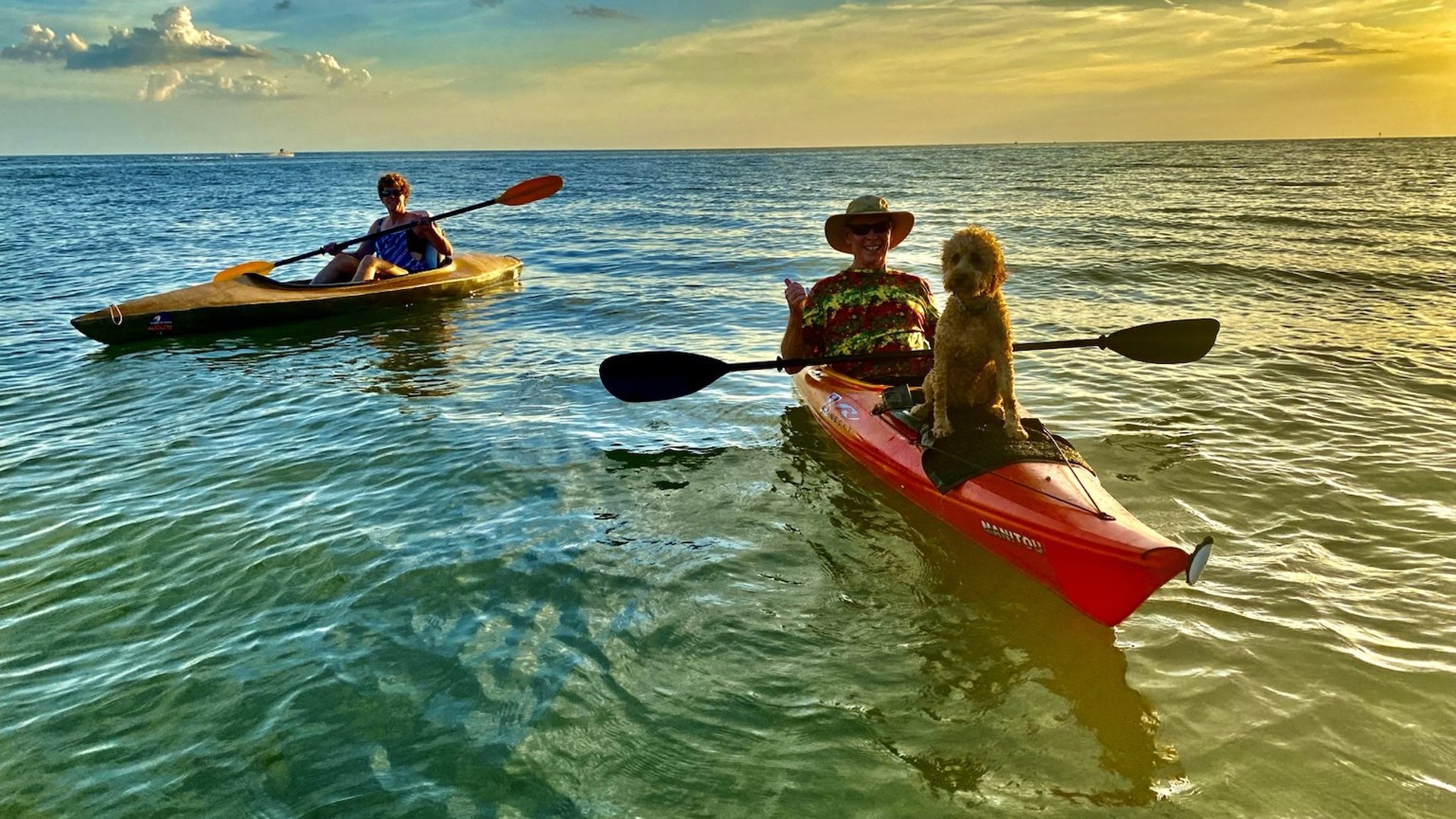
The vast majority of the times I paddle here are late in the afternoon, usually beginning a couple of hours before sunset. That gives me enough daylight to paddle out through Hurricane Pass, explore the sandbars, swim, play with Buddy Boy and enjoy the water before the light begins to change.
In the middle of a Florida day, the sun is high overhead and the light can be harsh. The heat can also be intense, especially during summer. By late afternoon, the temperature usually becomes more comfortable, the glare softens and the colors begin to warm. The wind often changes as evening approaches, and on many days it settles down close to the same time the sun reaches the horizon.
Anywhere in Florida where the sun sets into open water, the water seems to double the available color and light. The sky is illuminated from above while the Gulf reflects those same oranges, reds, pinks, golds and purples back upward. That reflected light shines into the camera lens and turns the entire surface of the water into part of the sunset.
Honeymoon Island is especially magical because there are nearly always people, dogs and beach activity between the camera and the setting sun. Everyone becomes backlit. Their faces and details disappear, leaving completely dark silhouettes against the bright sky and glowing water.
A dog running through the surf, a fisherman holding a rod, a couple sitting in beach chairs, a family walking along the shoreline or someone standing beneath an umbrella can all become part of the photograph. Their identities are hidden, but their outlines tell the entire story.
The setting is almost impossible to improve upon. The waves and chop catch the last sunlight. Wet shells and sand reflect the sky. Dogs race through the shallow water. People sit in chairs with their feet in the Gulf while fishermen make their final casts of the evening. Pelicans and gulls sometimes cross directly in front of the sun.
Every few seconds, the arrangement changes and another photograph appears. A wave catches the light differently, a dog leaps through the surf, or a person walks into exactly the right place beneath the sun. Even on evenings when the clouds are not dramatic, the reflections and silhouettes can make the scene beautiful.
Some of my favorite evenings begin with a difficult paddle into a south wind, followed by time bobbing in the surf or playing on a sandbar. Then, as sunset approaches, the wind dies, the temperature drops and the beach becomes softer and quieter. Buddy Boy can chase his toy through the surf while I photograph him against the glowing Gulf.
I have watched sunsets from beaches, rivers, lakes and mountaintops all over the country, but Honeymoon Island is my favorite place anywhere in Florida to watch the sun sink into the Gulf of Mexico.
Easy local access
Launching from Dunedin Causeway
Dunedin Causeway is a convenient place to launch because there are several sandy areas where a kayak or paddleboard can be carried directly to the water. Depending on the weather, tide and where I want to go, I can launch from different parts of the causeway and shorten or lengthen the crossing.
The causeway can be busy, but the flexibility of the launch is one of its strengths. I can paddle toward Honeymoon Island, cross toward Caladesi, head for Hurricane Pass, work along the protected inside shoreline or go out toward the Gulf when conditions are appropriate.
Before launching, I look closely at the wind direction, tide, boat traffic and the route I expect to use coming home. Conditions near the causeway can look easy while the pass or Gulf side is much rougher.
Several paddles in one place
Choosing a Route
There is no single correct route here. On a calm day I may cross directly toward Caladesi or head through Hurricane Pass. When the channel is crowded, I prefer a route that keeps me out of the marked boat channel as much as possible.
My lower route across the shallower water is often the safer and more pleasant choice during heavy traffic. It lets me cross the main channel more directly and spend only a few minutes exposed to fast-moving boats instead of paddling along inside the channel.
The inside shorelines of Honeymoon and Caladesi provide more protection from waves, while the Gulf side offers open water, surf and a much more energetic paddle. The best choice depends on experience, wind, tide, current and how comfortable everyone in the group is that day.
The centerpiece
Hurricane Pass
Hurricane Pass is the opening between Honeymoon Island and Caladesi Island. It is one of my favorite places to paddle because it can offer everything from calm, clear water to strong current, standing waves and rough chop.
An outgoing tide combined with wind from the west can build standing waves in and near the pass. Those conditions can be great fun for experienced paddlers who are comfortable in moving water, but they can also become intimidating very quickly.
The pass changes constantly. Sand shifts, channels migrate and the shape of the bars changes after storms. A route that was deep and easy on one trip may be shallow or completely different the next time.
South winds are often especially enjoyable because they may make the outbound paddle harder but help push us back toward the launch later. Still, I never count on the wind behaving exactly as forecast, and I always leave enough energy for the return.
The best places to stop
Sandbars, Beaches and Swimming
The shifting sandbars around Hurricane Pass are a huge part of why this area is so much fun. Some appear only at lower tide, while others remain exposed long enough to stop, stretch, swim, play and watch the current move around them.
On quieter days, the bars can feel like little private islands. We can pull the kayaks up, walk around, look for shells, let Buddy Boy swim and simply hang out in the water.
The sandbars are also excellent places to watch birds feeding in the shallows. As the tide falls, small fish and marine life become concentrated along the edges, attracting gulls, terns, pelicans, herons, egrets and shorebirds.
Because the bars change, I never assume that yesterday’s safe landing is still safe. Oyster shells, stingrays, deeper cuts and fast current can all be close to apparently gentle shallow water.
Buddy Boy’s favorite paddle
Paddling with Buddy Boy
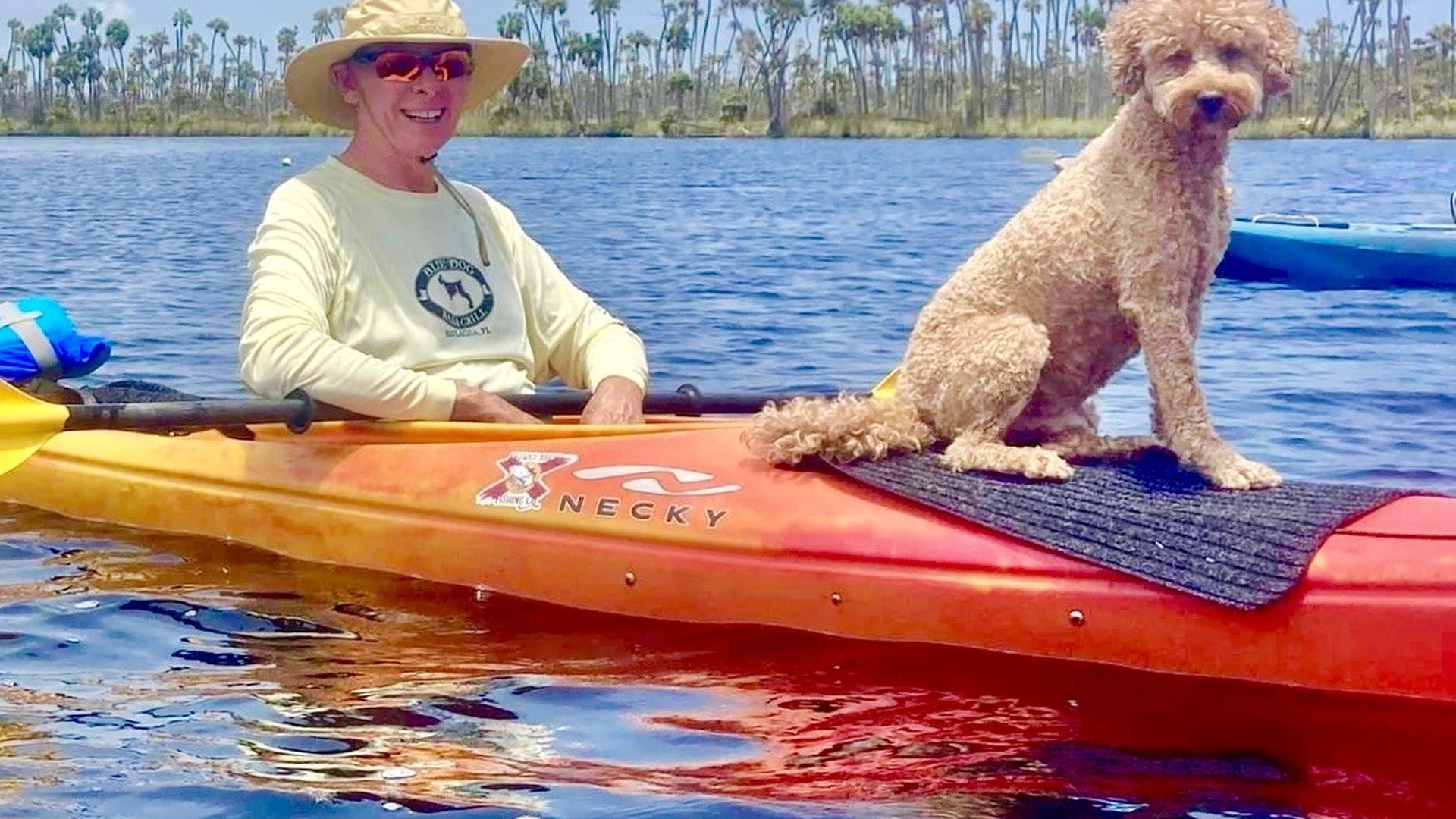
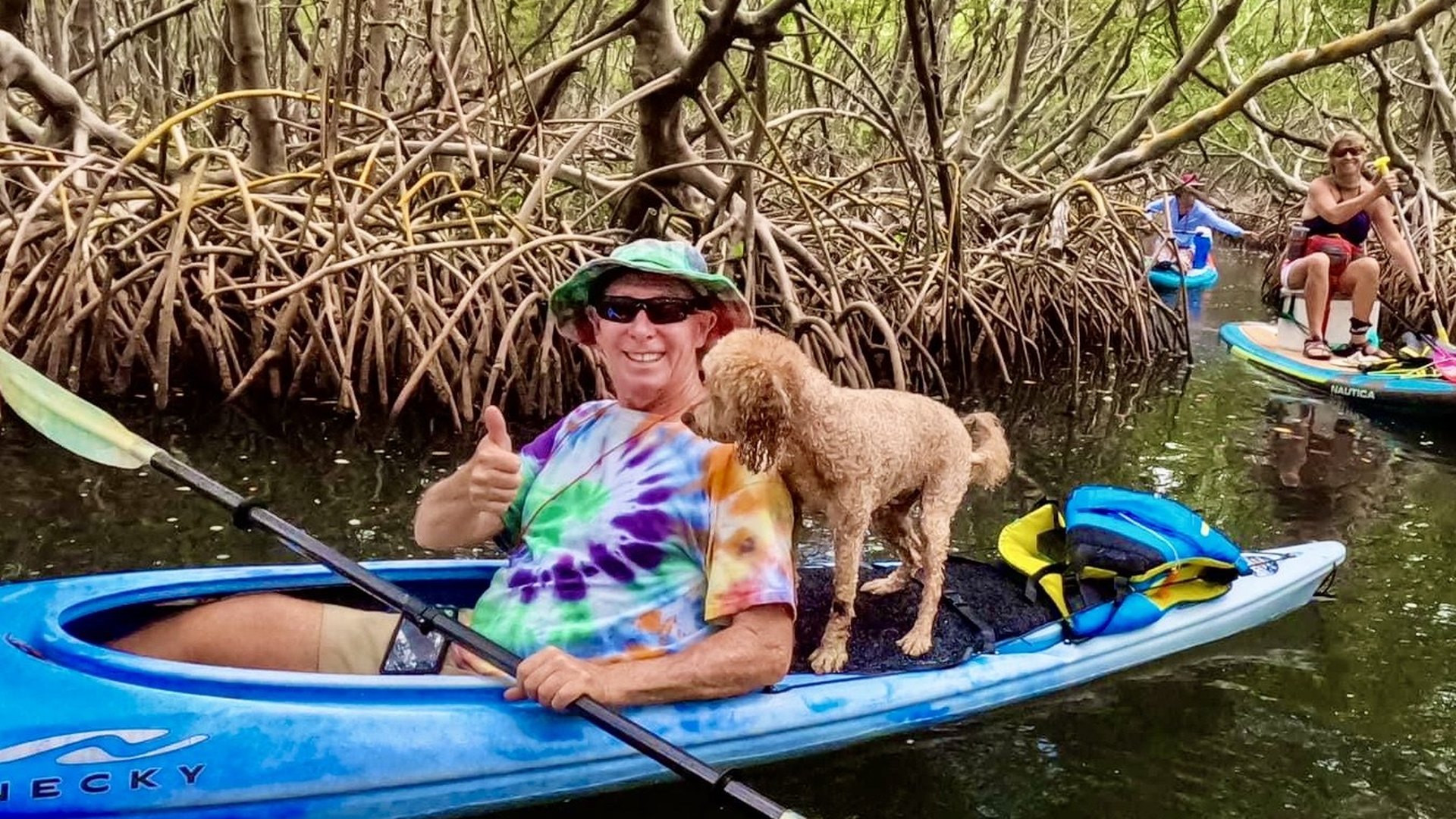
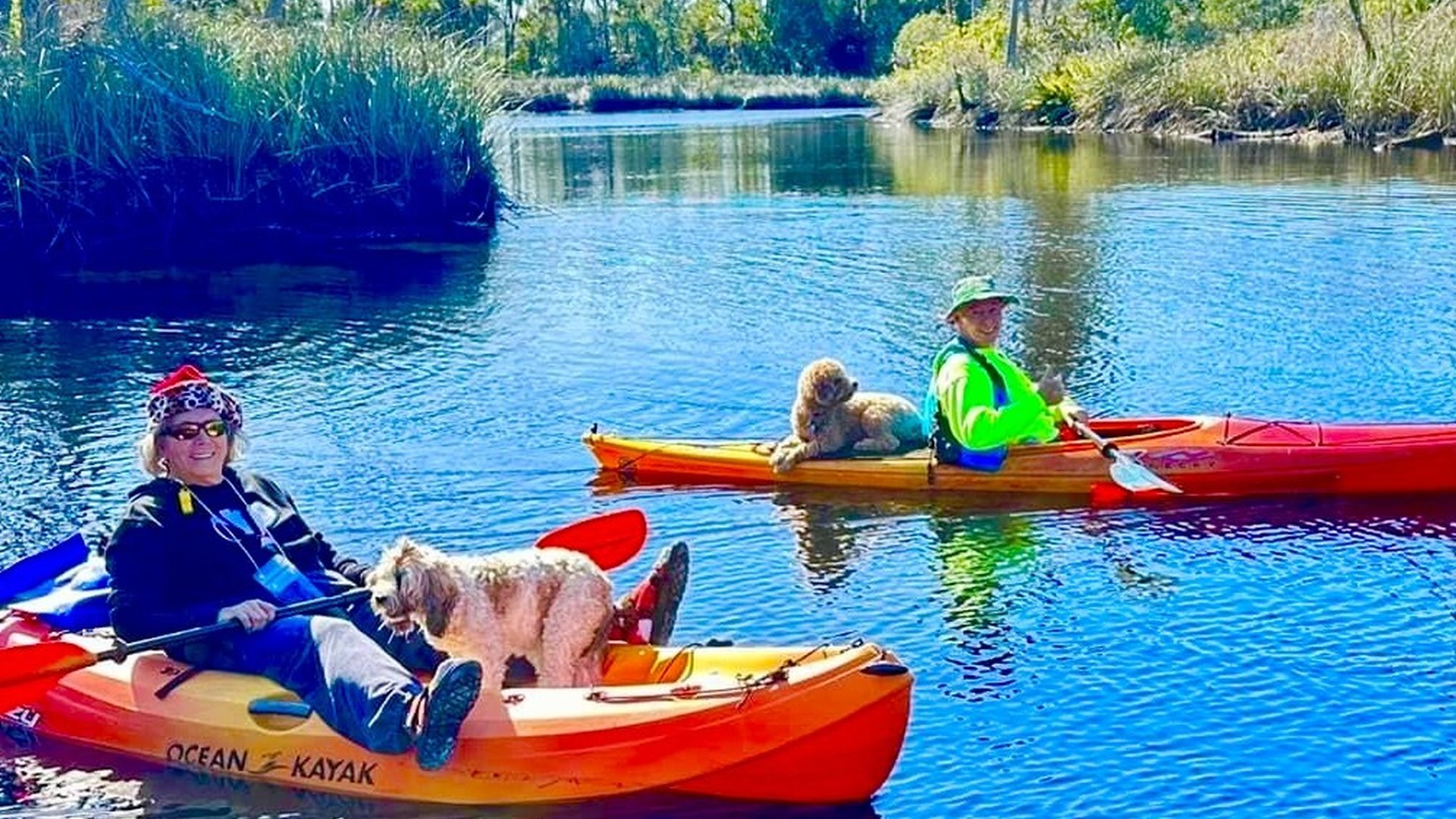
This may be Buddy Boy’s favorite place to paddle. He loves the chop and likes riding on the back of the kayak while the boat rises and falls beneath him. The rougher water that makes some dogs nervous seems to make the trip more exciting for him.
He also loves swimming here. The sandbars, shallow water and Honeymoon Island Pet Beach give him places to get out, cool off and play. When the regular beaches are crowded, the shifting bars often provide a much better place for us to stop.
Caladesi is different. Dogs are not allowed on its beach, so when Buddy is aboard we do not land there. We can paddle along the shoreline and enjoy the scenery from the water, then continue to a sandbar or Honeymoon Island where he is allowed.
Even in a dog-friendly area, I keep a close eye on current, waves, heat and boat traffic. A dog moving around on a kayak changes the balance, and I want to be sure I can control the boat if he suddenly stands, turns or jumps into the water.
Conditions matter
Wind, Tide and Current
Wind and tide determine nearly everything about this paddle. A light breeze and gentle tide can make the crossing easy, while stronger wind against current can produce short, steep waves that are much more difficult than they look from shore.
I especially enjoy south winds because they often help blow me back toward the causeway after I have paddled out toward the islands. Westerly wind against an outgoing tide can create fun standing waves around Hurricane Pass, but those same conditions may be too much for newer paddlers.
The current through the pass can be powerful. It may carry a kayak sideways toward a channel, shoal or breaking wave. Ferries, fishing boats and other traffic add to the complexity.
On red-flag or very windy days, I may still paddle if the wind direction gives me a manageable route and an easier return, but I do not treat a red flag as an invitation. It is a warning that requires experience, judgment and a conservative plan.
The biggest weekend concern
Boat Traffic and Crowds
Weekends can be insane, particularly around midday. Powerboats, jet skis, fishing boats and the Caladesi ferry all use the surrounding channels, and their wakes can arrive from several directions at once.
New paddlers considering a weekend crossing should be especially careful. Even an expert paddler does not want to remain in the channel longer than necessary when traffic is heavy.
I usually prefer crossing through shallower water and entering the channel only briefly. Bright clothing, a visible paddle blade and constant attention are important. I never assume that an approaching boat operator has noticed me.
Late afternoon is often more pleasant. Traffic usually begins to thin, the sun becomes less harsh and the light improves as sunset approaches. Weekdays are better still, especially outside holidays and peak tourist periods.
Always something to see
Wildlife and Birds
This area is full of wildlife. Dolphins are common enough that I am always watching for them, and manatees may appear in the warmer months. Rays move across the sandy bottom, fish scatter in the shallows and small sharks occasionally pass through the deeper water.
The birdlife is exceptional. Pelicans, osprey, herons, egrets, gulls, terns, cormorants, anhingas and many kinds of shorebirds use the islands, bars and grass flats.
Low tide can be especially productive because exposed flats and shallow pools concentrate food. Birds gather along the edges of the bars, and it is possible to sit quietly in a kayak and watch them feed at close range without disturbing them.
Seagrass beds and oyster areas support much of this wildlife. They also require care from paddlers. I try not to drag through grass beds unnecessarily, disturb resting birds or land near nesting areas.
Why this place matters to me
Why I Keep Coming Back
I love paddling here during the week, when the crowds disappear and the whole area feels larger and wilder. I can move between quiet protected water, open chop, sandbars and beaches without feeling rushed.
Some days we paddle hard into the wind. Other days we drift, swim or sit on a bar through sunset. Sometimes the surf at the mouth of the pass is more than we want, so we ferry across to Honeymoon and simply bob in smaller waves.
There is always another option. If the Gulf is too rough, we can stay inside. If the tide exposes a new bar, we can stop there. If the dog beach is quiet, Buddy can play fetch. If the evening is beautiful, there is no reason to hurry home.
That variety is what makes this one of my favorite paddling destinations. It is familiar, but it is never exactly the same.