RockADock 2023 • September 30, 2023

Merritt’s Mill Pond

Hunter Fish Camp to Jackson Blue Spring—and the unforgettable final official night of RockADock.
A spring-fed Florida wonder

A pond that looks almost too beautiful to be real

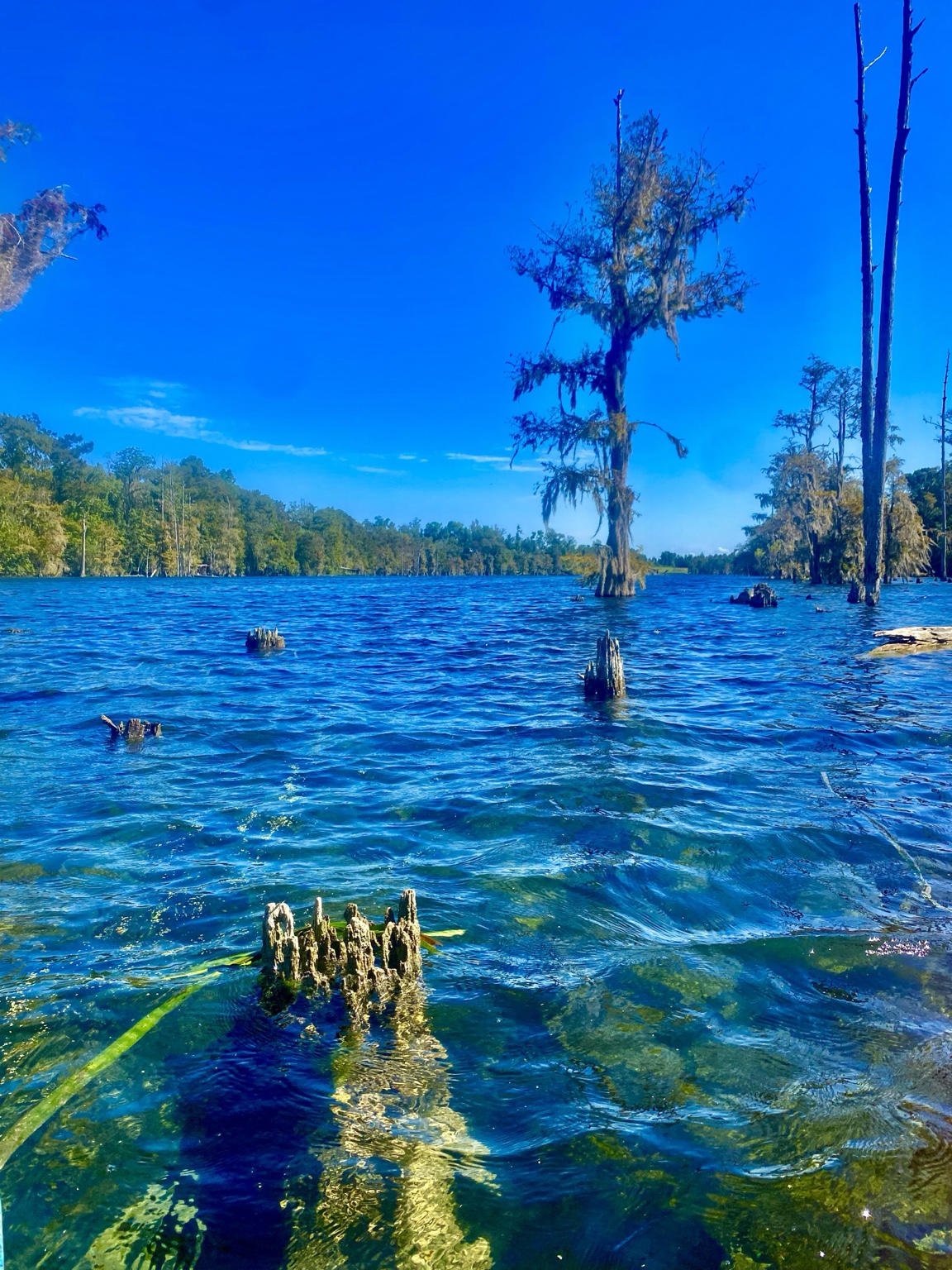
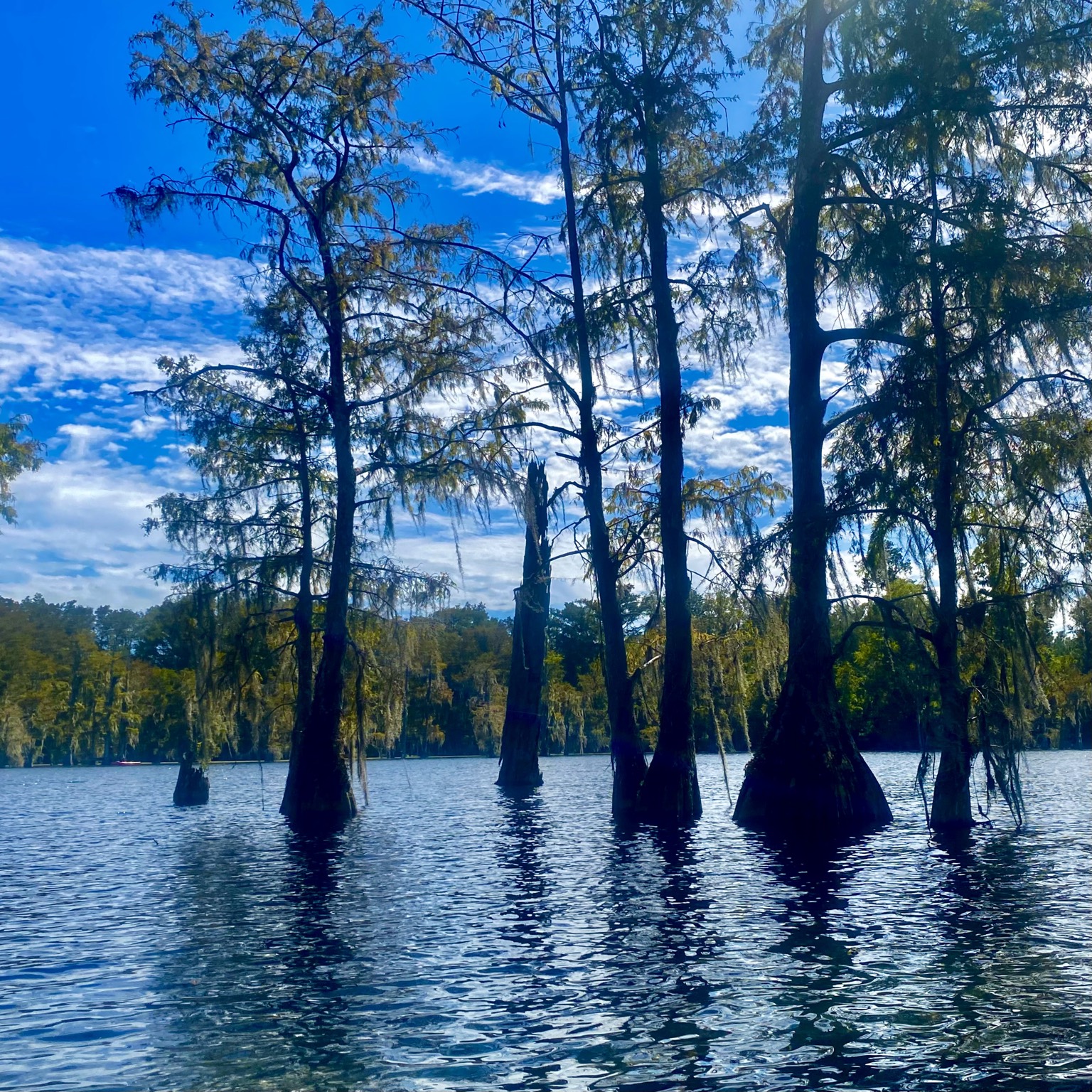
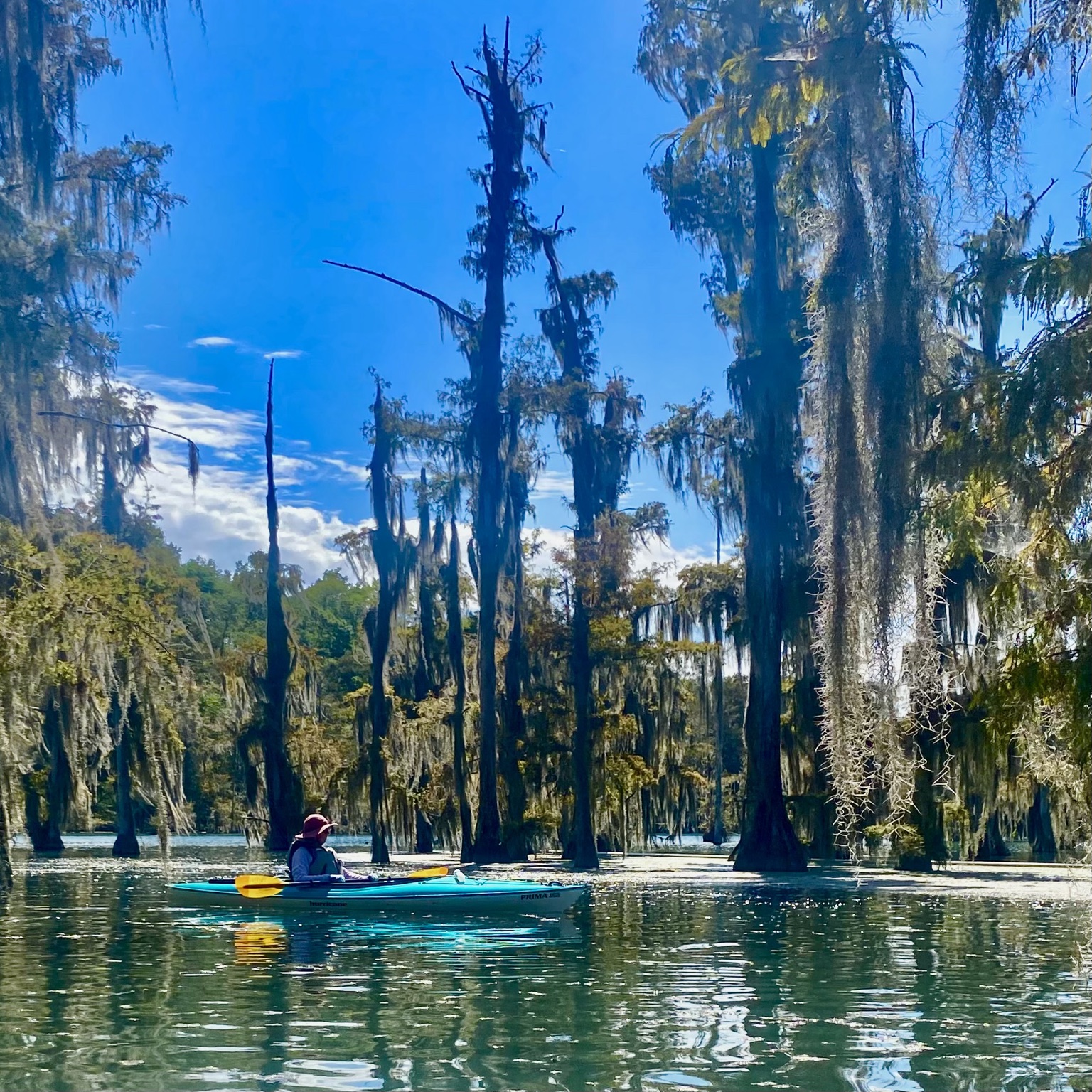
On September 30, 2023, during RockADock 2023, we launched at the public ramp at Hunter Fish Camp and made an out-and-back paddle toward Jackson Blue Spring. Merritt’s Mill Pond surprised me from the moment we left the ramp. The water shifted from clear green to turquoise and deep blue, enormous bald cypress rose directly from the pond, and Spanish moss hung in long curtains above our kayaks.

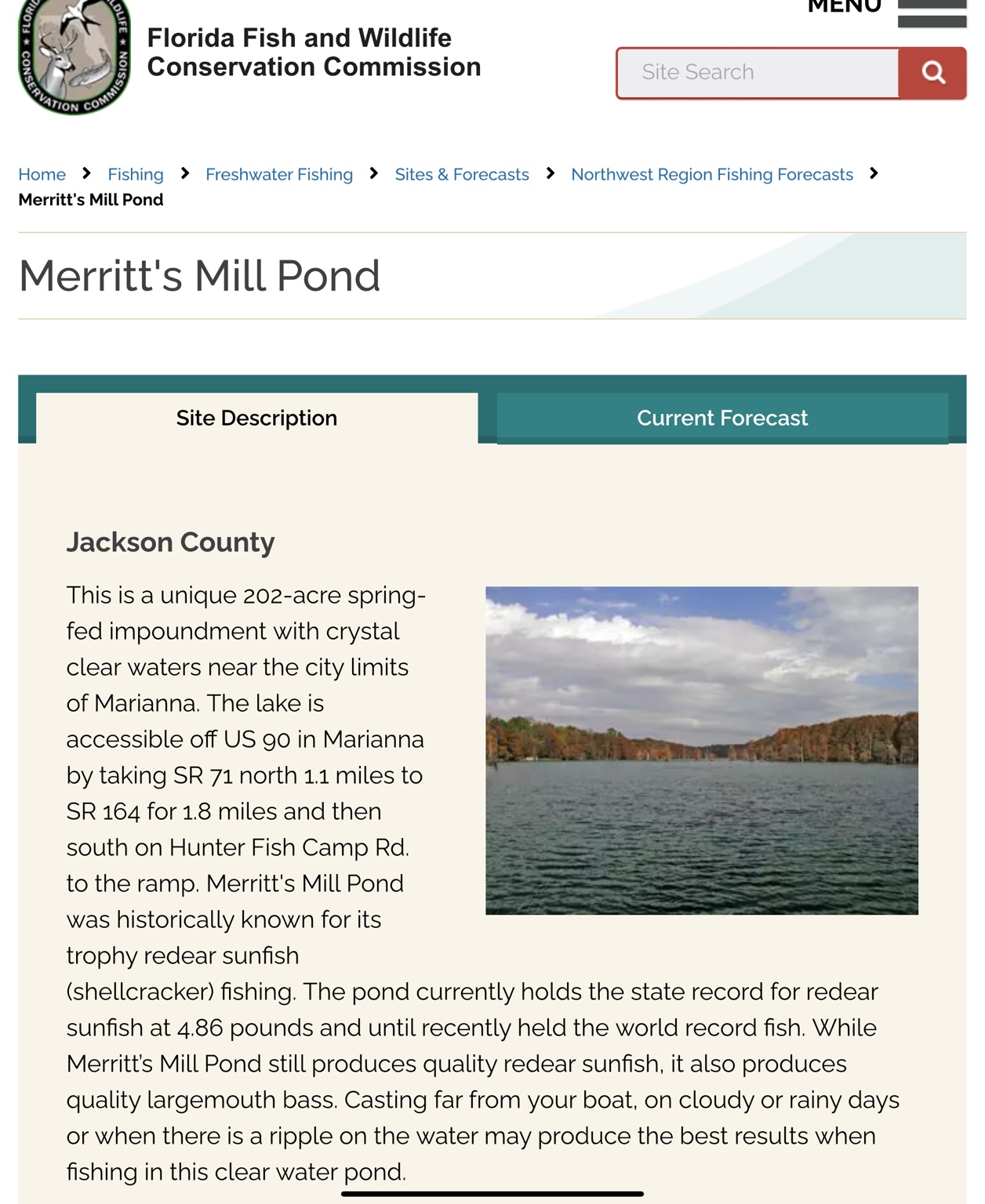
Merritt’s Mill Pond is a 202-acre spring-fed impoundment near Marianna, roughly four miles long. Although it was created by damming a spring-fed valley for a mill, it feels far more like a natural spring river widened into a lake. Jackson Blue Spring is the principal source, while Gator Spring, Hole-in-the-Wall, Indian Washtub, Twin Caves, Shangri-La, and other vents add clear groundwater from the Floridan Aquifer.

DateSeptember 30, 2023
EventRockADock 2023
LaunchHunter Fish Camp
TripOut and back
The route

Hunter Fish Camp to Jackson Blue

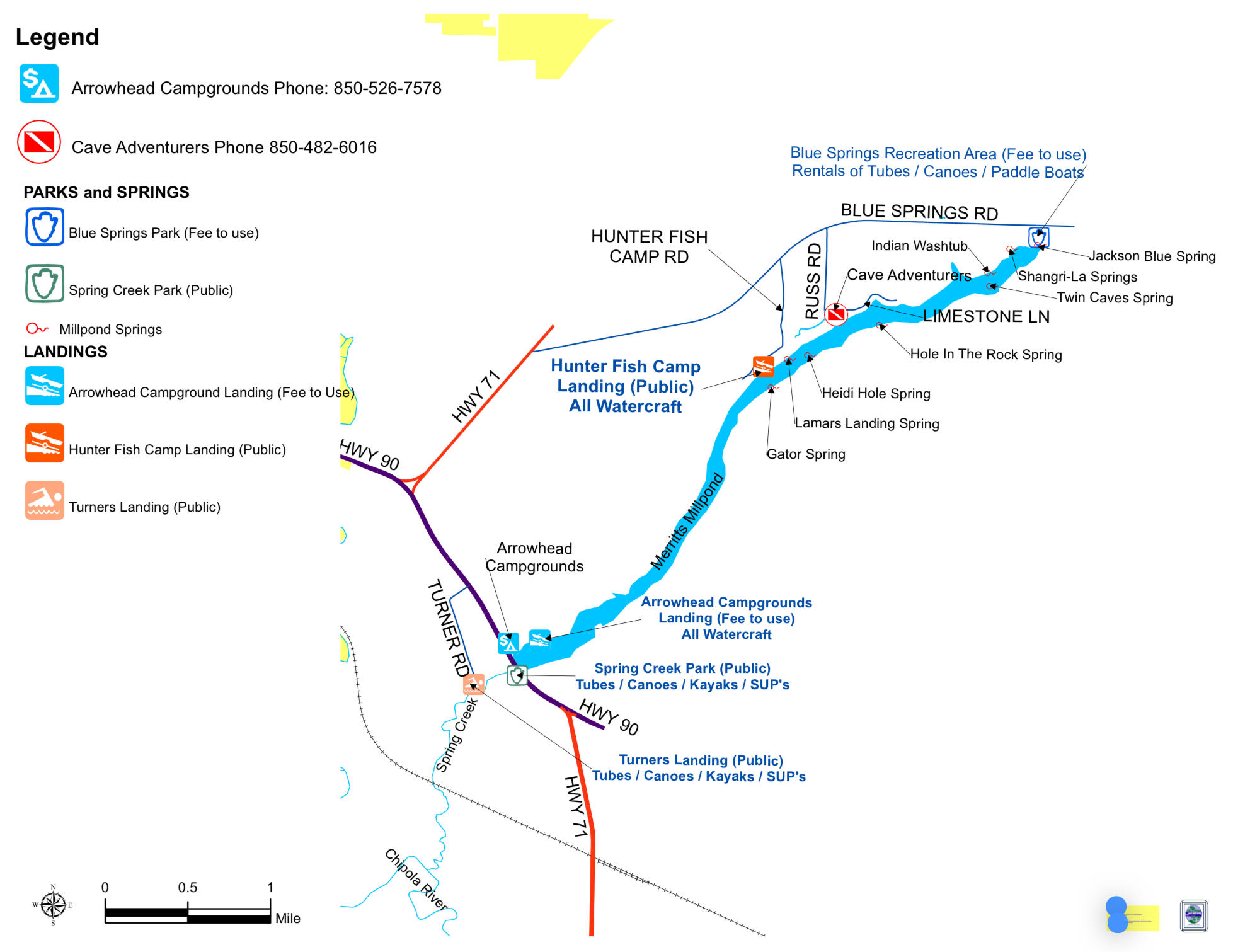
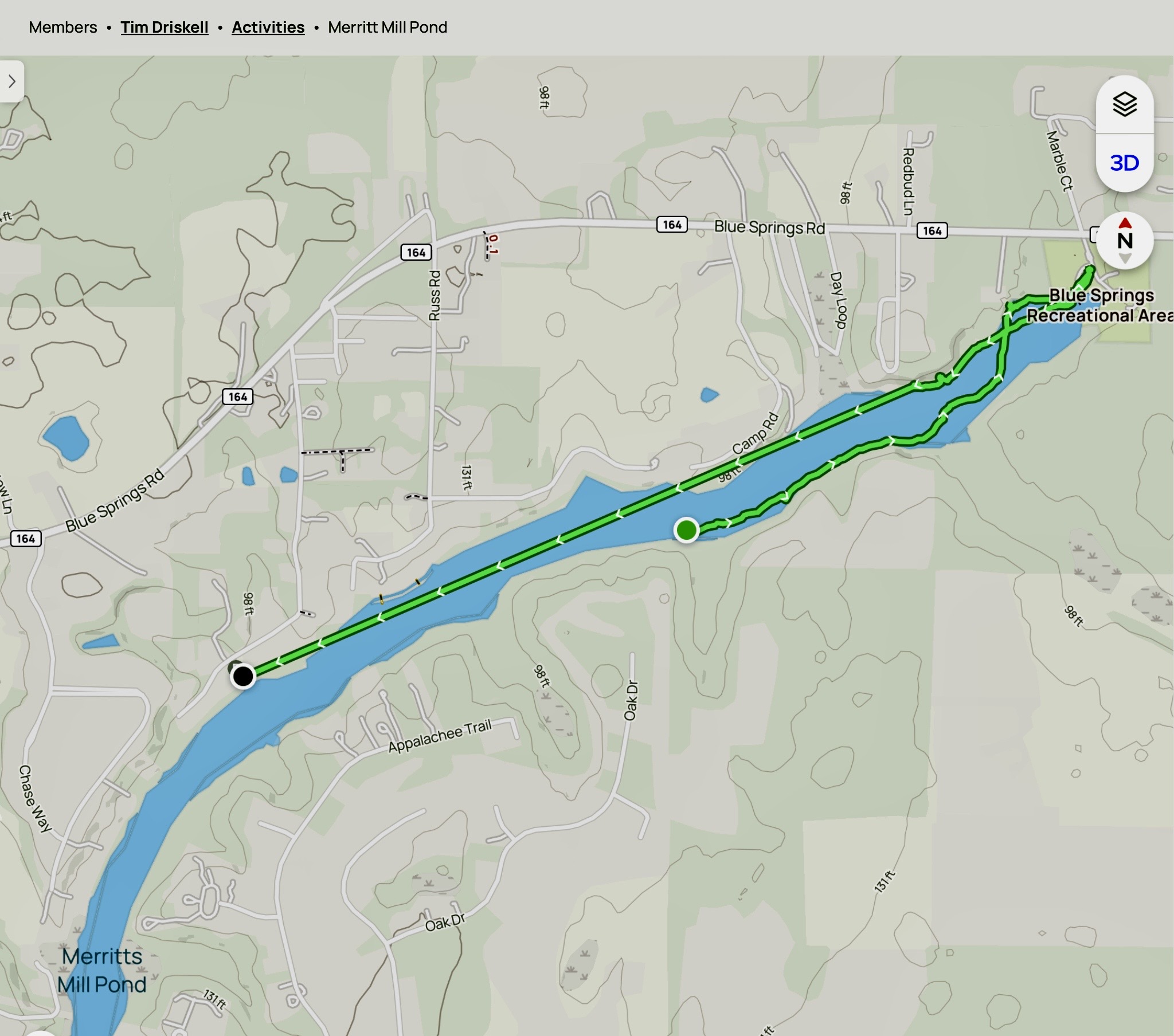
The launch address on our RockADock route sheet was 2935 Hunter Fish Camp Road, Marianna, Florida. Because the paddle was an out-and-back, there was no shuttle to organize. We launched from the public ramp near the middle of the pond, headed northeast, explored the spring areas, reached Jackson Blue near the far end, and then returned to Hunter Fish Camp.

The official route sheet marked Gator Spring, Hole-in-the-Wall Spring, Indian Washtub, Shangri-La, its nearby dry cave, Twin Caves, and Jackson Blue. The trip could be treated as a straightforward excursion, but the pleasure was in wandering: slipping behind cypress trunks, looking into clear vents, and pausing wherever the light and water became irresistible.
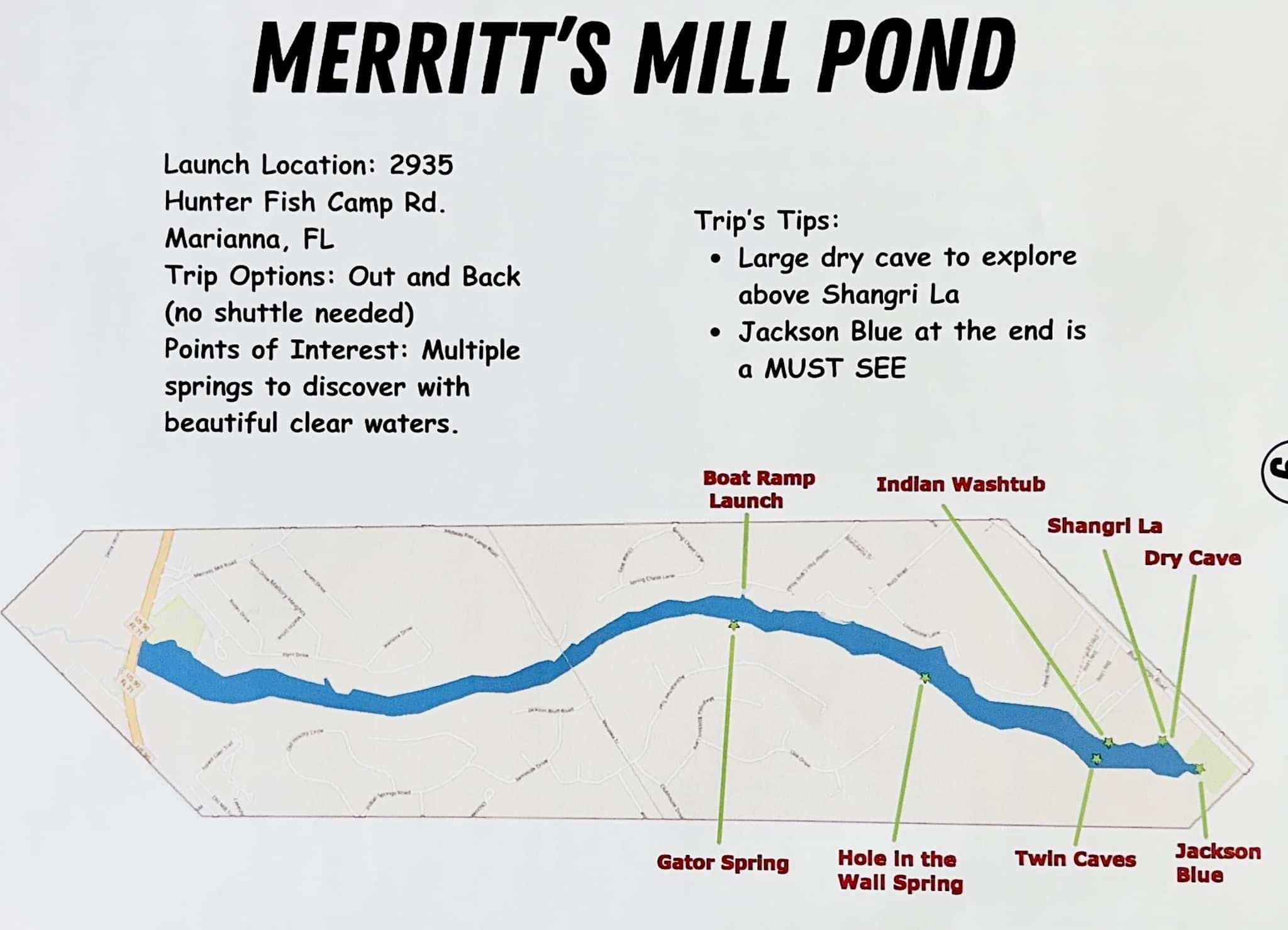
The RockADock Merritt’s Mill Pond route sheet, with the Hunter Fish Camp launch and major springs clearly marked.
GPS map showing the out-and-back paddle from Hunter Fish Camp toward Jackson Blue Spring.
A detailed regional map showing Hunter Fish Camp Landing, Jackson Blue Spring, other springs, and nearby access points.
Leaving the ramp

From ordinary boat ramp to underwater garden

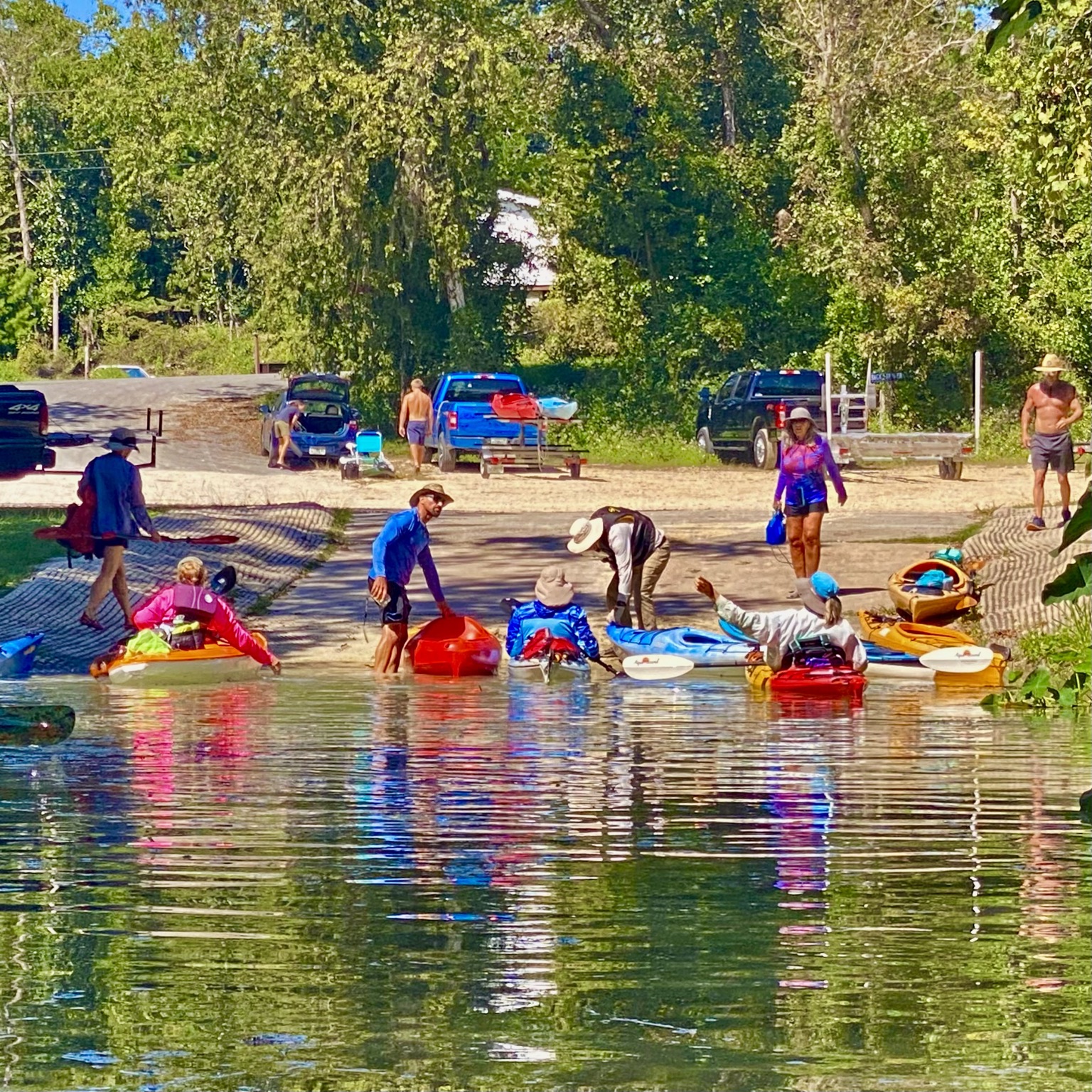
Hunter Fish Camp gave us easy access to both the open middle pond and the chain of springs toward Jackson Blue. At the ramp, kayaks crowded the shoreline and people helped one another into the water. Within minutes, the launch disappeared behind us and the bottom became visible beneath our boats.

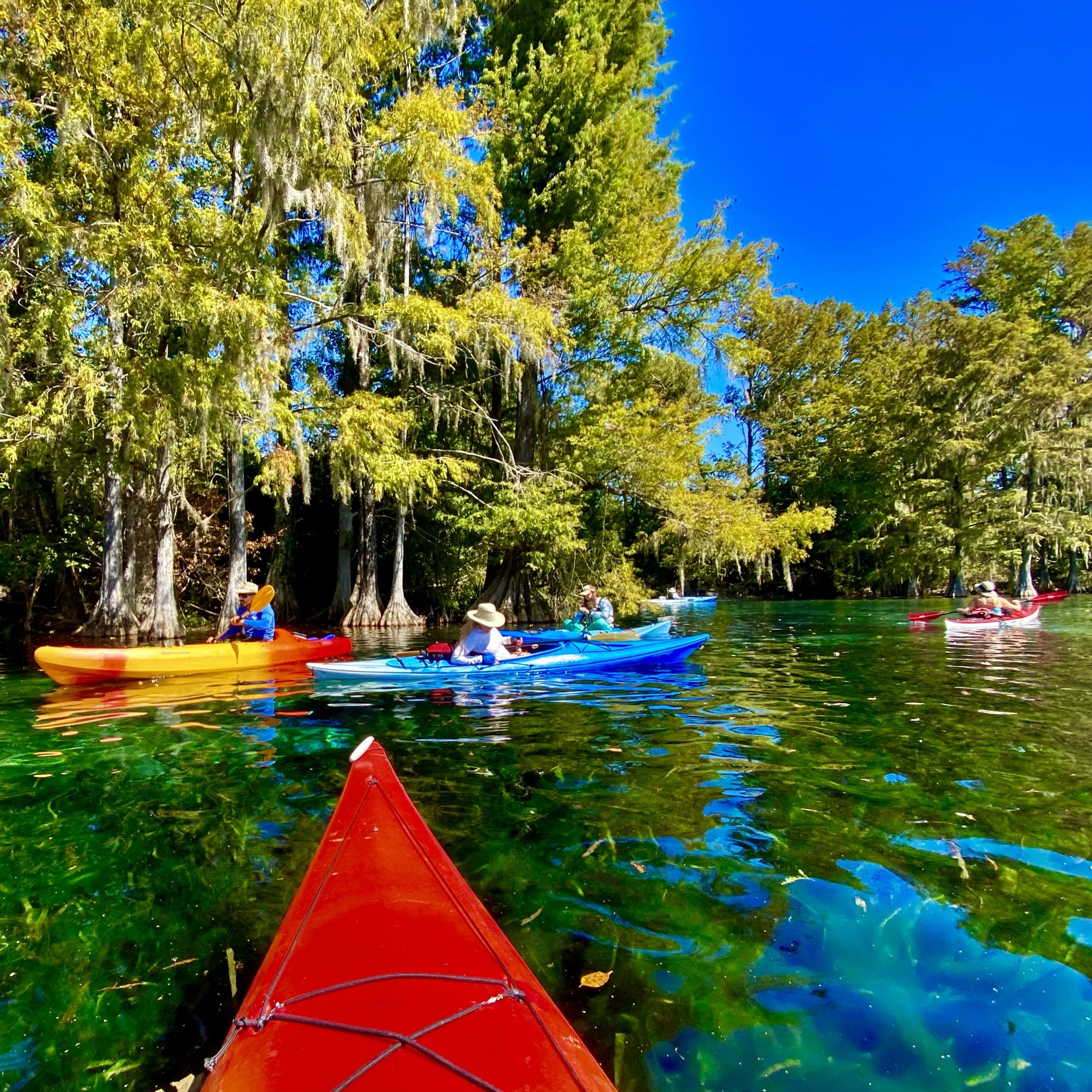
Clear water changes the entire feeling of paddling. Instead of seeing only the surface, we could watch vegetation waving below, trace the shapes of submerged logs, and see shadows move across pale sand. In places the kayaks looked suspended in air.

The group launching and returning at the public ramp on Hunter Fish Camp Road.
Freedom among the trees

No single channel and no need to hurry

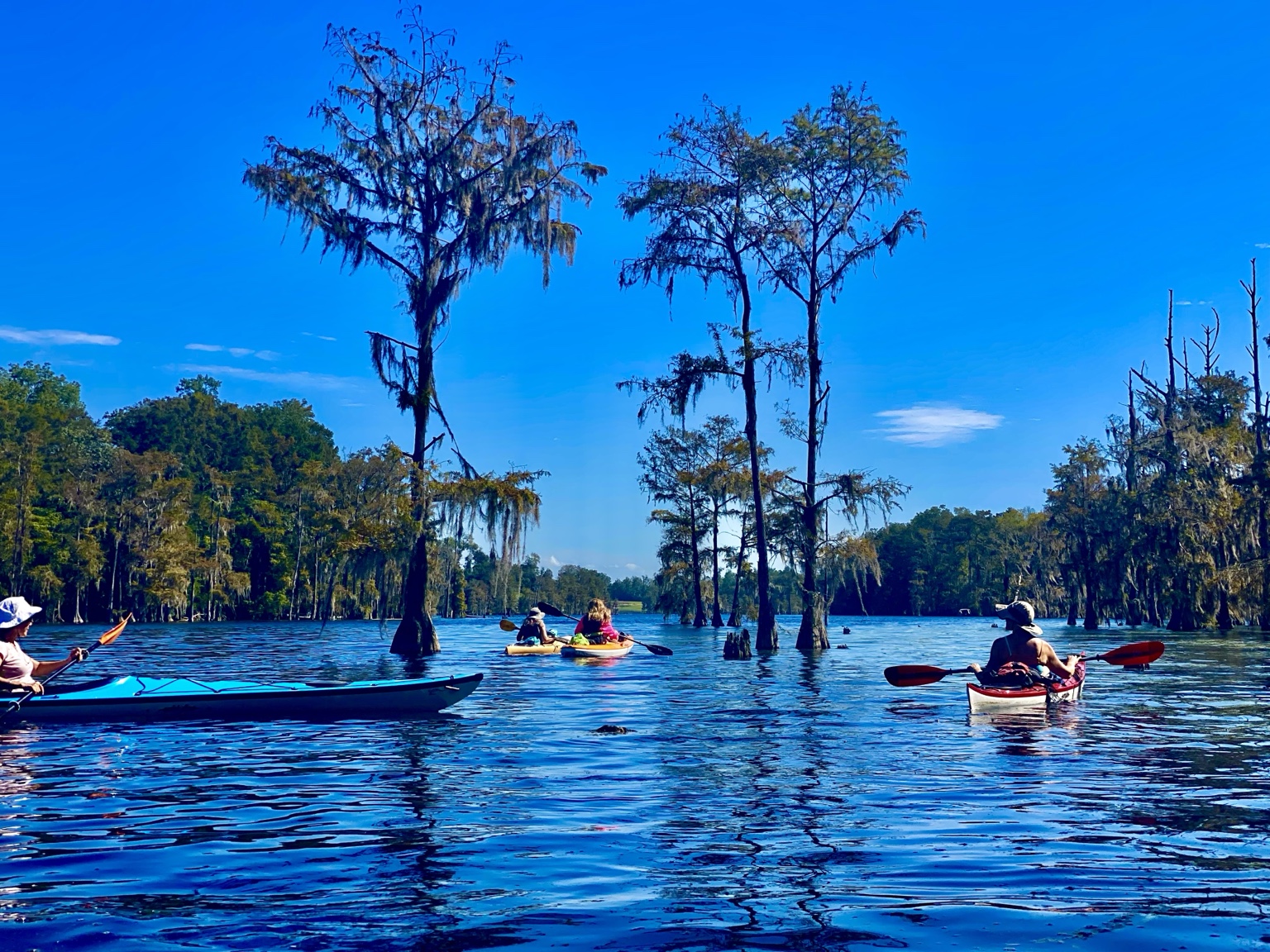
Holmes Creek had guided us through a twisting corridor. Merritt’s Mill Pond felt completely different. It offered space and freedom. We could cross open water, weave among cypress trunks, tuck beneath Spanish moss, or simply drift while the rest of the group spread out.

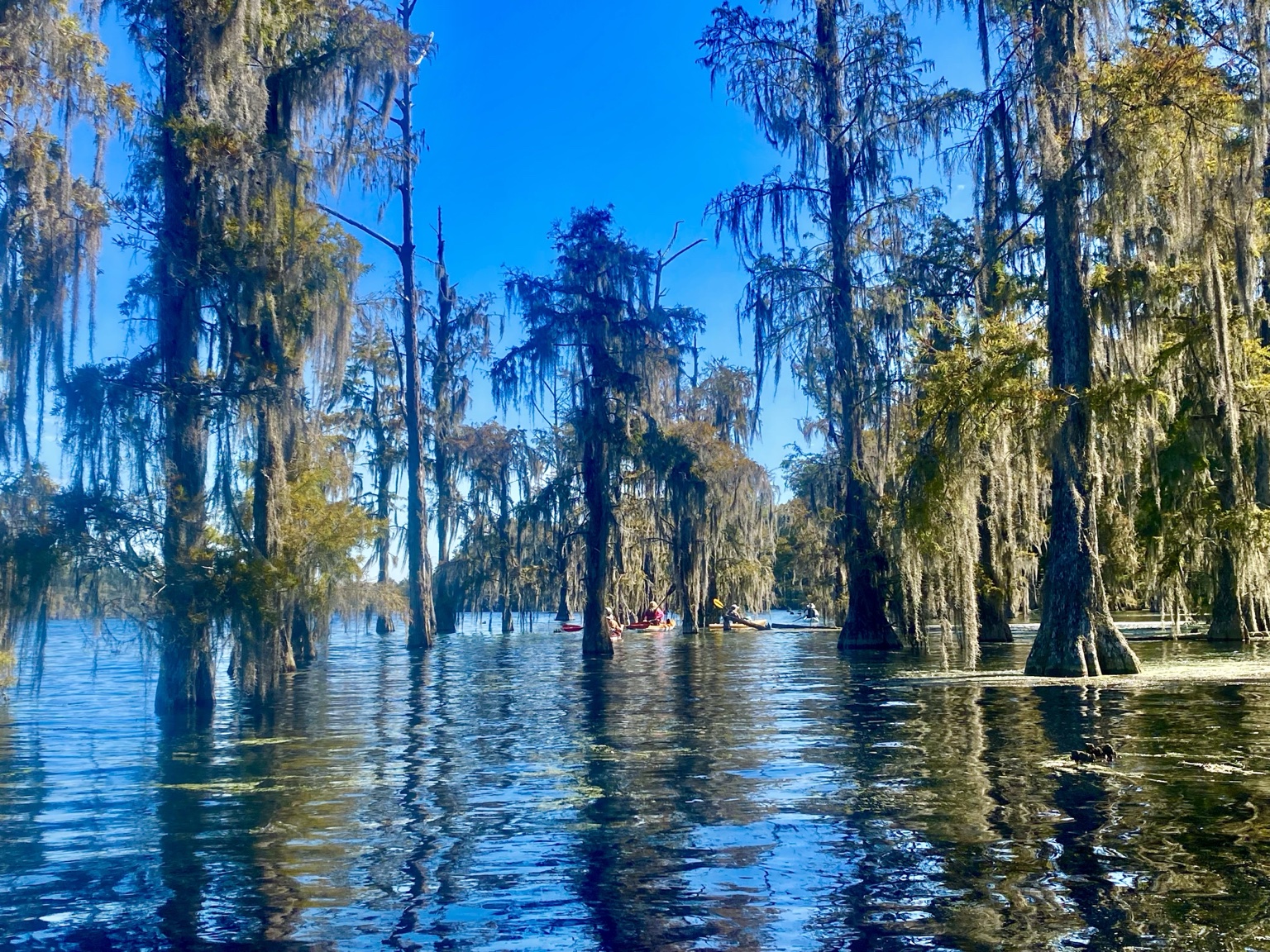
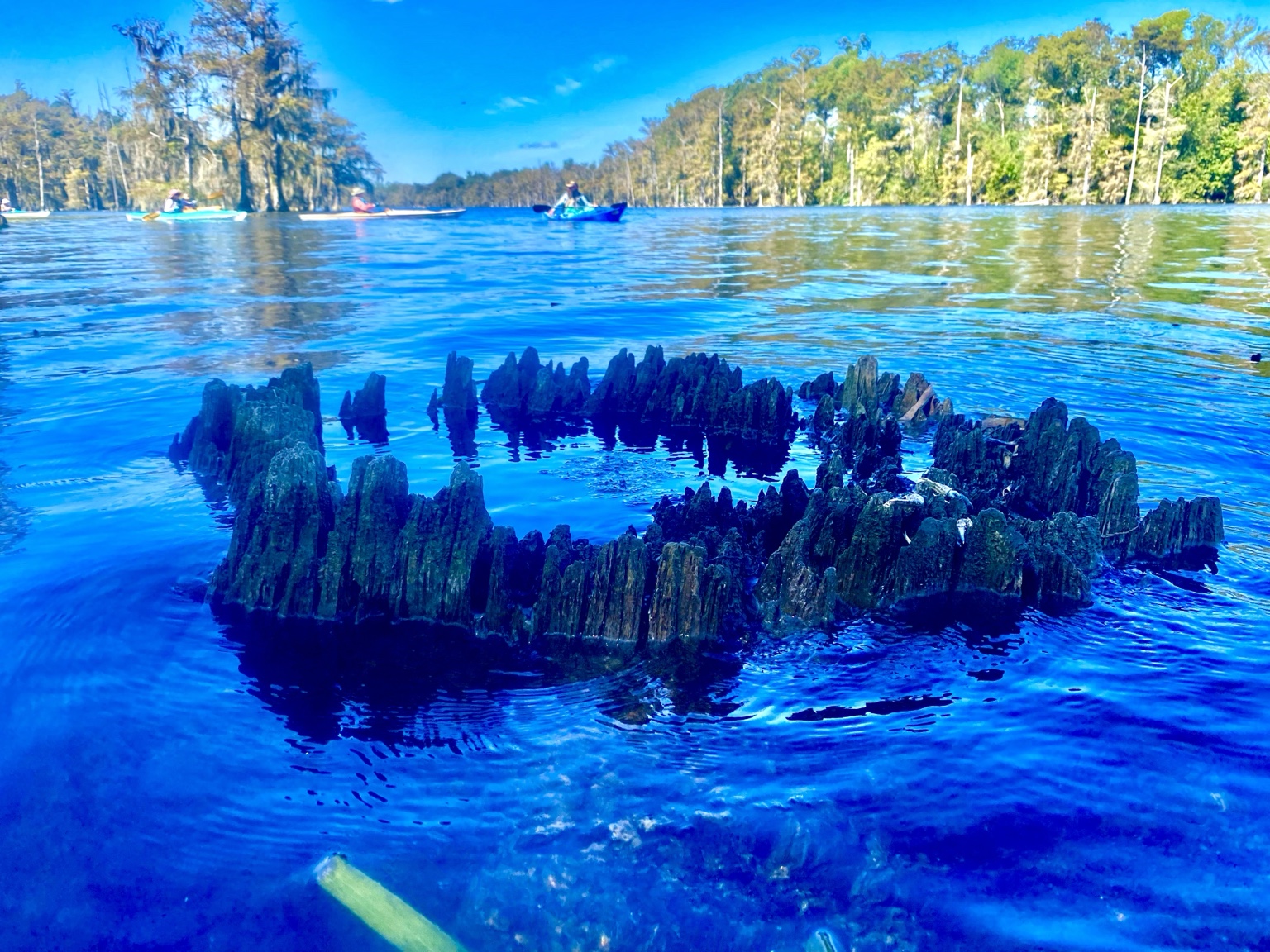
The giant trees were as memorable as the springs. Some stood in clusters; others rose alone from the water like living sculptures. Old stumps and broken trunks hinted at the flooded valley beneath us. The pond was broad enough to feel expansive but intimate enough that the cypress forest was always nearby.

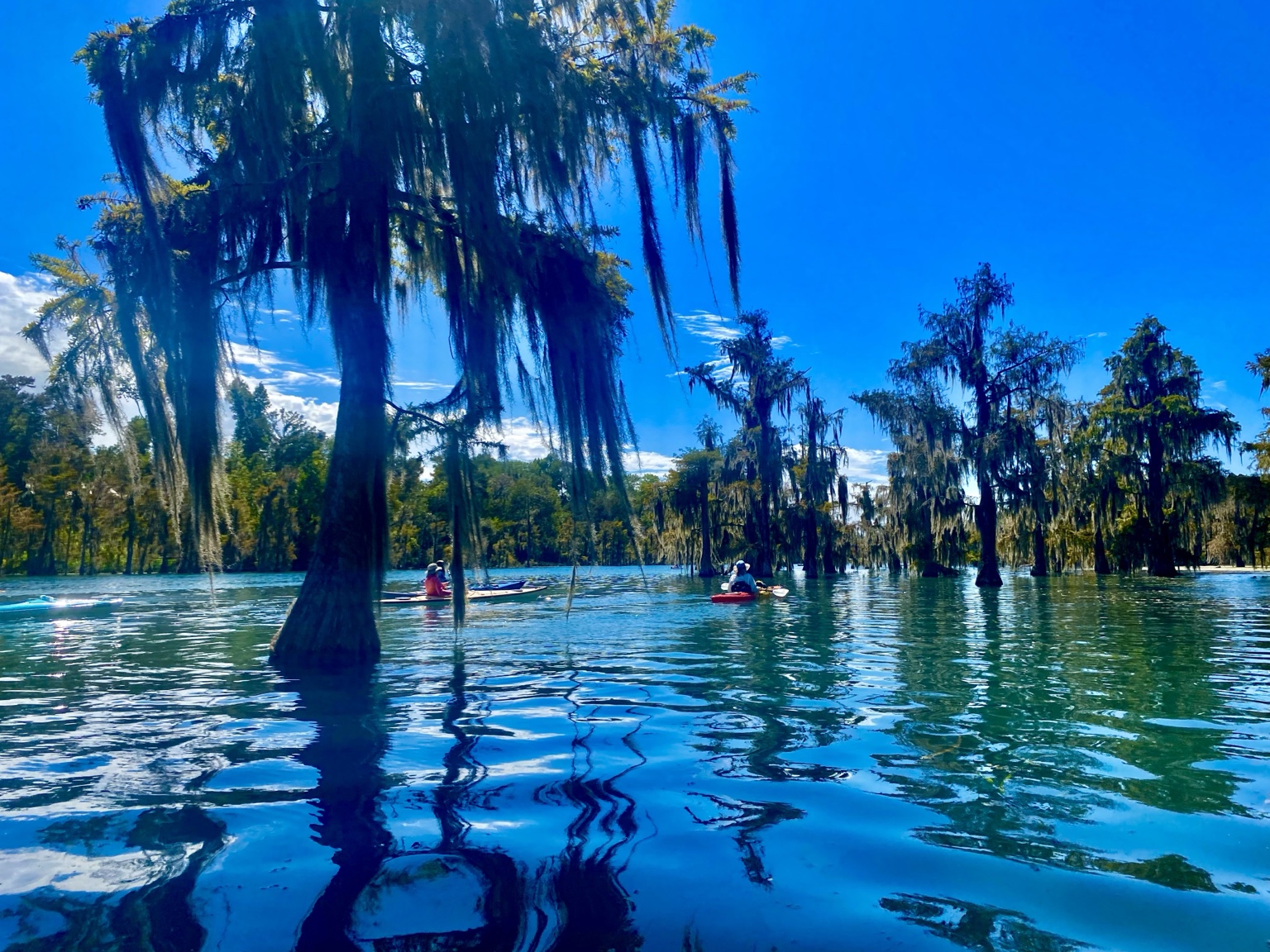
A sweeping view of the flooded cypress forest and scattered paddlers.
Photographs of Merritt’s Mill Pond can look heavily edited, but on a clear, sunny day the water truly is that blue, green, and transparent.
The spring country

Floating above the Floridan Aquifer

Rainwater slowly moves through sand and porous limestone before emerging through openings in the karst landscape. That natural filtration removes much of the suspended sediment that clouds ordinary lakes. The resulting spring water stays relatively stable in temperature and can be startlingly transparent.

Below the peaceful pond are underwater caves known to divers from around the world. Jackson Blue, Twin Caves, Hole-in-the-Wall, and other openings connect the visible landscape to a much larger underground one. Cave diving requires specialized training and should never be attempted casually, but paddlers can safely appreciate the basins and the remarkable water above them.

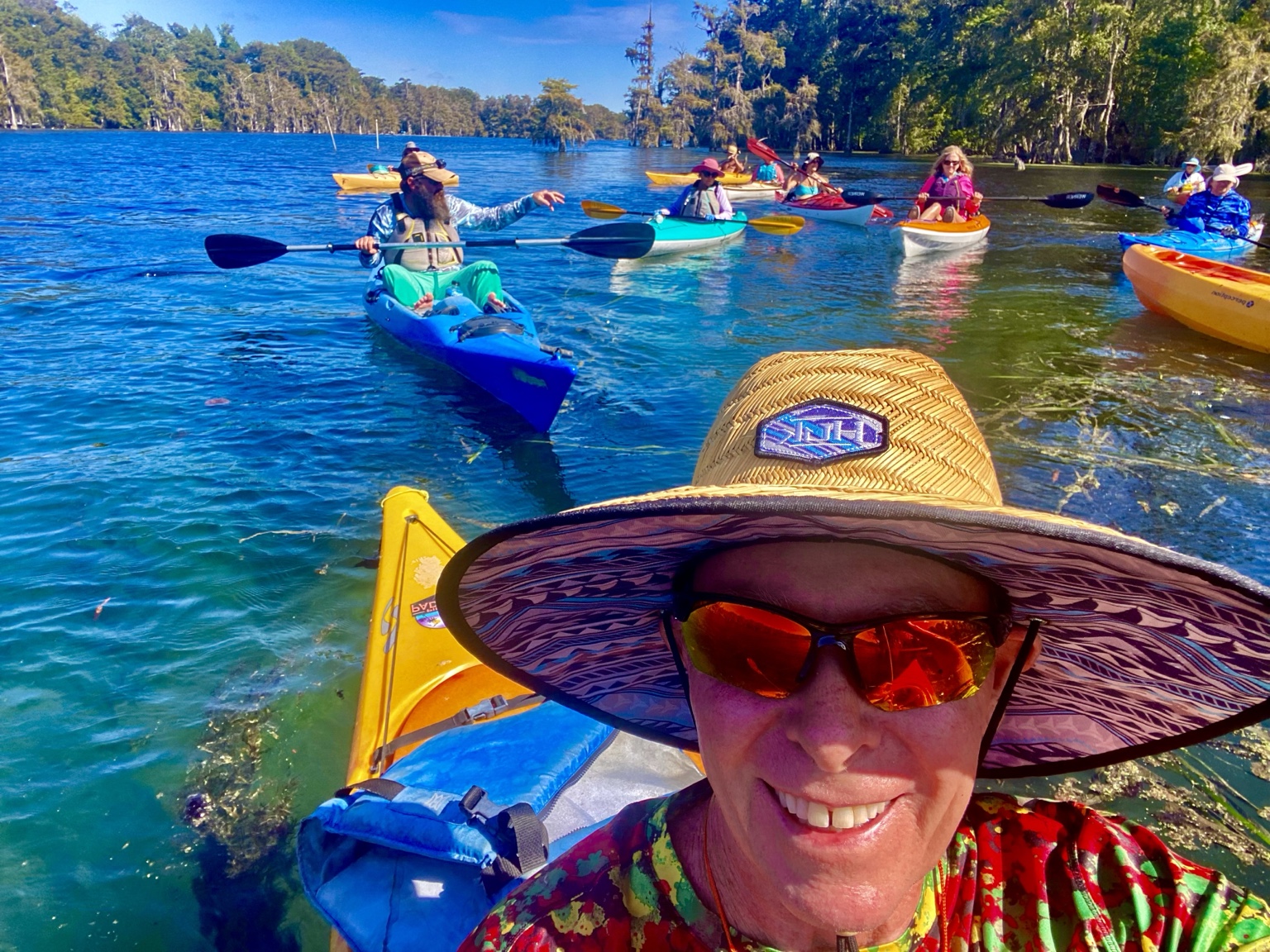
Colorful kayaks drift across astonishingly clear emerald water near one of the springs.
People make the paddle

A colorful flotilla and a generous guide

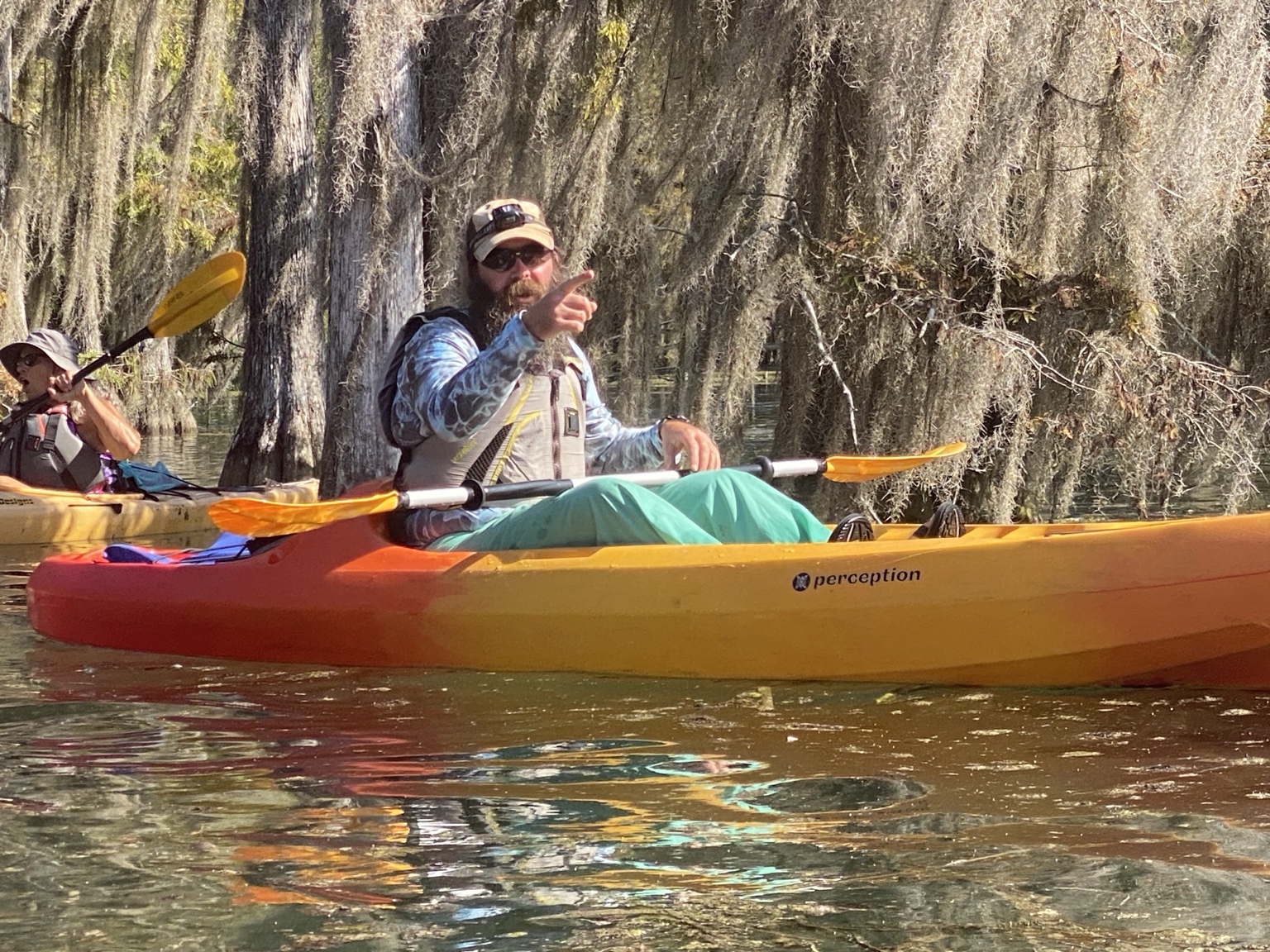
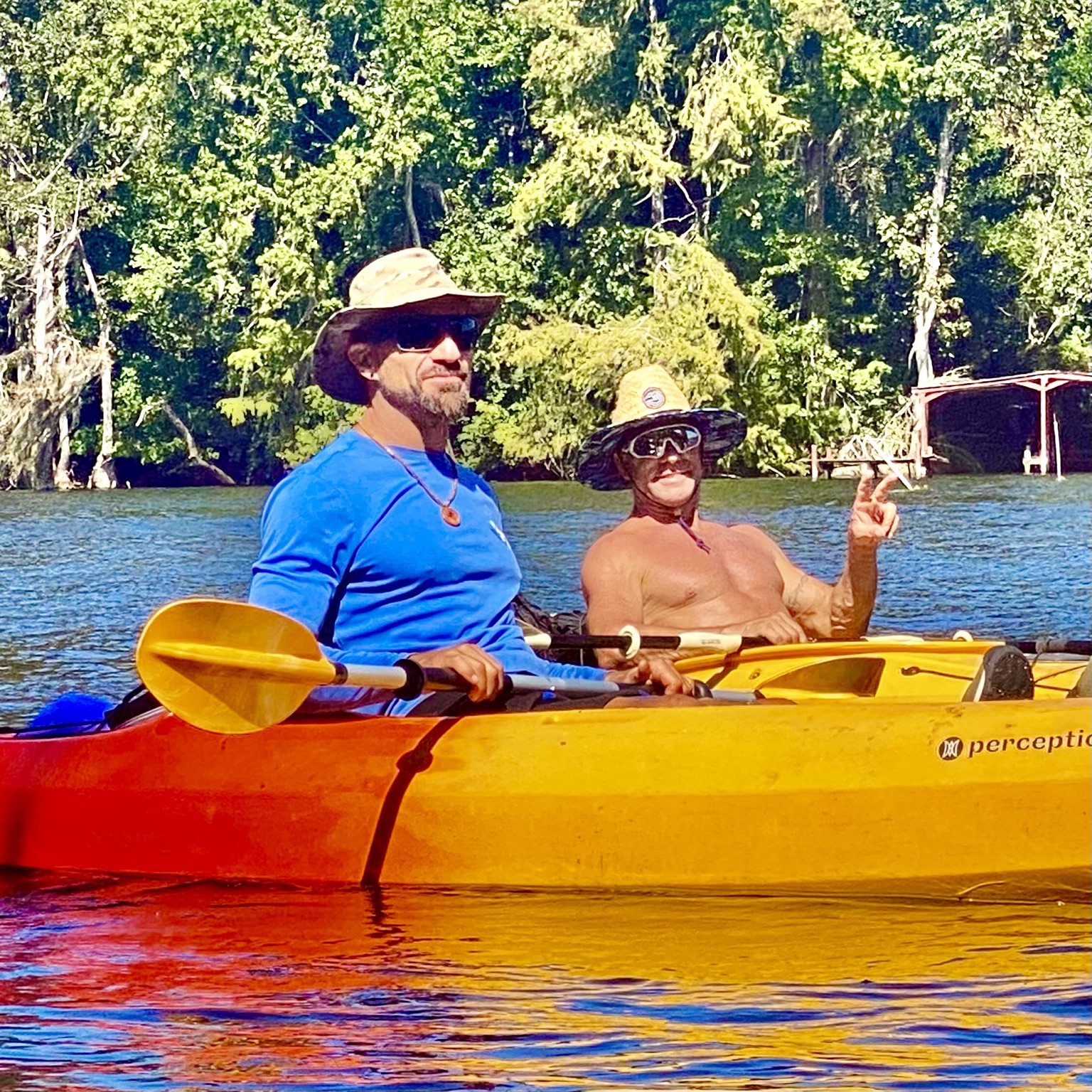
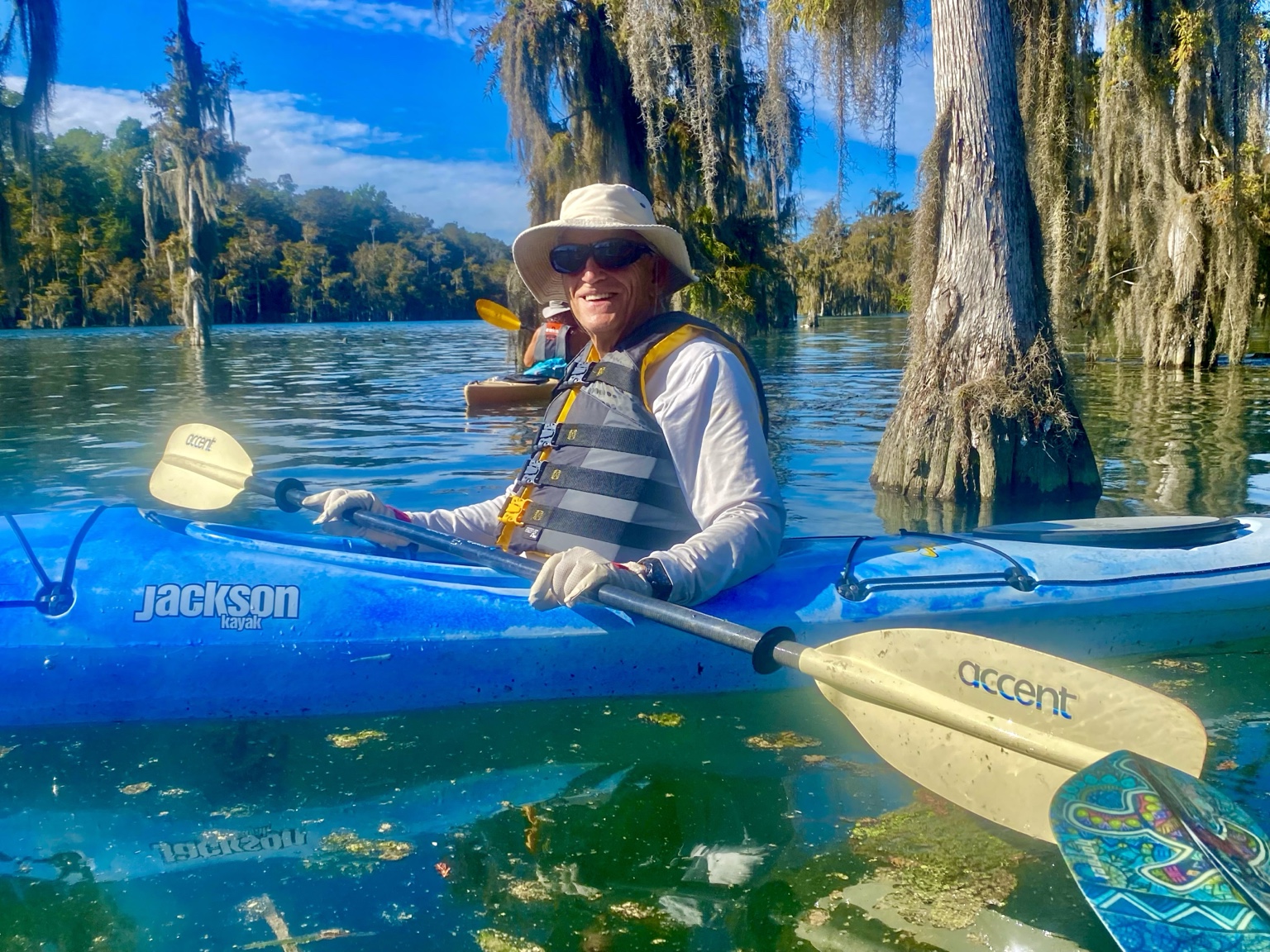
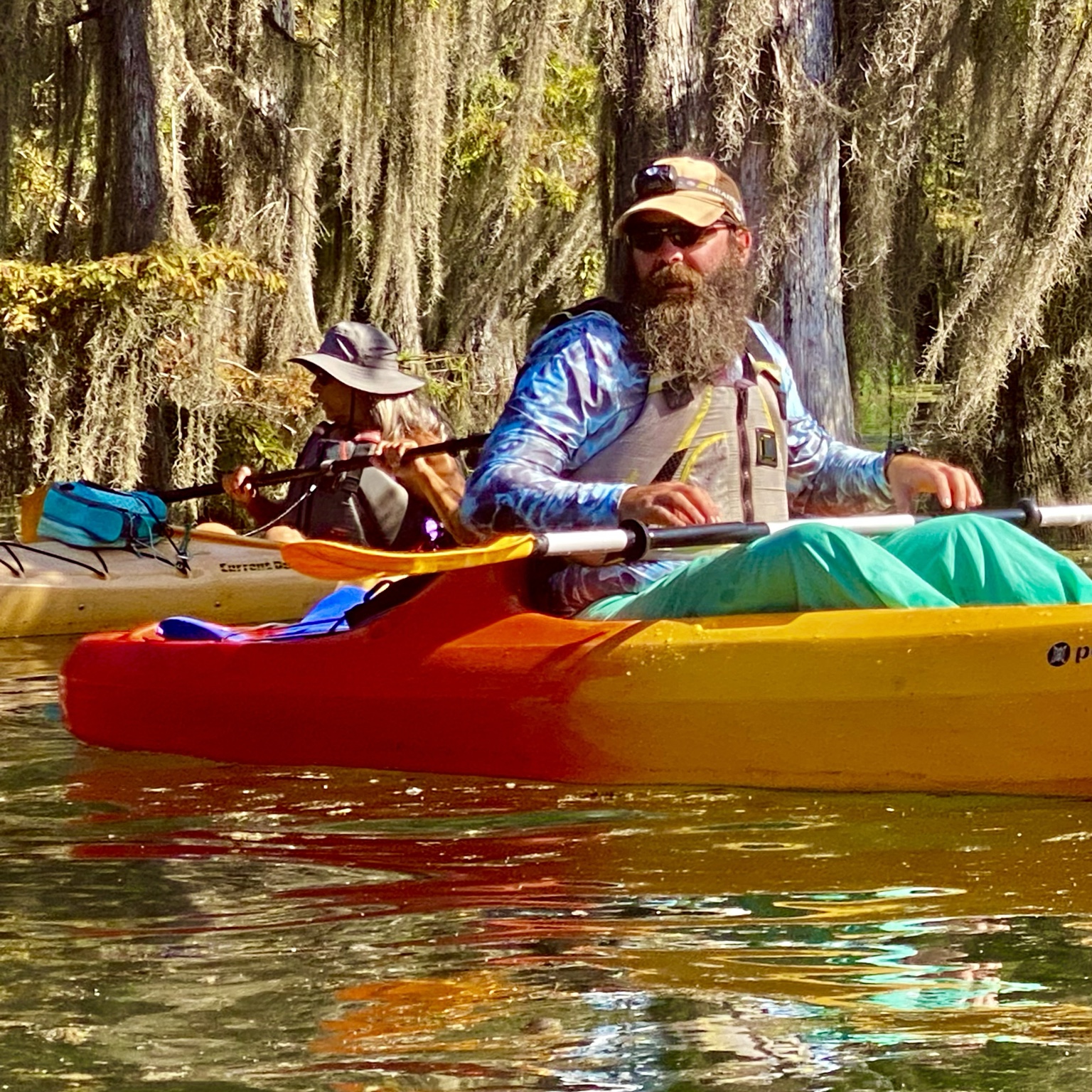
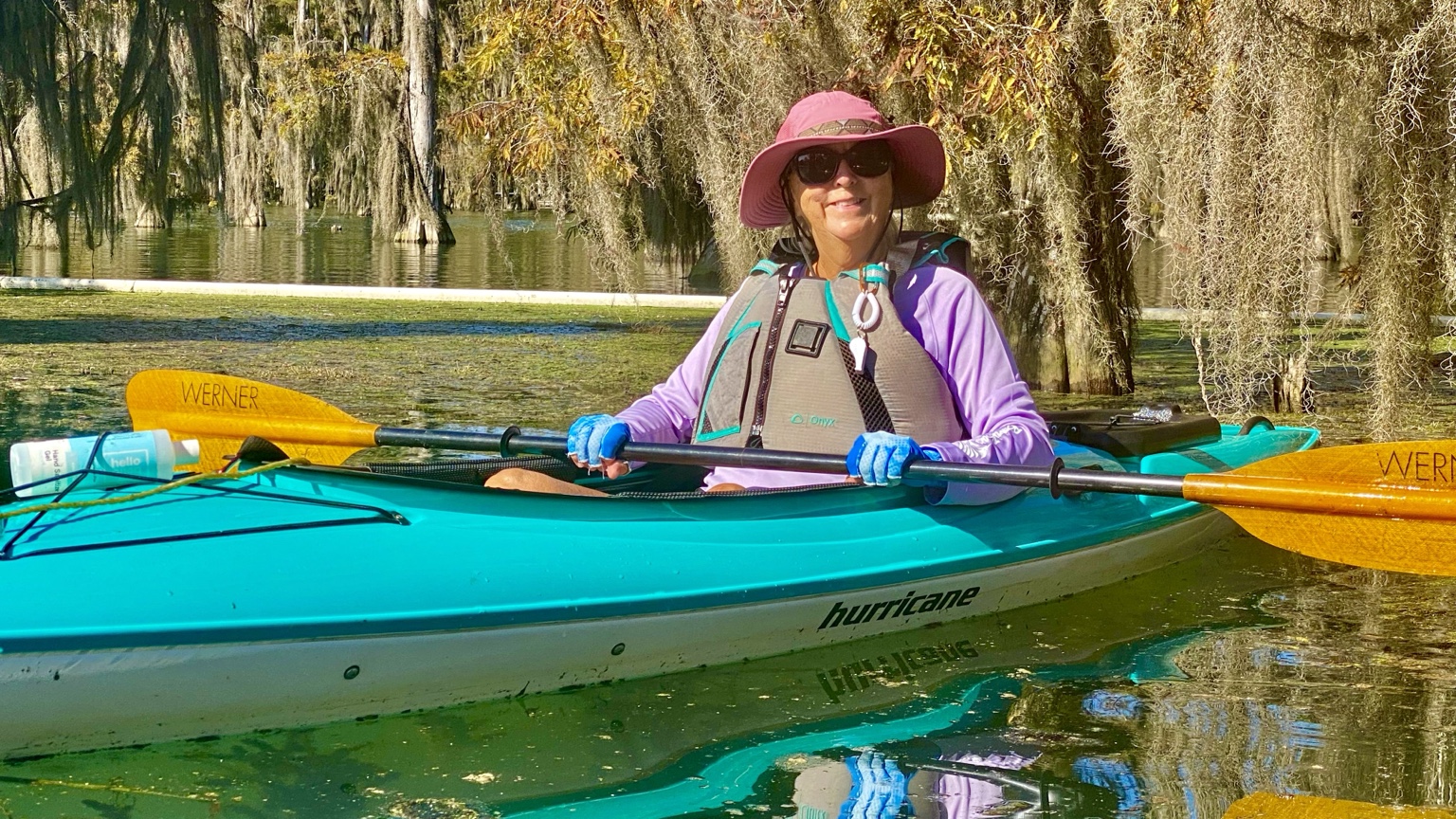
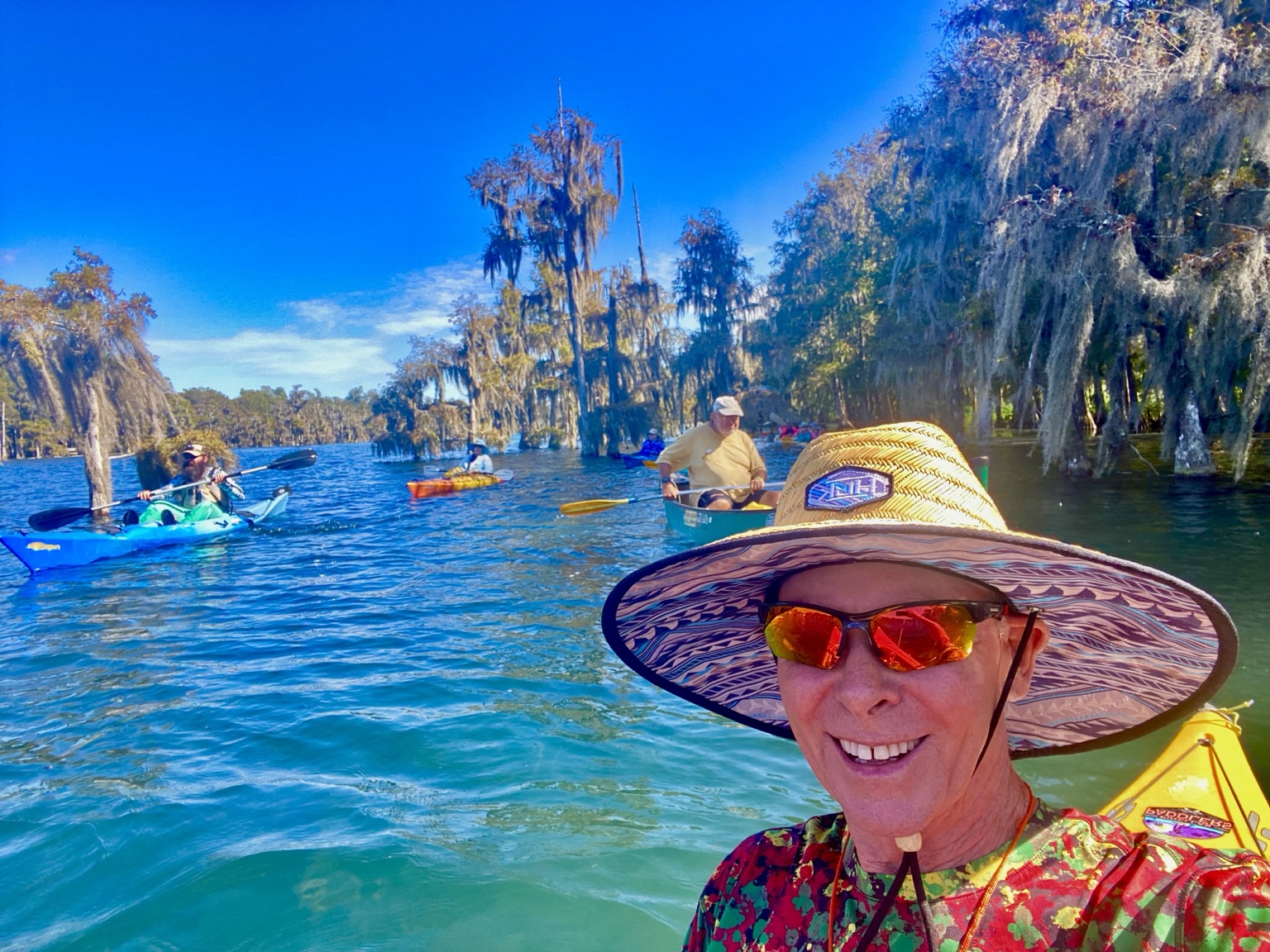
Our boats formed a bright moving procession across the blue water. People stopped to talk, point out springs, pose for photographs, and wait for anyone who wanted more time. Professional river guide Jimi DaBeard was part of the group, sharing his experience and calling attention to features along the way.

That generosity is central to RockADock. Experienced paddlers lead others because they want to share places they love. There is no formal daily tour schedule that everyone must follow. Groups form from conversations—often around the campfire the night before—and people work out launch times, carpools, boats, routes, and skill levels together.

Professional river guide Jimi DaBeard points out a feature while the group pauses among the trees.
Natural history

Small wonders among the giant cypress

Bald cypress

Buttressed bases help support these flood-tolerant trees. Their knees may aid stability, gas exchange, or both, though their exact function is still debated.

Spanish moss

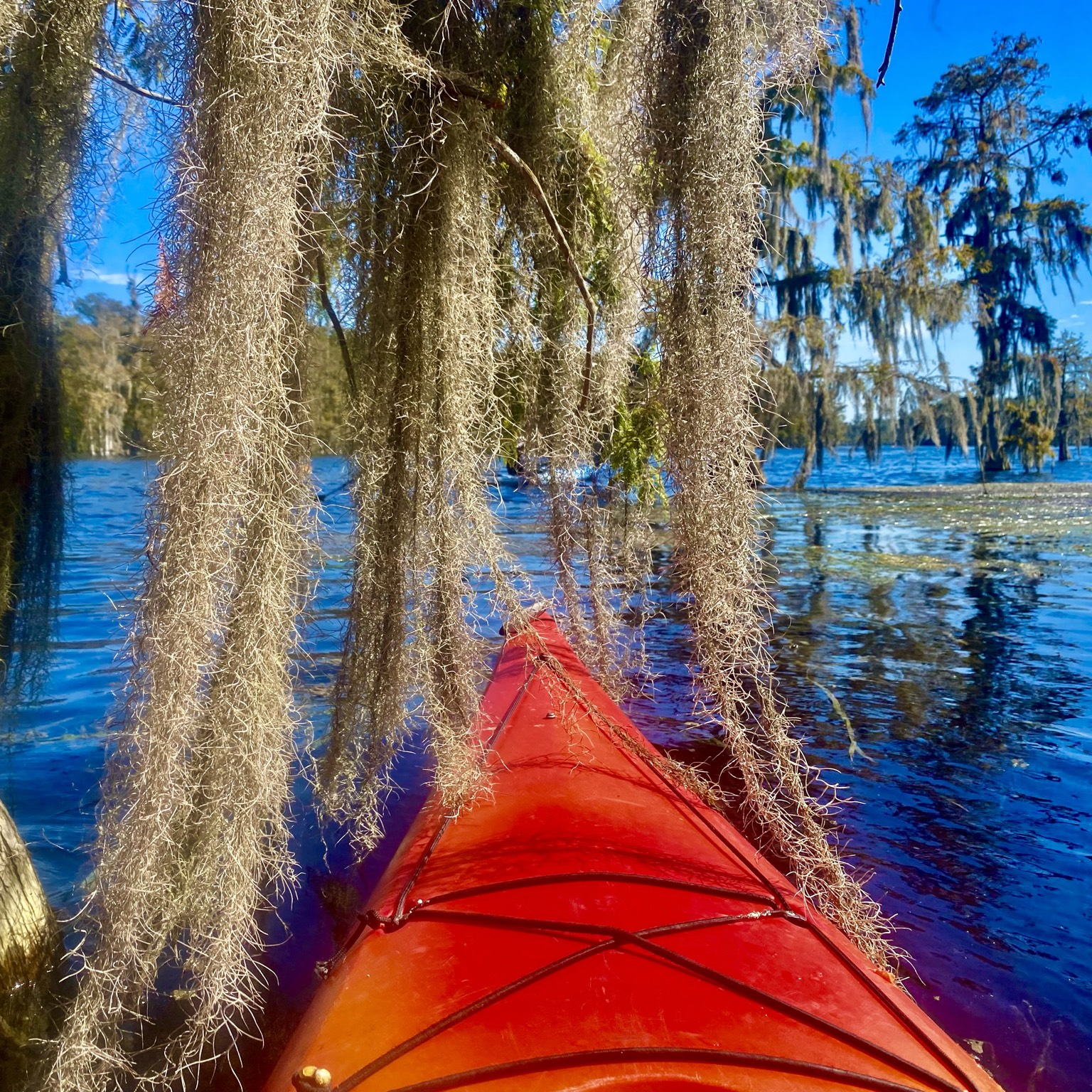
It is not a moss and does not parasitize the trees. It is a flowering bromeliad related to pineapples that absorbs moisture and nutrients from air and rain.

Apple snails

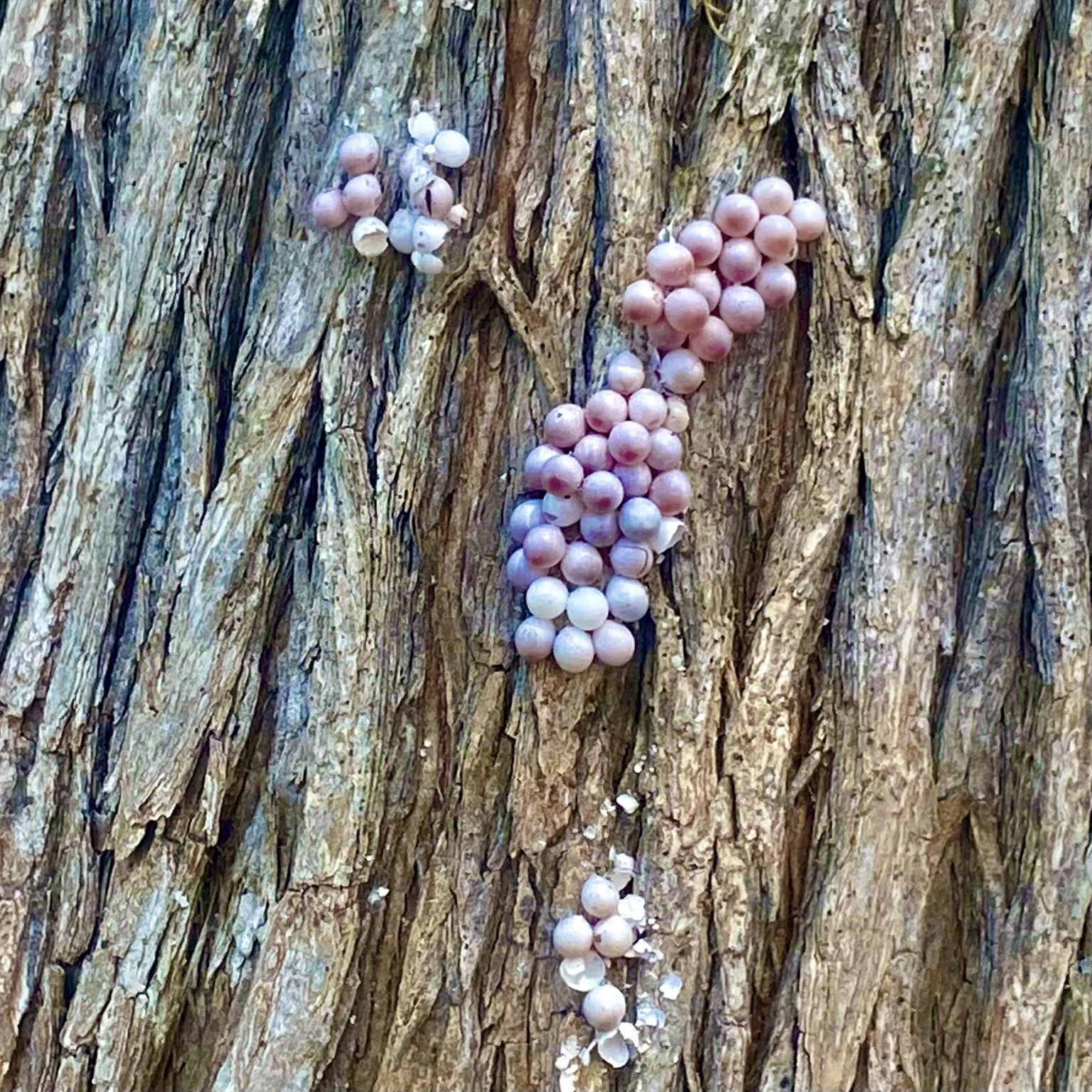
The conspicuous pink egg clusters are laid above the waterline. Some Florida apple snails are invasive and can alter aquatic vegetation and food webs.

Fishing

The pond is famous for redear sunfish, or shellcracker, and also supports largemouth bass. Its clear water can make fish especially cautious.

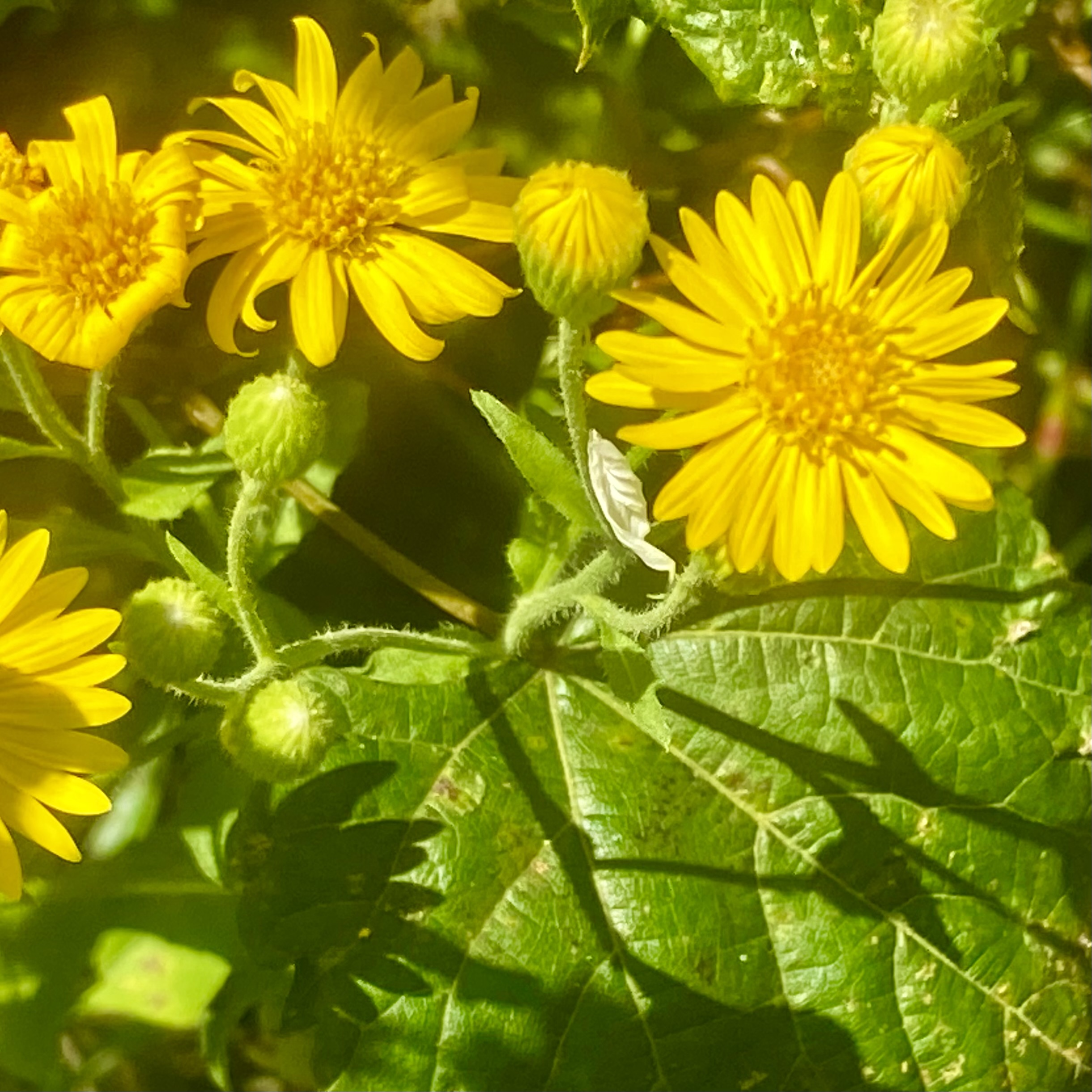
Even with scenery this large, the day rewarded close attention. Pink snail eggs stood out against rough cypress bark. Yellow flowers brightened the shoreline. Sunlight revealed submerged vegetation, ripples, and fragments of old wood beneath us. Merritt’s Mill Pond is spectacular at landscape scale, but it is equally rich when examined a few inches at a time.

Bright pink apple-snail egg masses attached above the waterline on cypress bark.
The changing light

Blue at midday, gold by evening

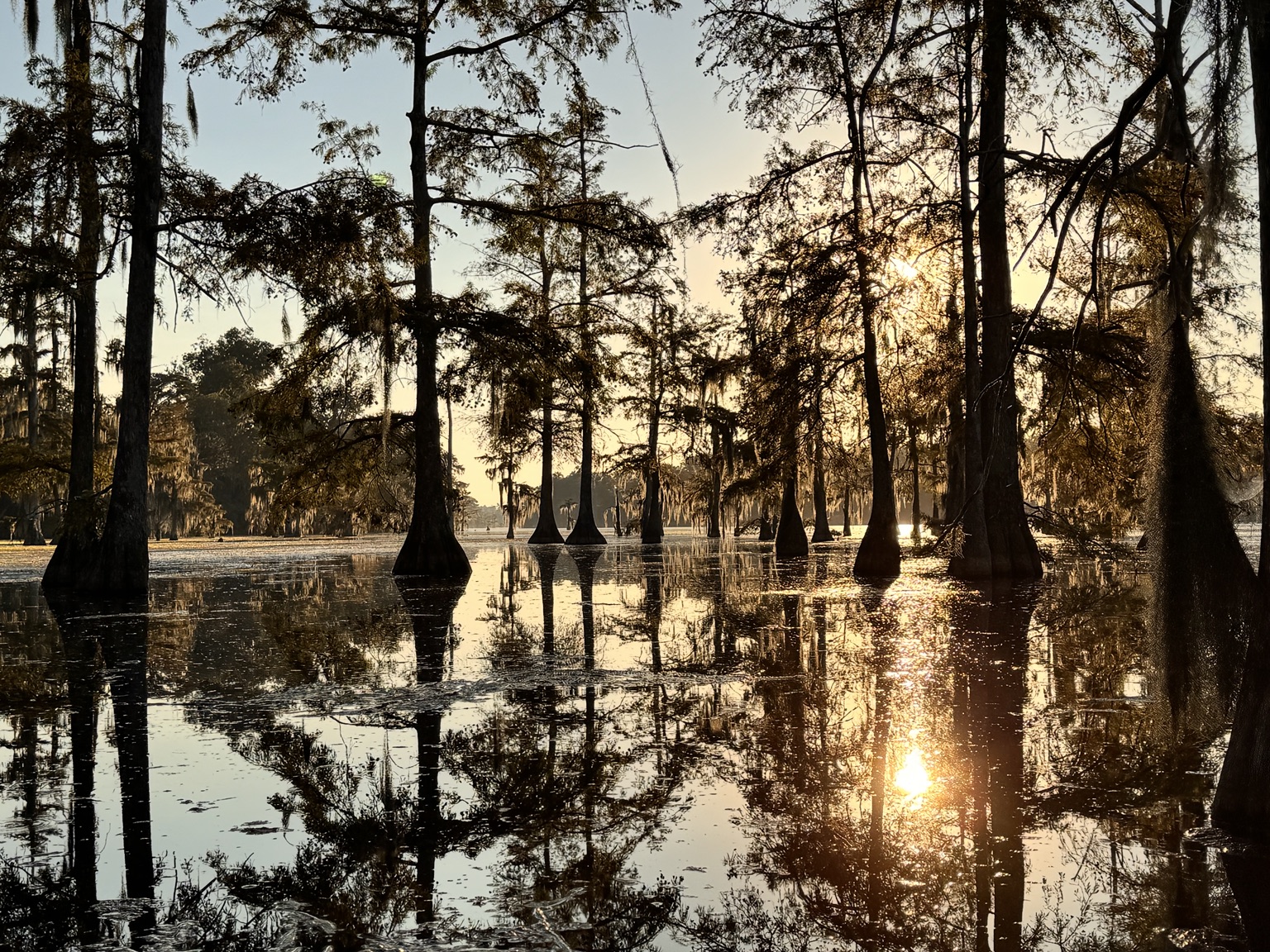
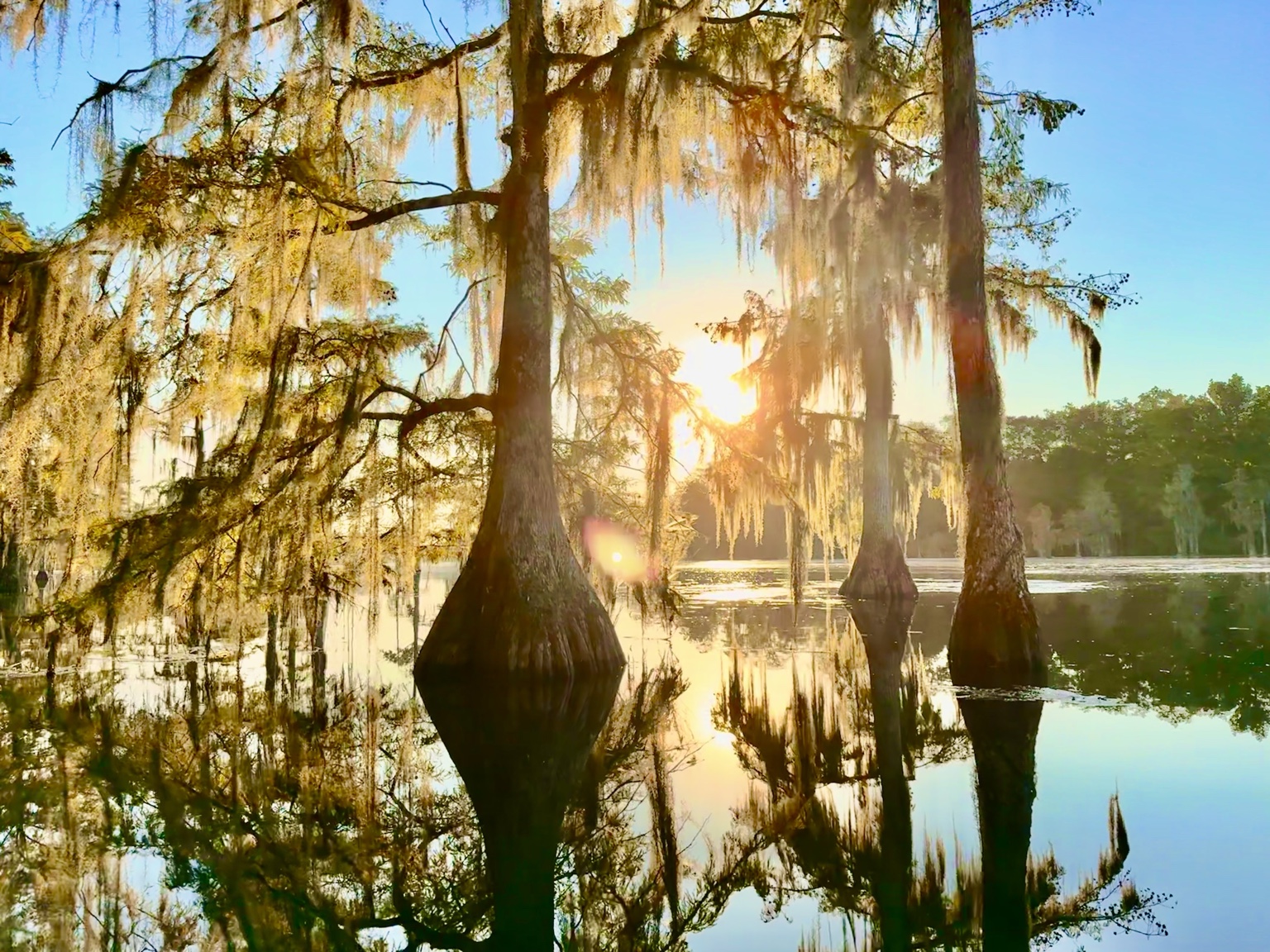
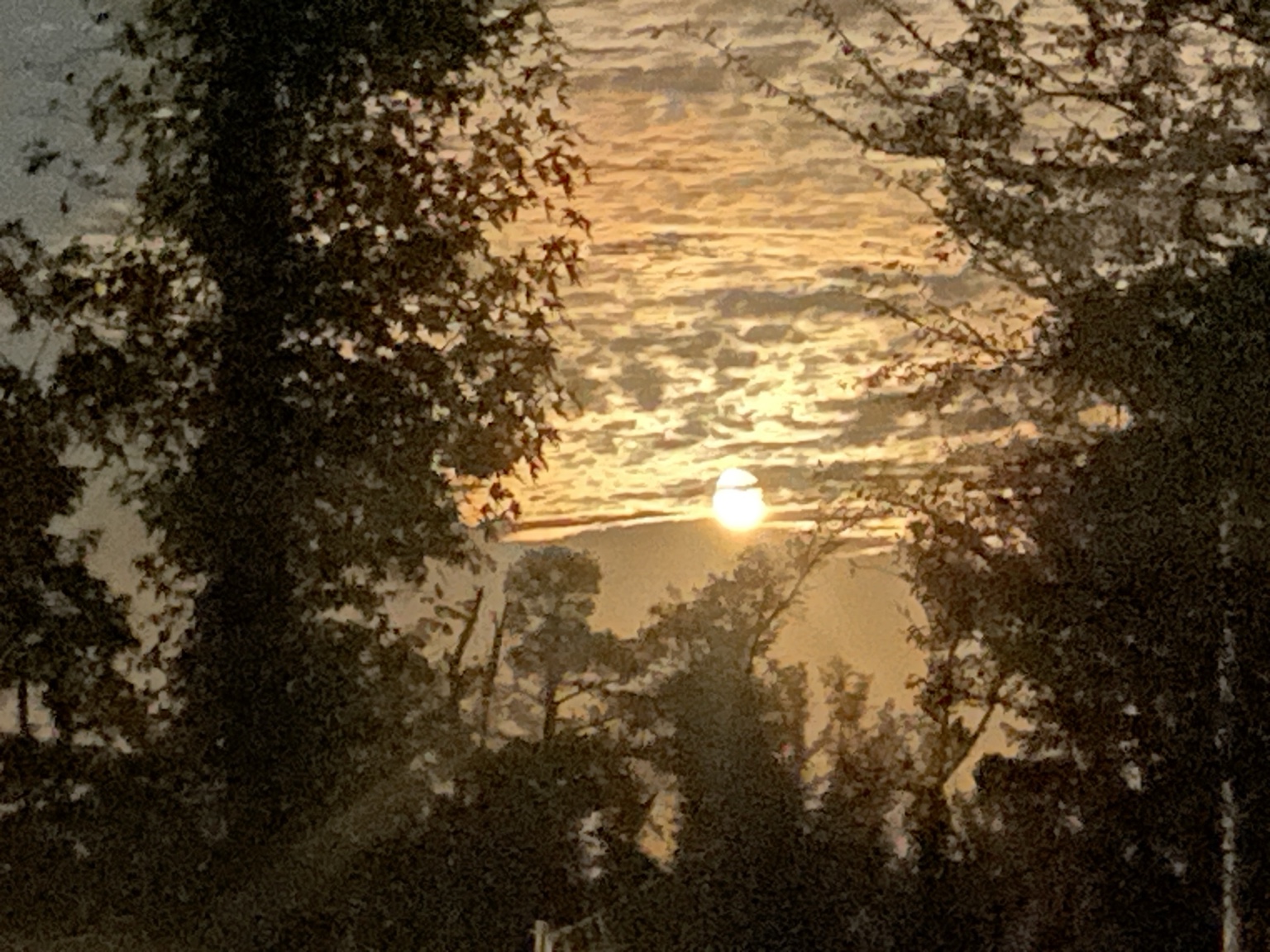
The pond transformed as the sun dropped. Midday produced saturated blues and greens; late light turned the Spanish moss gold and doubled the cypress forest in reflections. The landscape became quieter and more mysterious without changing location at all.

Late-afternoon sunlight glows through bald cypress and Spanish moss, with every trunk reflected in the still water.
Golden sunlight streams through Spanish moss and cypress trees along Merritt’s Mill Pond.
More than a paddling trip

What RockADock had become by 2023

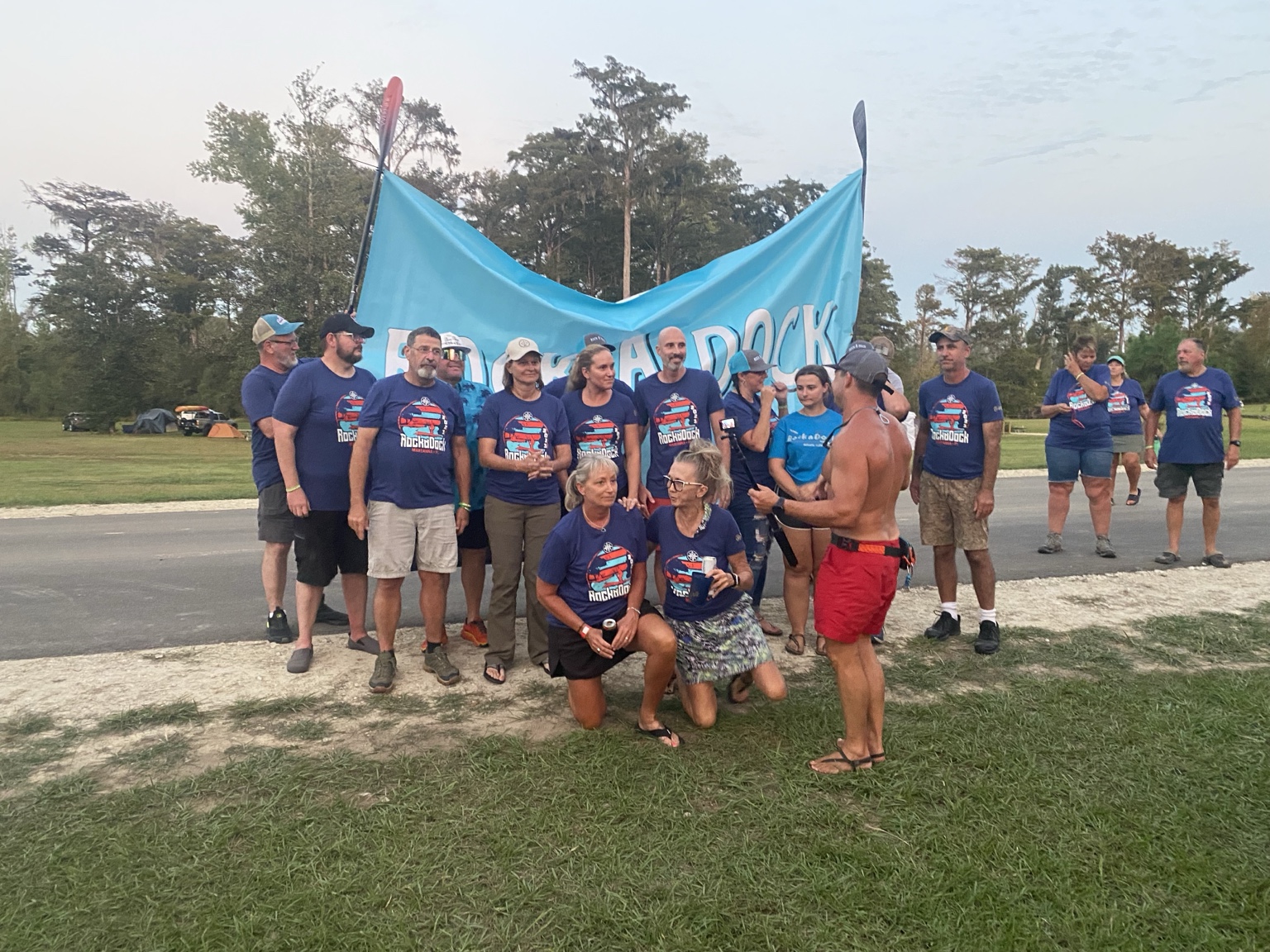
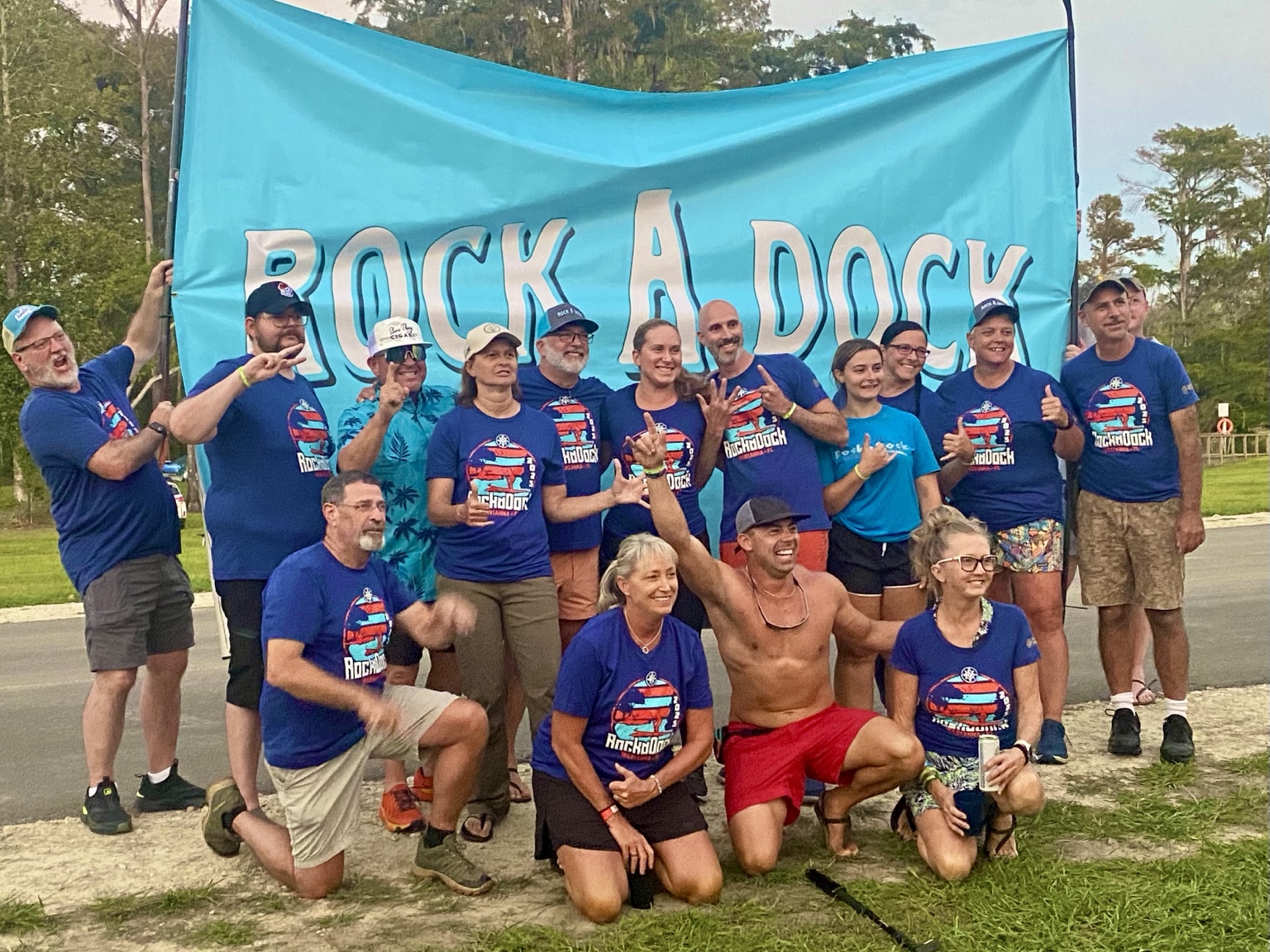
RockADock began with roughly thirty friends who wanted to camp together and paddle the rivers and springs of the Florida Panhandle. By the 2023 gathering—about the twelfth annual event—it had grown to several hundred people. Around twenty original members had reportedly attended every gathering from the beginning.
Most participants camped together for roughly a week, while a few stayed in nearby rentals. People came from across the East Coast, from as far away as Colorado, and sometimes from other countries. Some paddles were only thirty minutes from camp; others required an hour and a half or two hours of driving. A few people arrived early or stayed afterward for additional paddling, but Saturday was the final official night.

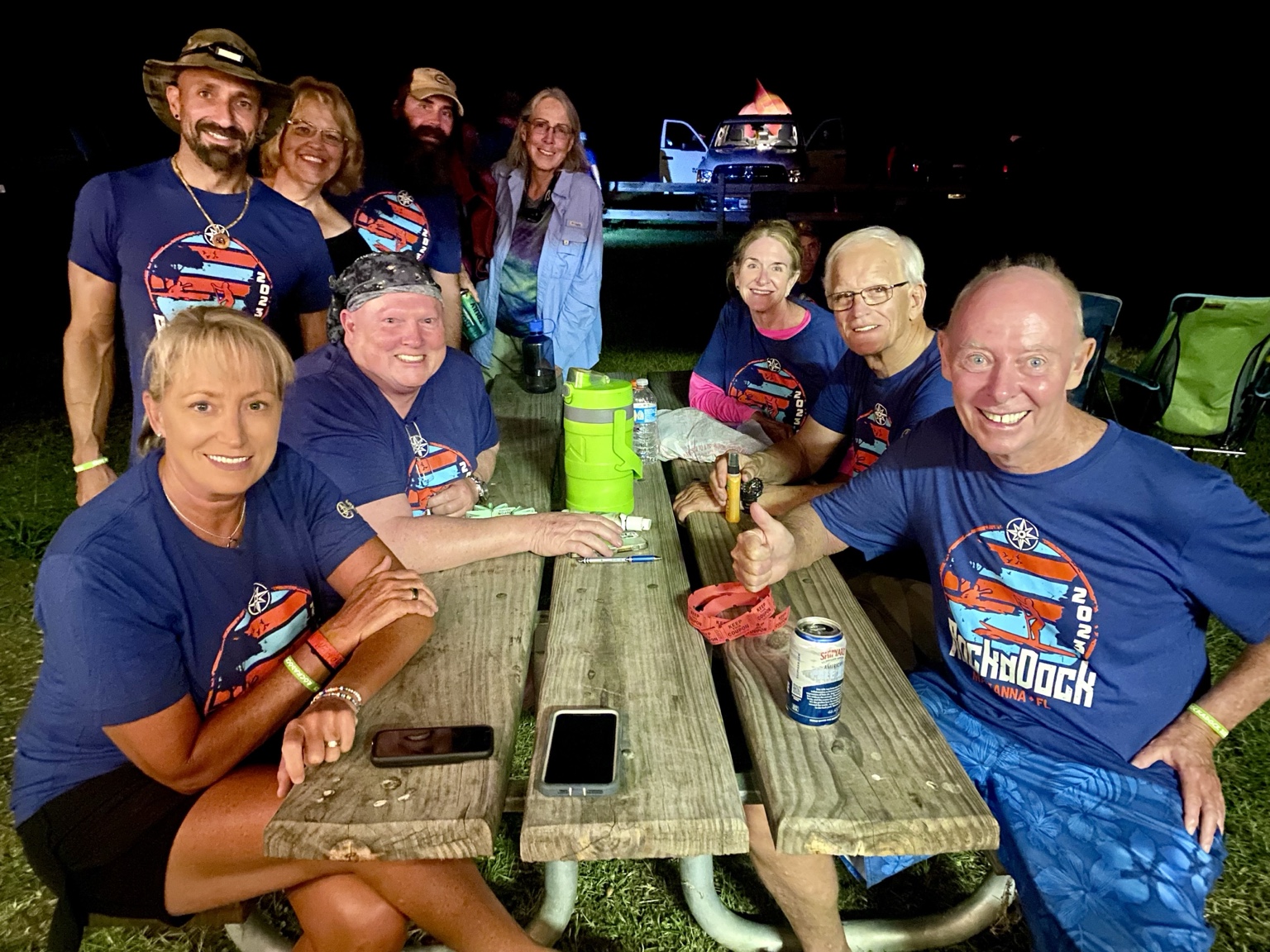
The real organizing system was friendship. Around the campfire, people talked about the next day, compared routes and weather, formed groups, offered seats and spare boats, and volunteered to lead. The result was not just a series of outings but a community in which lifetime friendships formed year after year.

Saturday night finale

Trip Smith, music, food, raffle, auction, and firelight

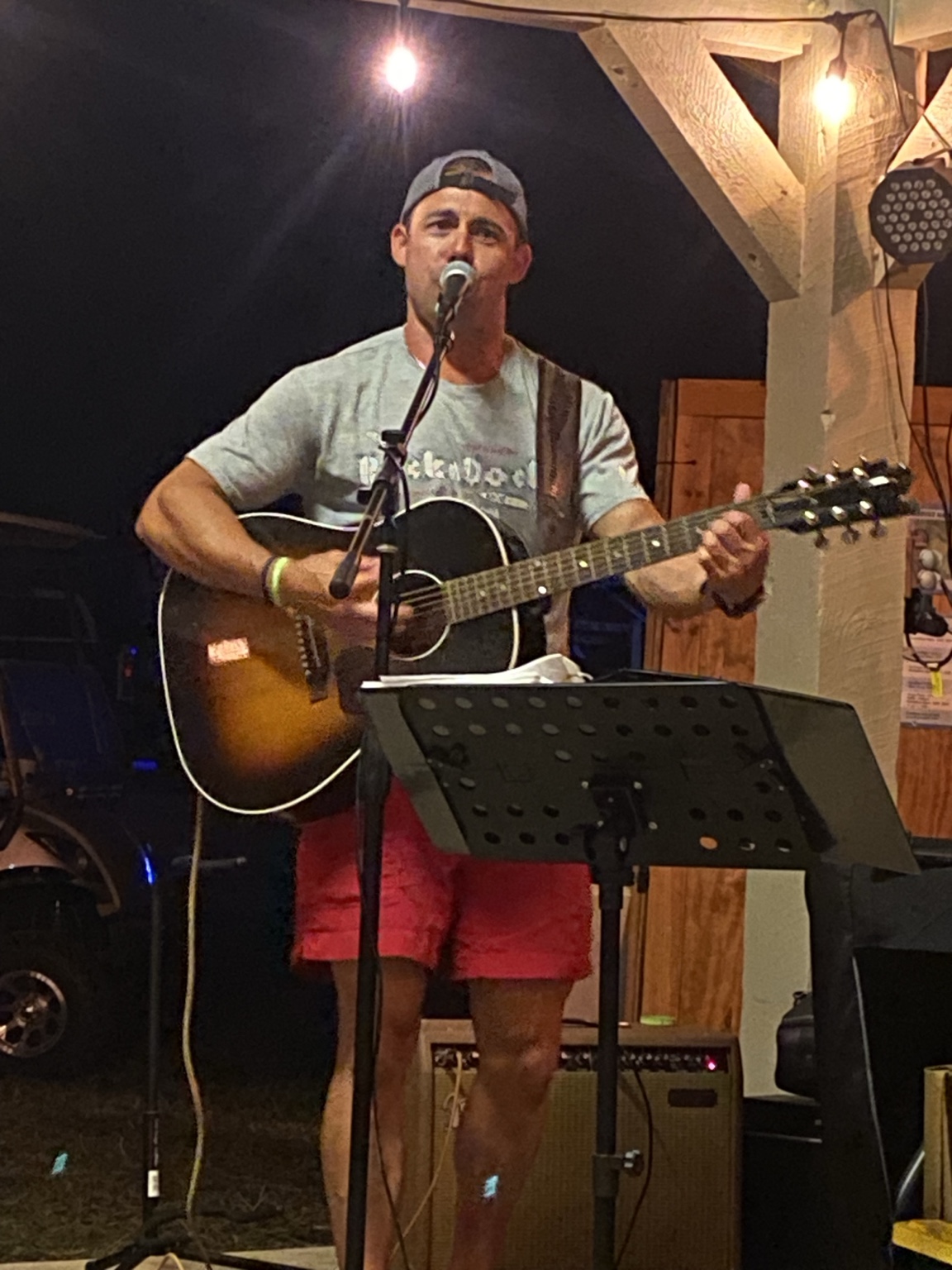
This was the final official night of RockADock 2023, and Saturday night followed the tradition that regulars look forward to all week. Trip Smith—T-R-I-P S-M-I-T-H—graciously hosts RockADock each year from the goodness of his heart. He creates the setting, brings people together, and then caps the gathering with music.

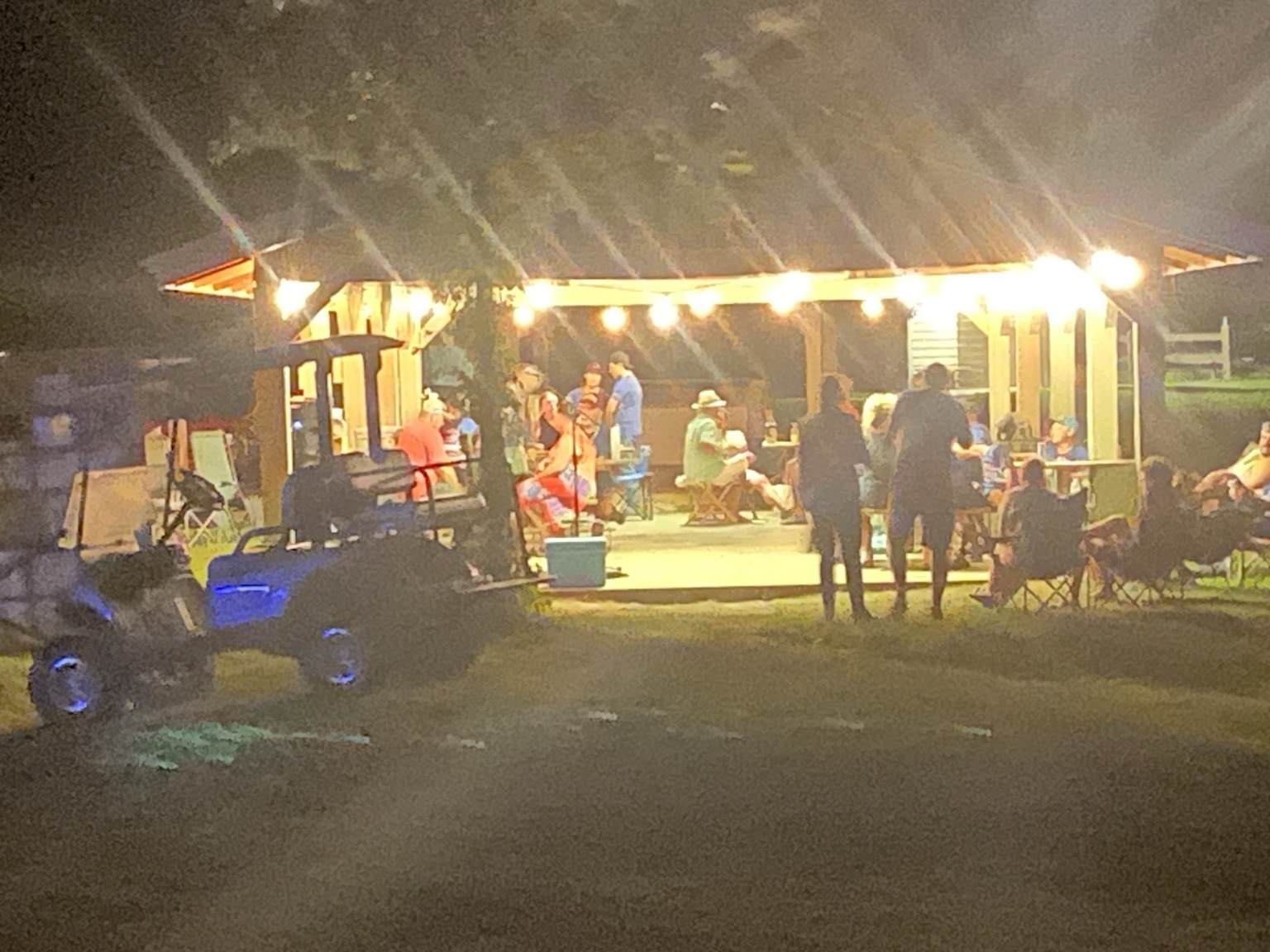
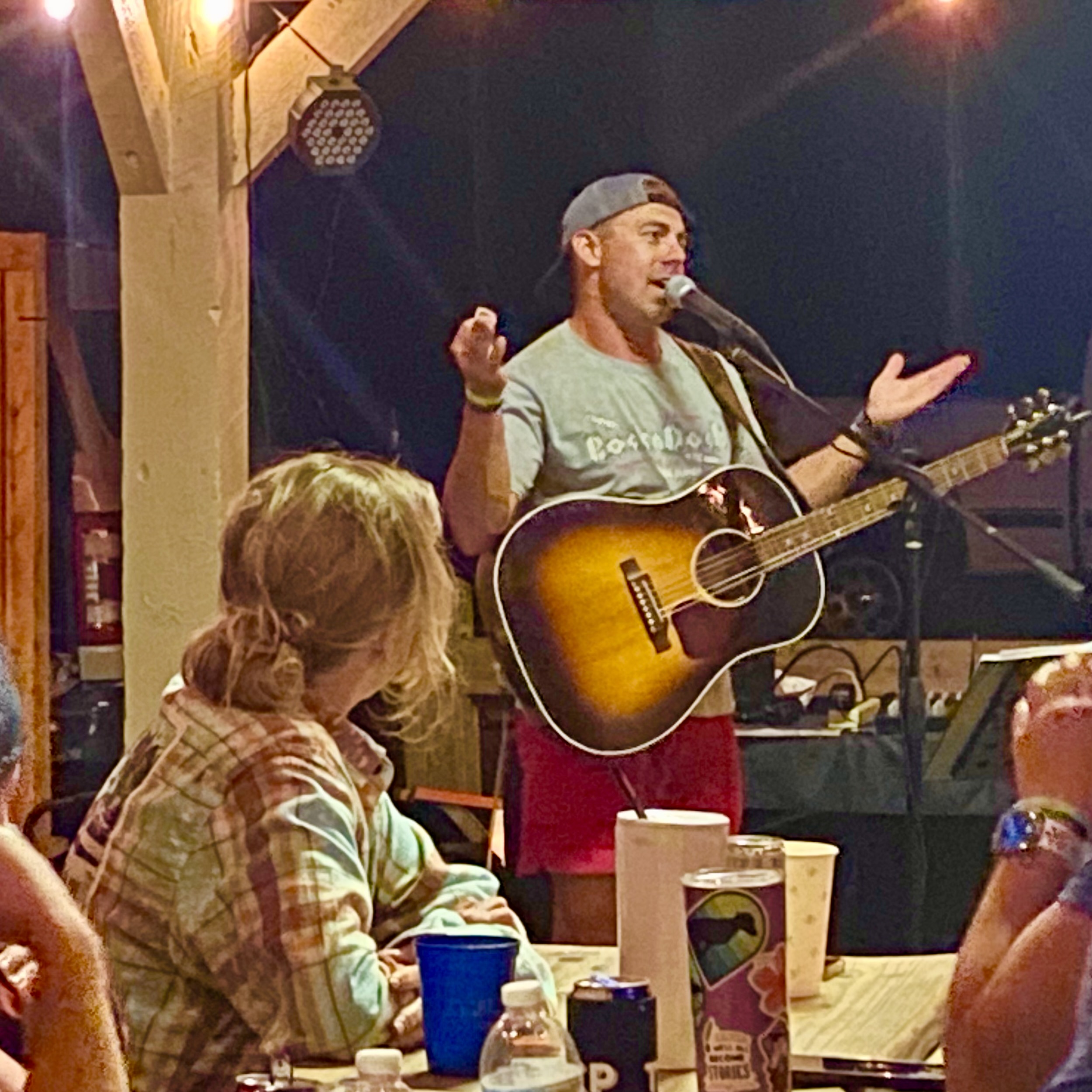
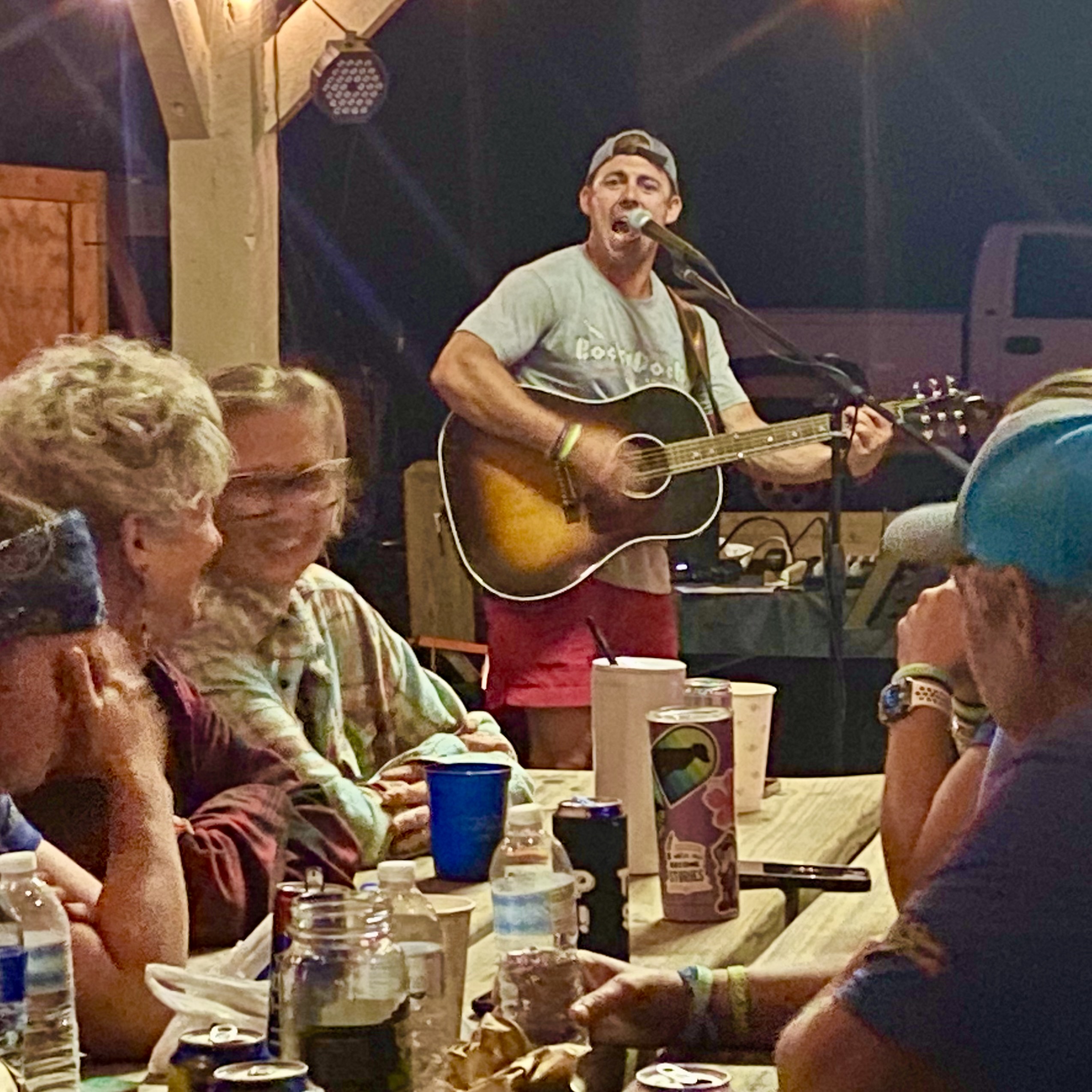
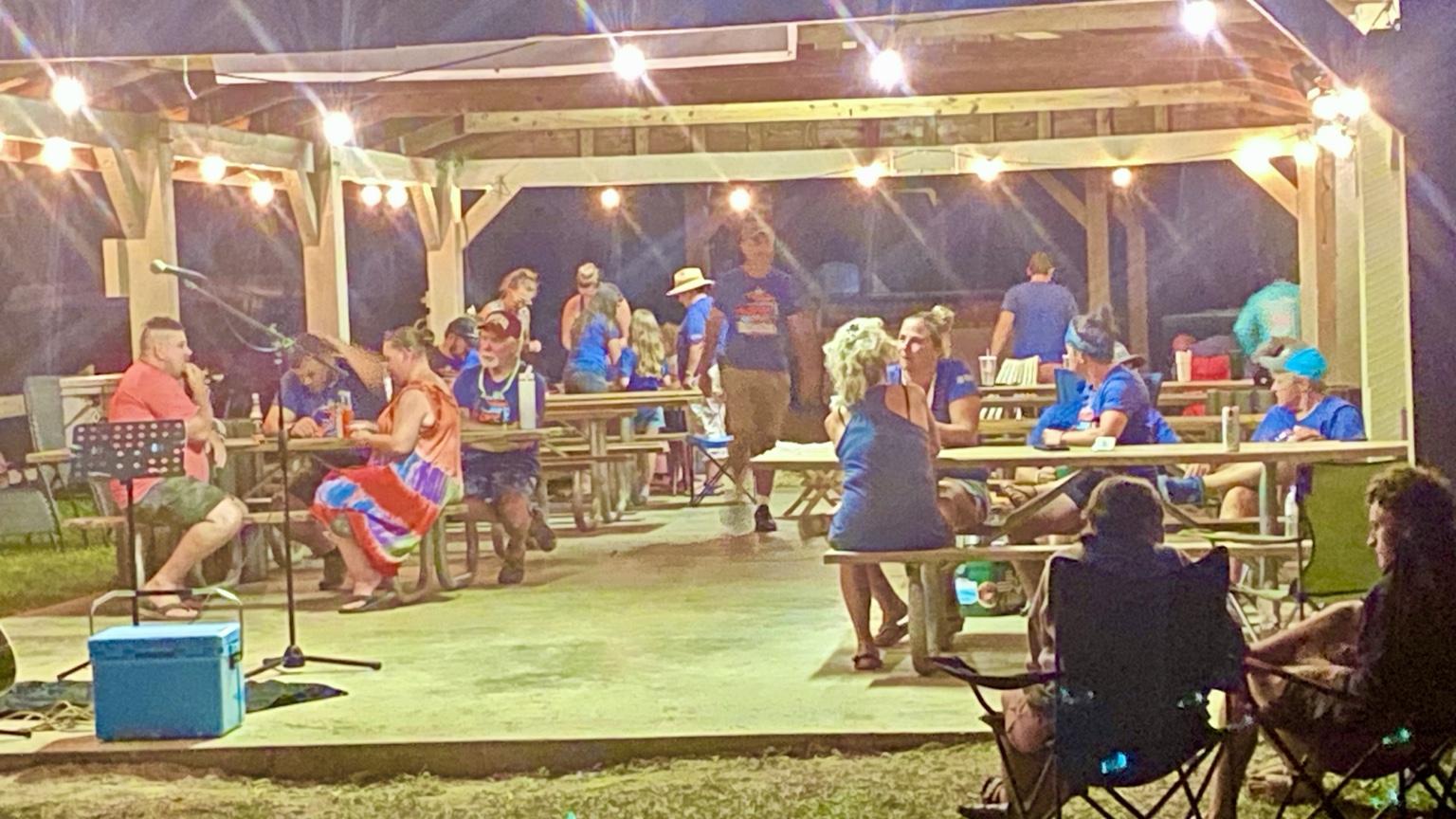
Trip played a great set beneath the pavilion lights while people ate, visited, and settled in after the day’s paddles. The final-night celebration also included the annual raffle and auction, part fundraiser and part comedy, with the entire community participating.

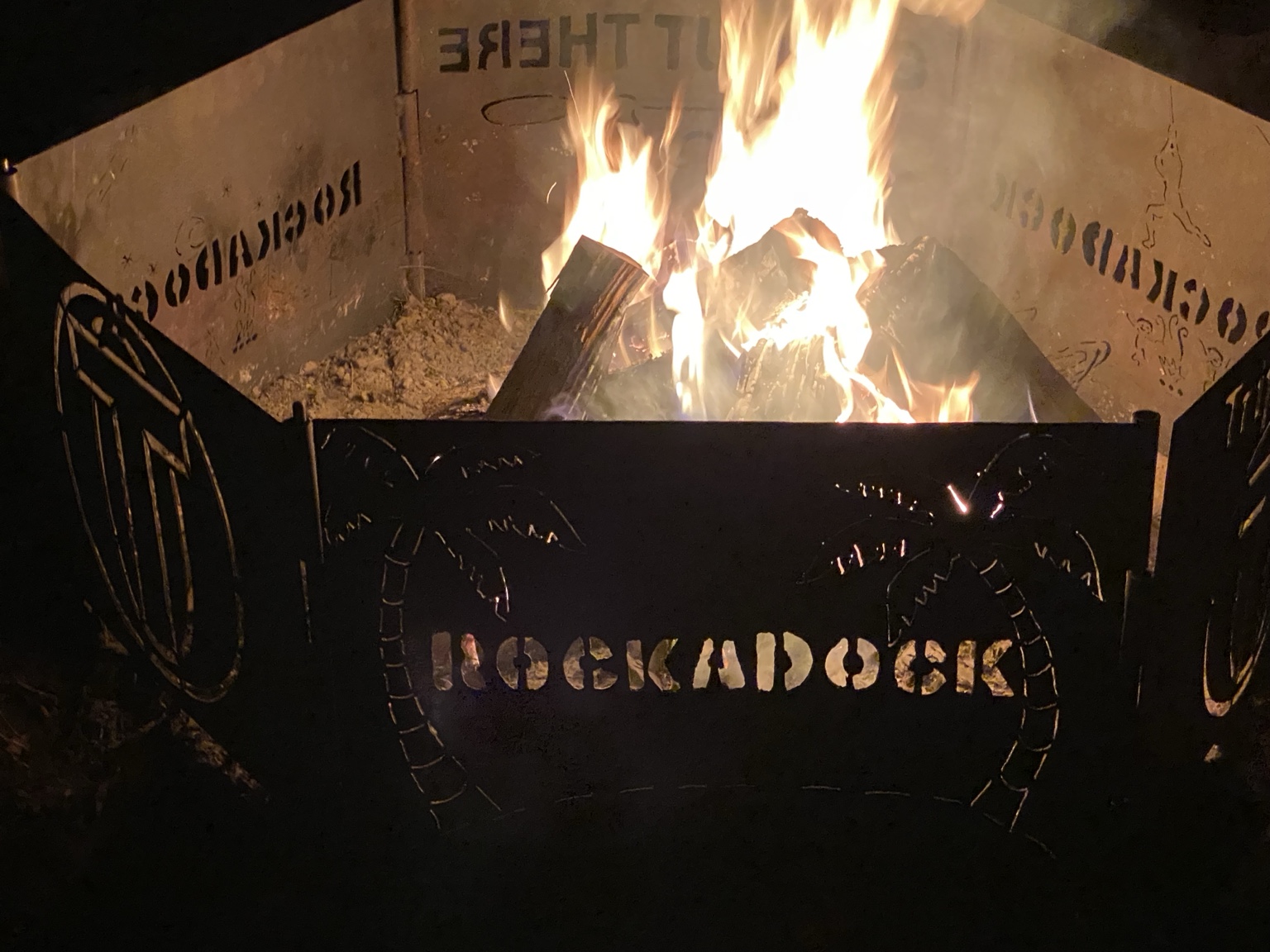
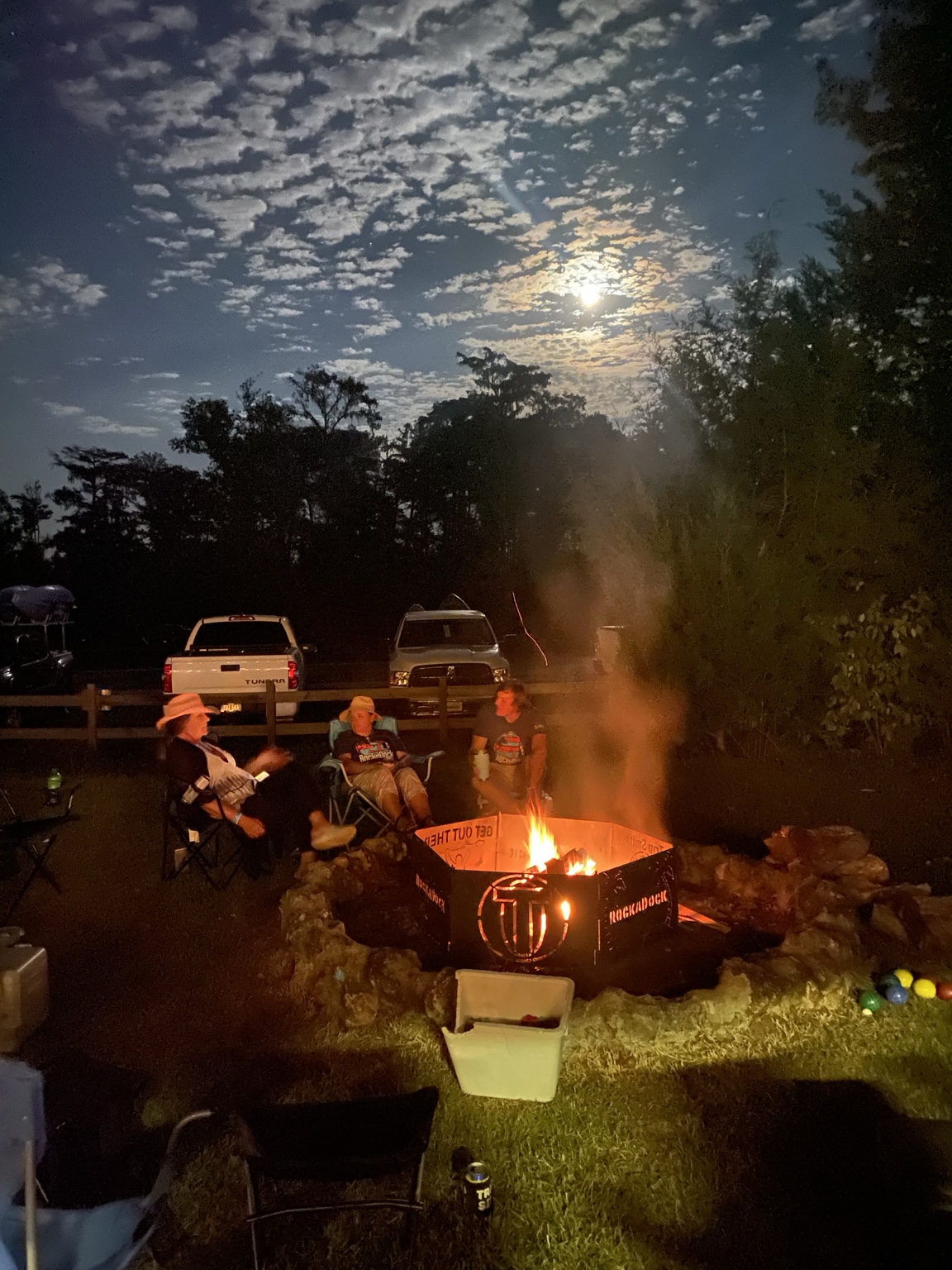
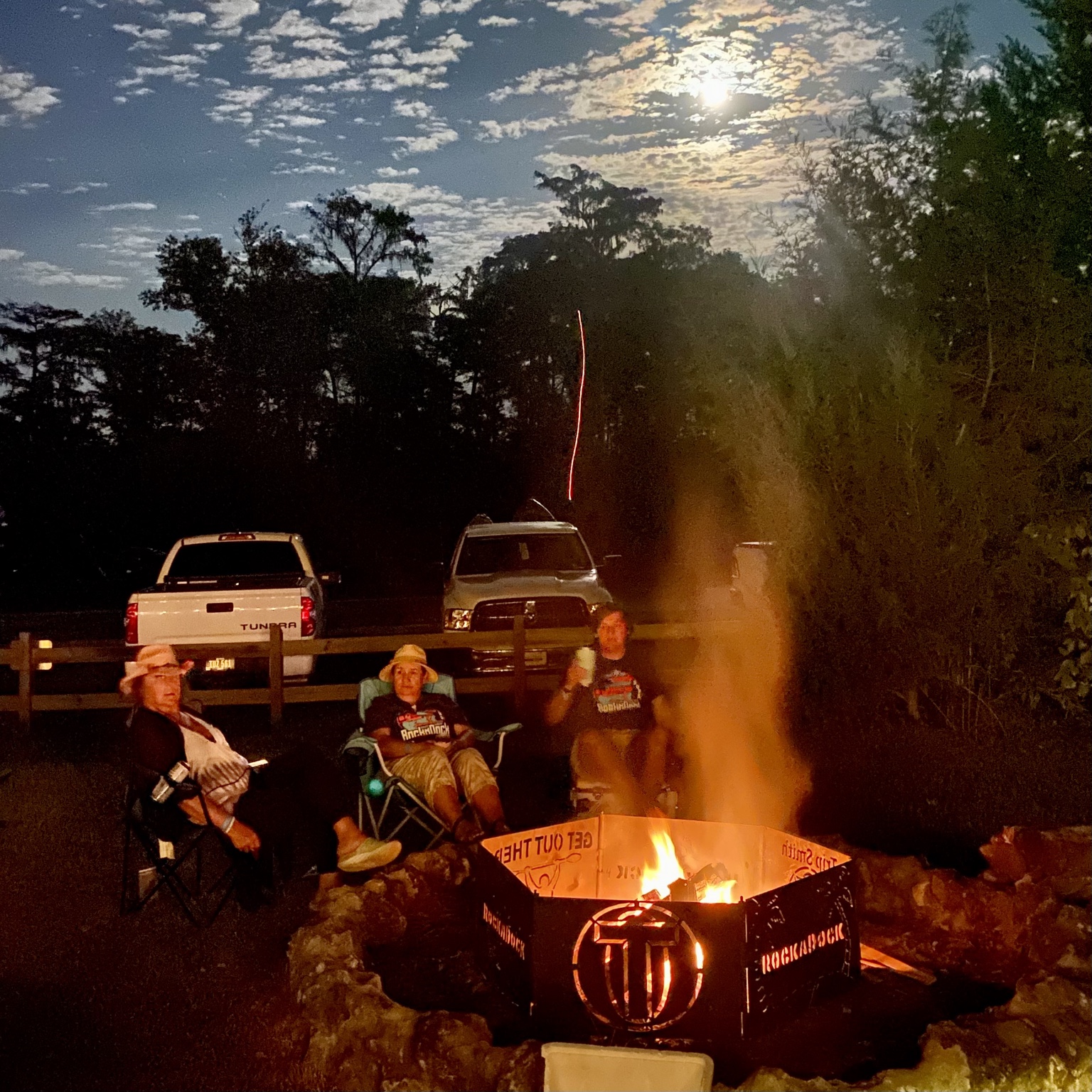
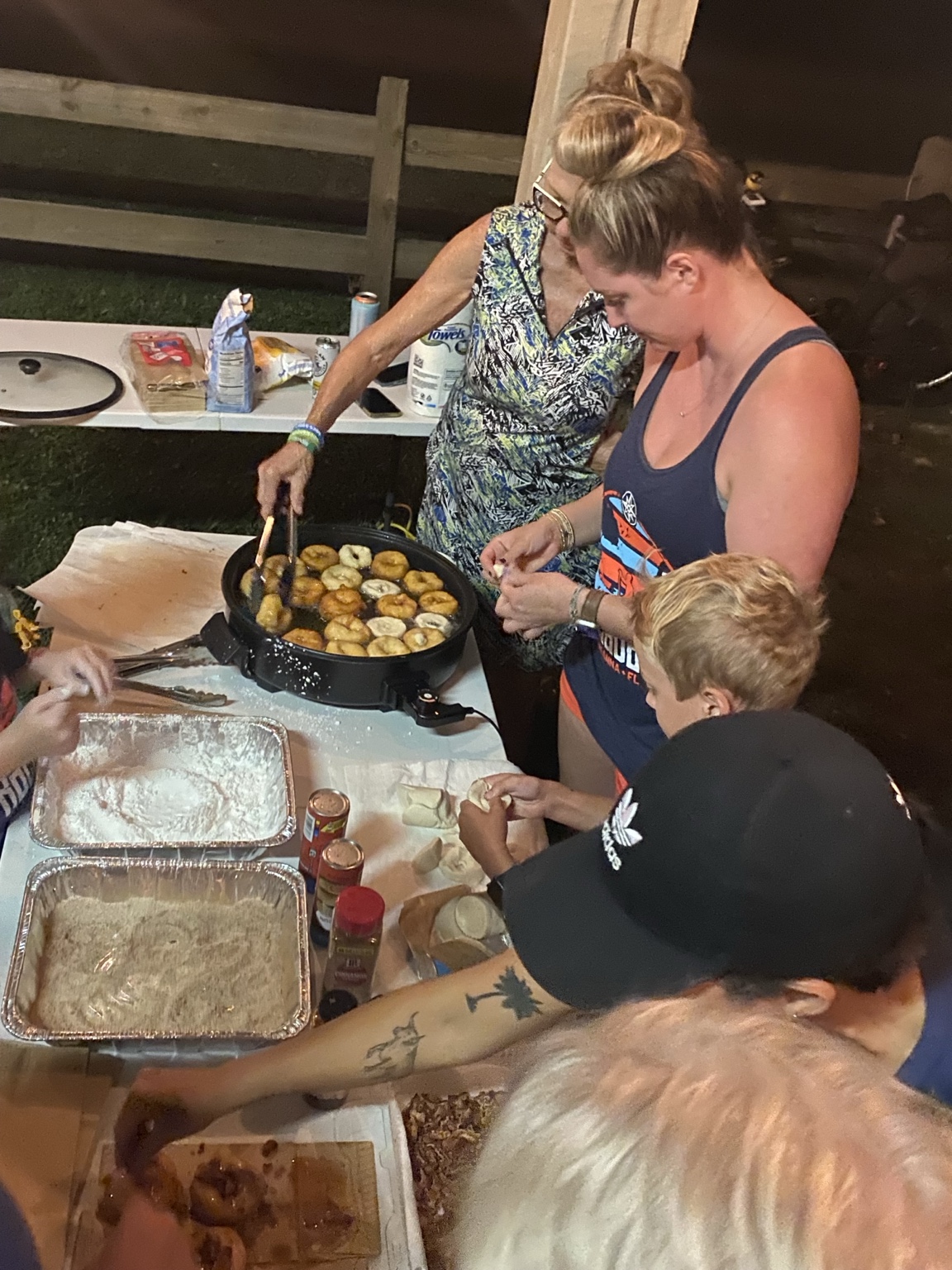
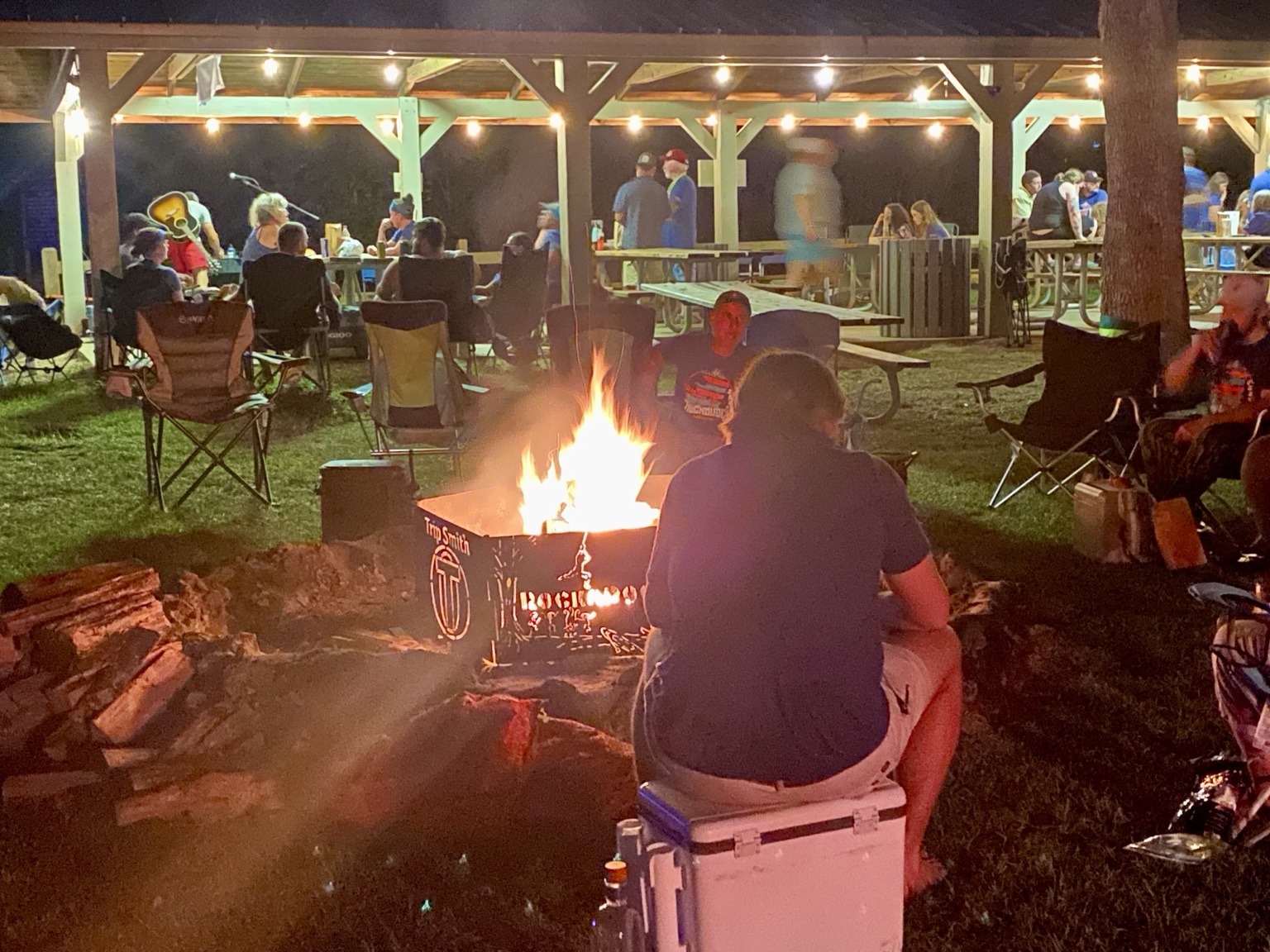
Food was shared and prepared together. People gathered around picnic tables, the pavilion, and the custom RockADock firebox. The moon rose through broken clouds while music and conversation continued. It was the perfect ending: a full day on impossibly clear water followed by a warm night among people who had quickly begun to feel like old friends.

Trip Smith performing music for the RockADock community on the final official night.
The custom RockADock firebox blazing on Saturday night.
Paddlers relaxing around the RockADock fire beneath a bright moon and patterned clouds.
Put it on the calendar

A week every friendly paddler should experience

If you want to meet some of the coolest paddlers imaginable and spend an extraordinarily fun week exploring new water, RockADock deserves a permanent place on your calendar—especially if you enjoy camping, sharing meals, gathering around a fire, and welcoming people you have just met.

For 2026, the official RockADock site lists the gathering for September 21–27 at Robert Fowler Park in Geneva, Alabama. The location has changed since our 2023 Marianna gathering, but the essential idea remains: a few hundred paddlers camping at a central hub, organizing day trips, and creating their own community. Registration information and current details are available through Trip Smith’s official site.

Planning note: Event dates, campground, fees, registration procedures, and access conditions can change. Confirm current details on the official RockADock page before traveling.

Maps and videos

Explore the pond and the gathering

Florida Fish and Wildlife Conservation Commission information describing Merritt’s Mill Pond as a 202-acre, crystal-clear, spring-fed impoundment.

Background and practical information were checked against Florida DEP’s Merritt’s Mill Pond paddling guide, the Florida Fish and Wildlife Conservation Commission, and the official RockADock site. The personal trip narrative and RockADock history on this page come from Tim Driskell’s firsthand experience and recollections.

Surprise Me