Paddling into the wild heart of the Hillsborough River
A river that never stays the same
Seventeen Runs is one of the wildest and historically most difficult sections of the Hillsborough River. Between Dead River Park and John B. Sargeant Conservation Park, the river enters a deeply shaded hardwood and cypress swamp and stops behaving like one clearly defined channel. It divides into narrow runs, side channels, sloughs and dead ends before gradually coming together again.
The name should not be taken as an exact count. There are far more than seventeen possible channels, and the route changes as trees fall, water levels rise and fall, and floating vegetation gathers against branches. Even experienced paddlers may have to stop and decide which opening carries the main flow and which one simply disappears into the woods.
May 26, 2026Our day in Seventeen Runs
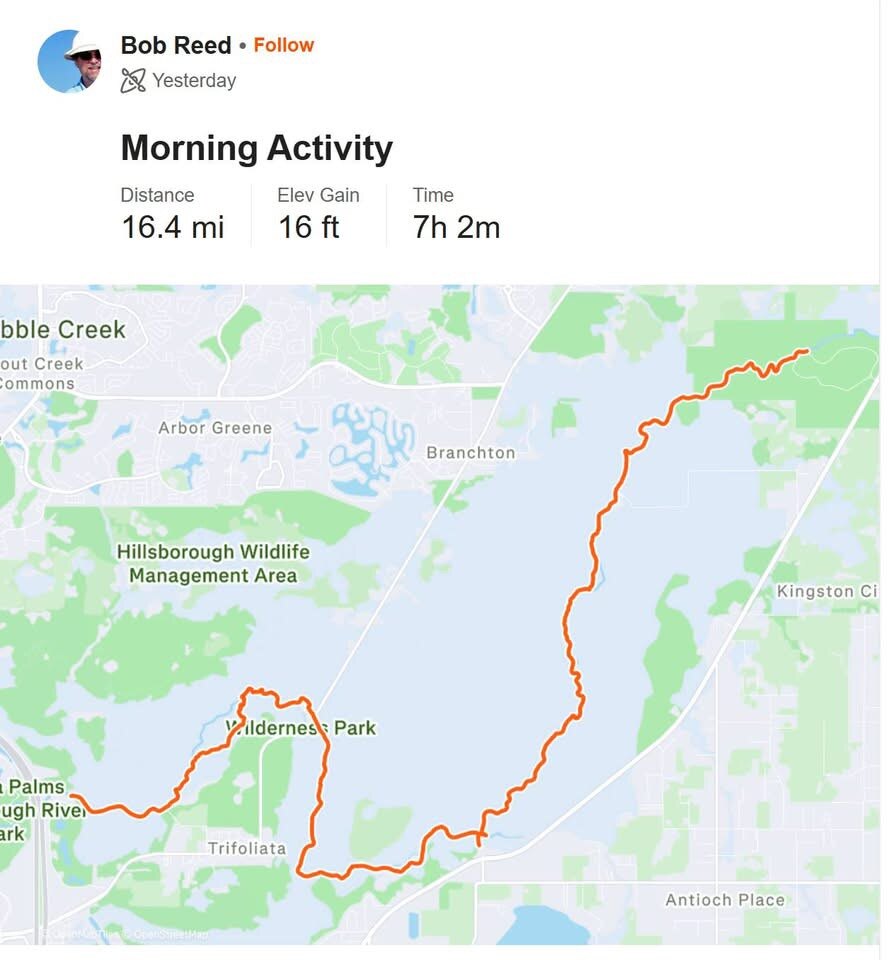
16.4 milesRecorded trip distance
7 hr 2 minA full day on the river
All photographs are clickable for a larger view.
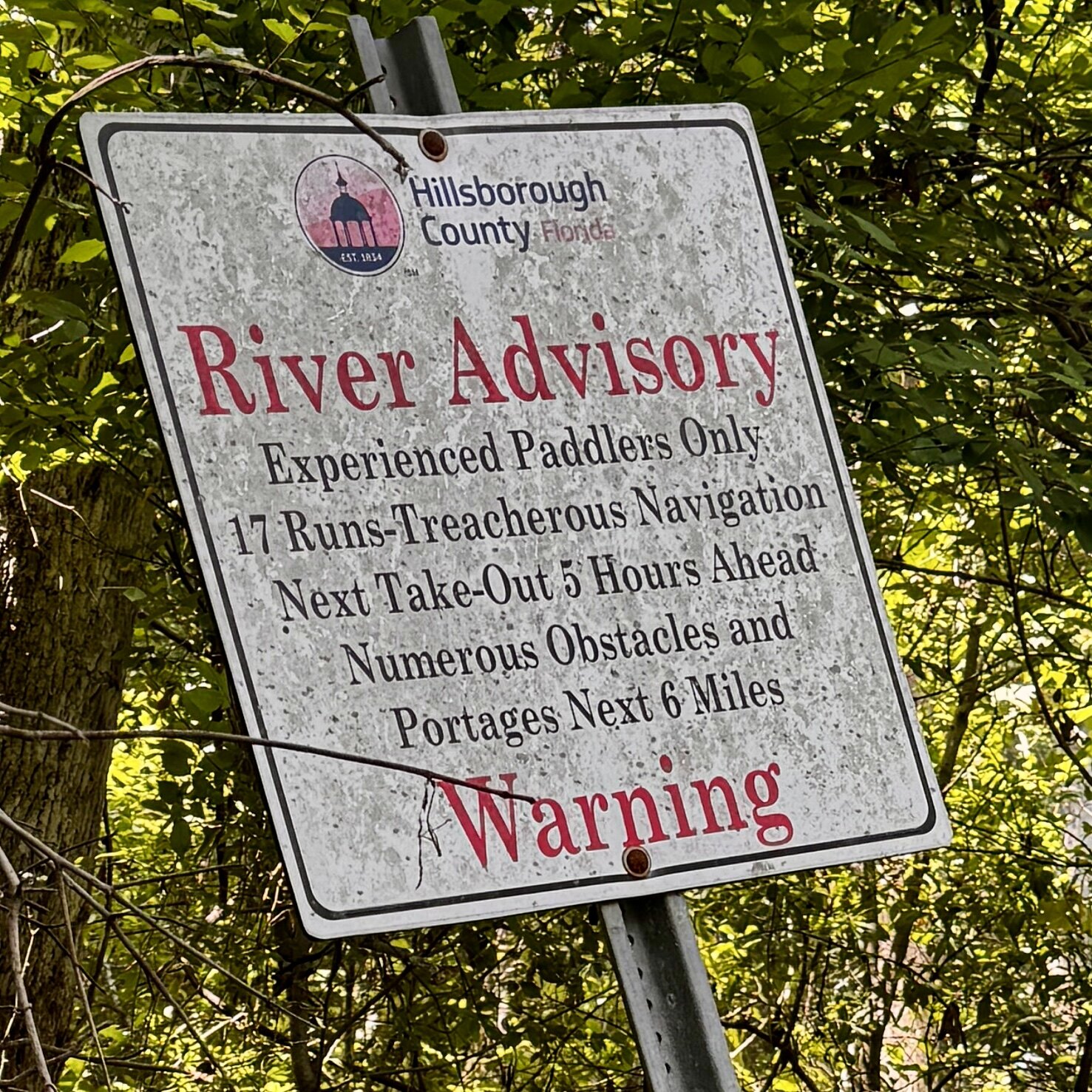
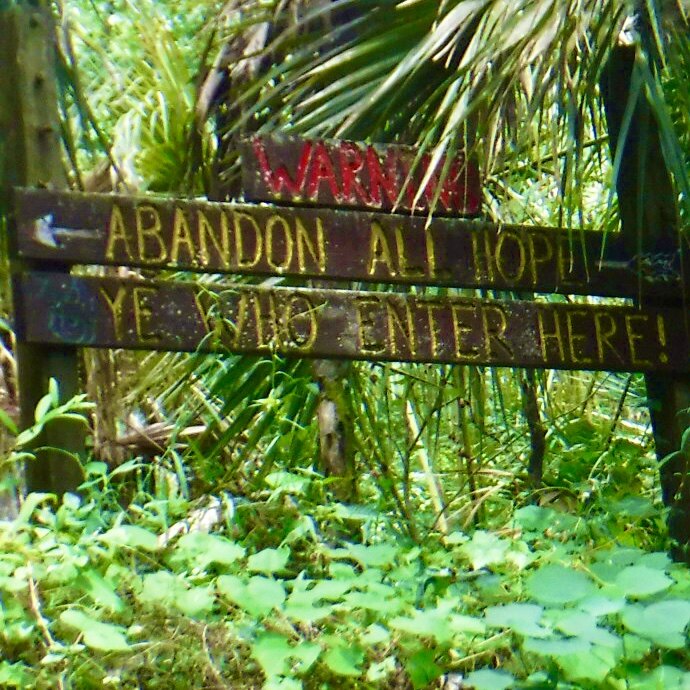
The official warning leaves little doubt: experienced paddlers only, treacherous navigation and numerous obstacles.
The warning at the entrance
For many years, Seventeen Runs was considered nearly impenetrable. Fallen trees crossed the river in every direction, forcing paddlers to climb over trunks, crawl beneath branches, drag their boats through the swamp or wade through deep, dark water. Older accounts describe dozens of portages and six hours or more to cover only a few miles.
Its remoteness adds to the challenge. Once committed to the interior of the swamp, there are no convenient roads and no easy places to leave the river.
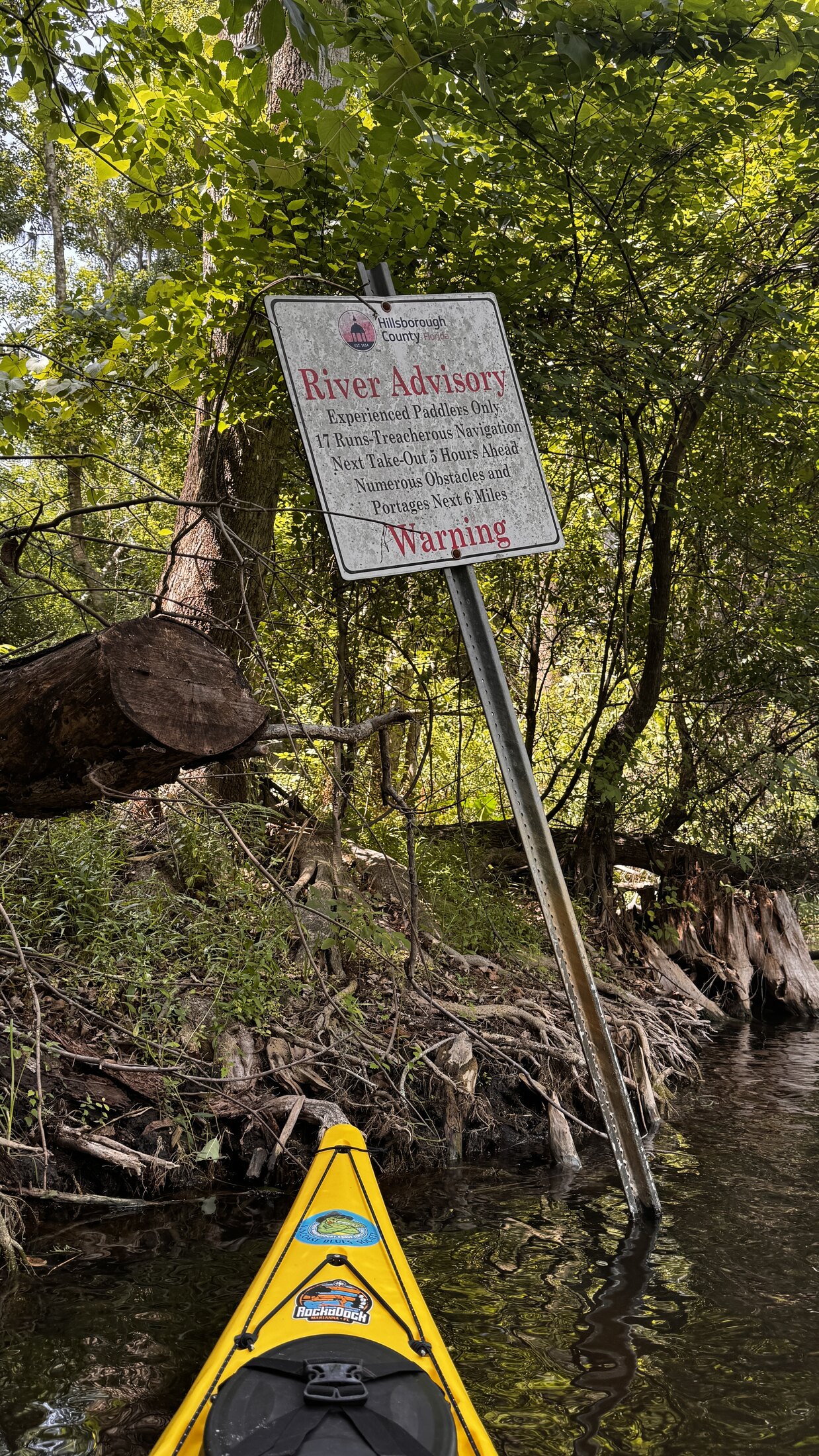
The bow points directly toward a route with an old and well-earned reputation.
A rare window of passage
The hurricanes of 2024 brought down even more trees throughout the upper Hillsborough River corridor. During the subsequent cleanup, state crews cleared a substantial amount of fallen timber from Seventeen Runs. That work opened a route through a section that had traditionally been passable only with great difficulty.
For paddlers familiar with the river’s reputation, it created an unusual opportunity to see the heart of the swamp without fighting over or under an obstacle every few yards.
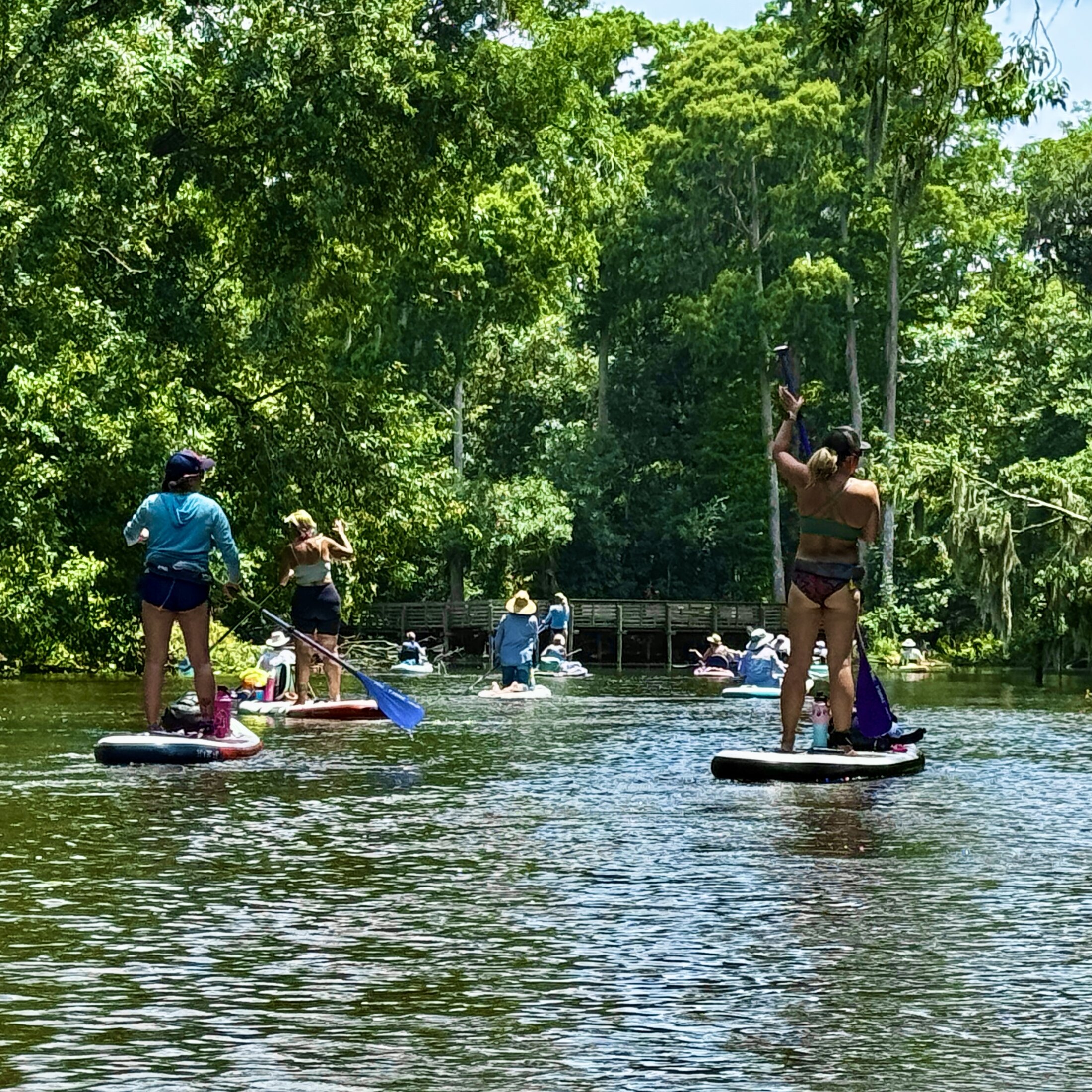
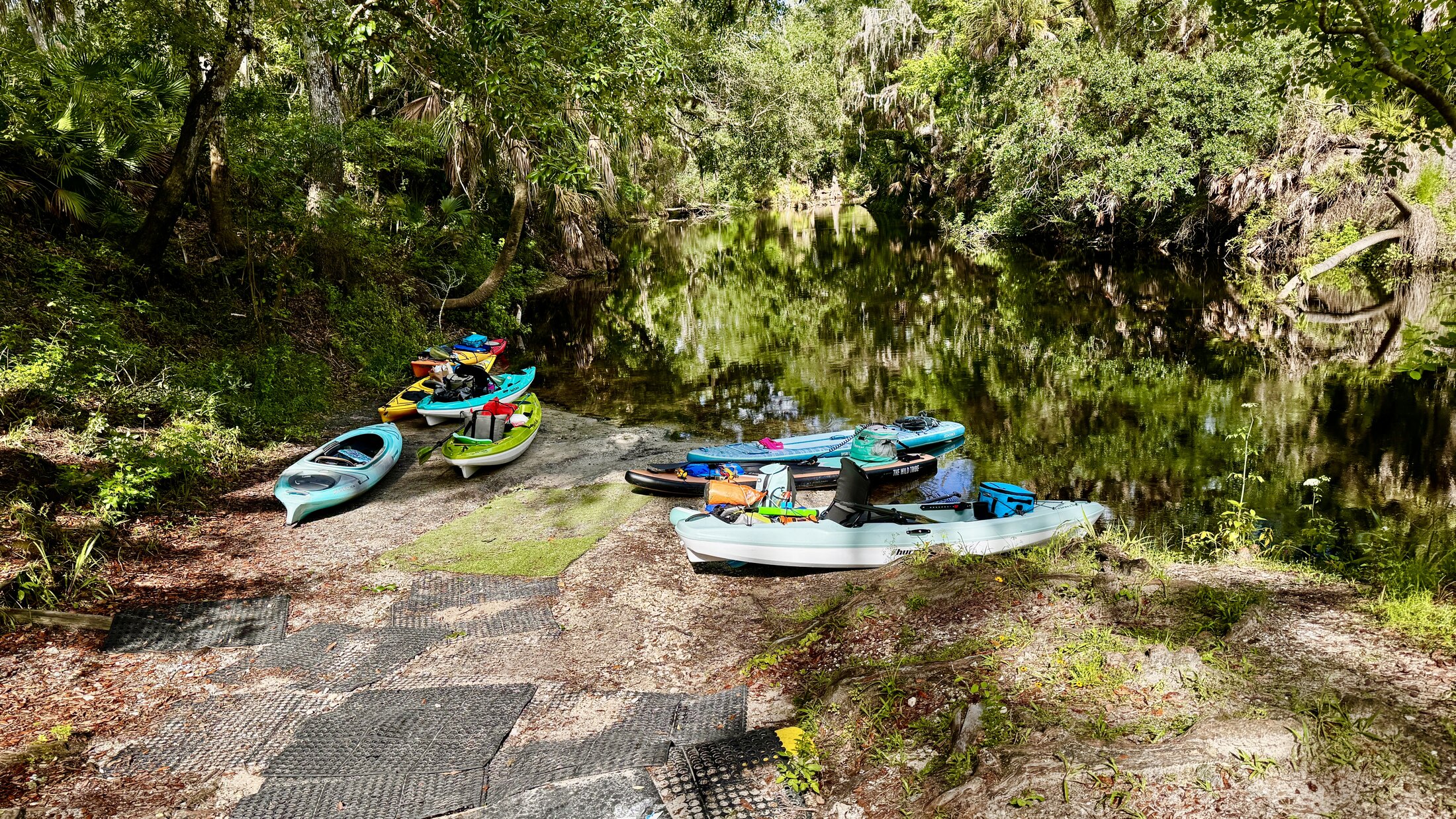
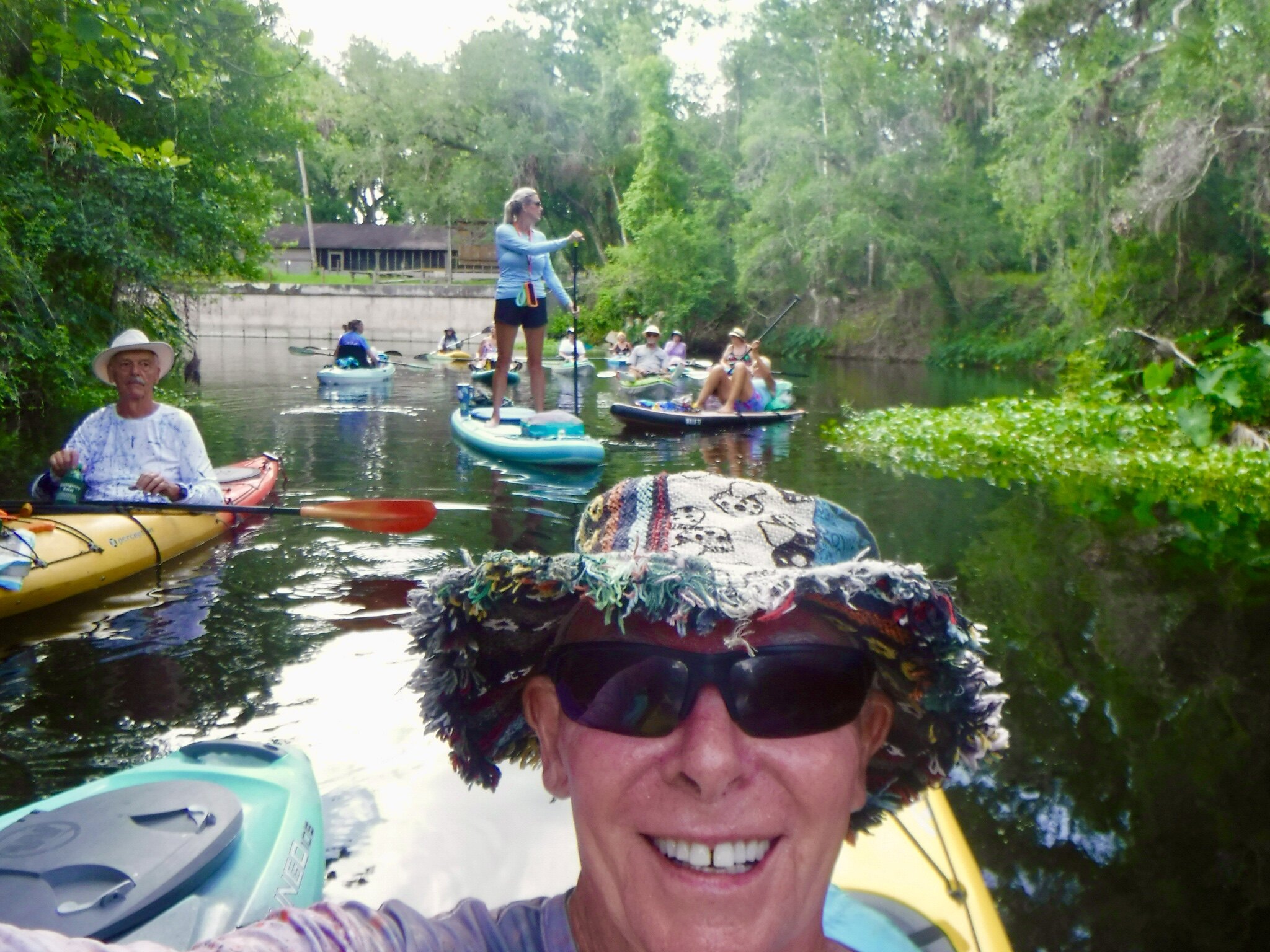
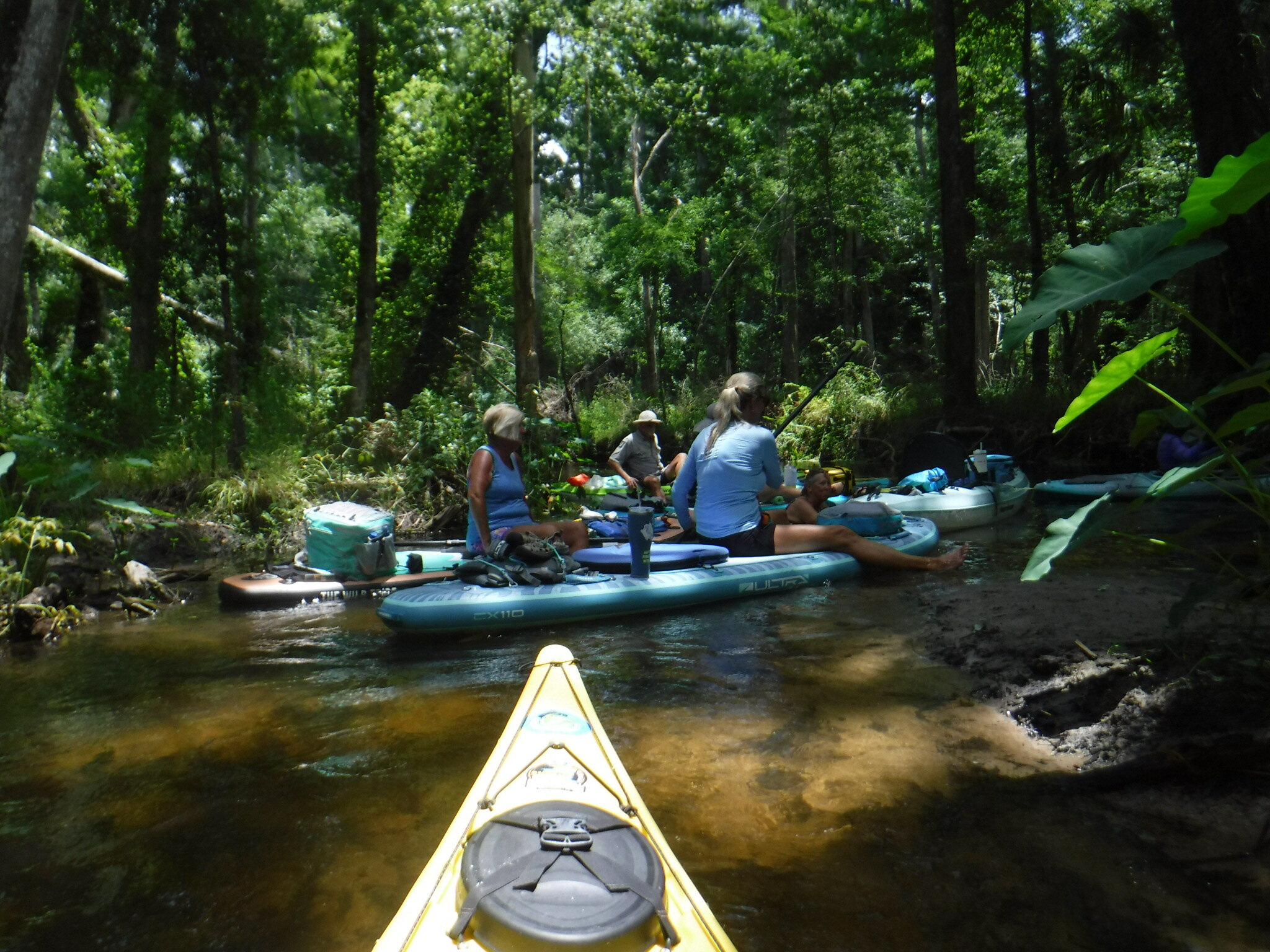
Boats gathered at the edge of the river before the group headed into Seventeen Runs.
Kayaks, paddleboards and a big day ahead
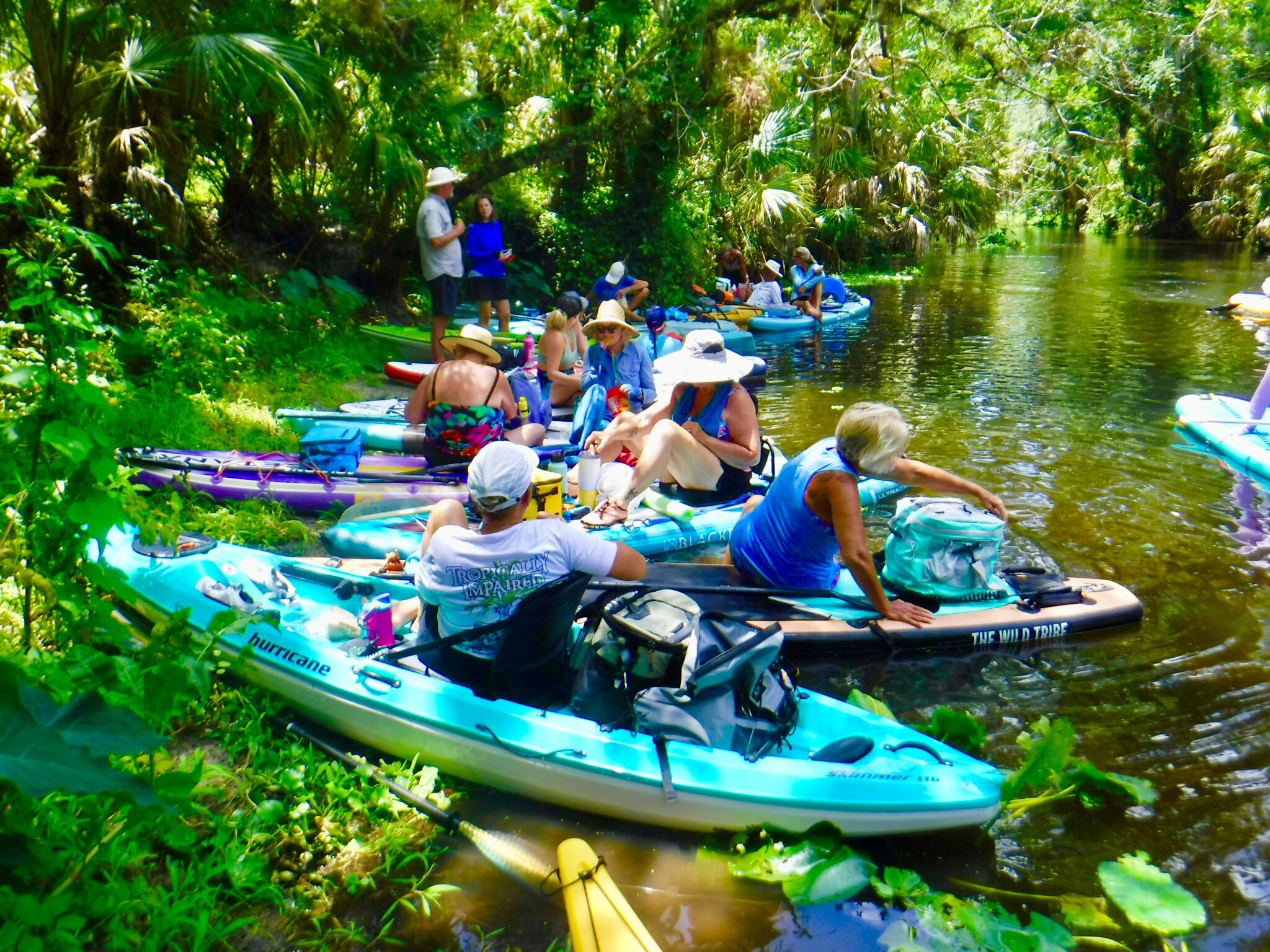
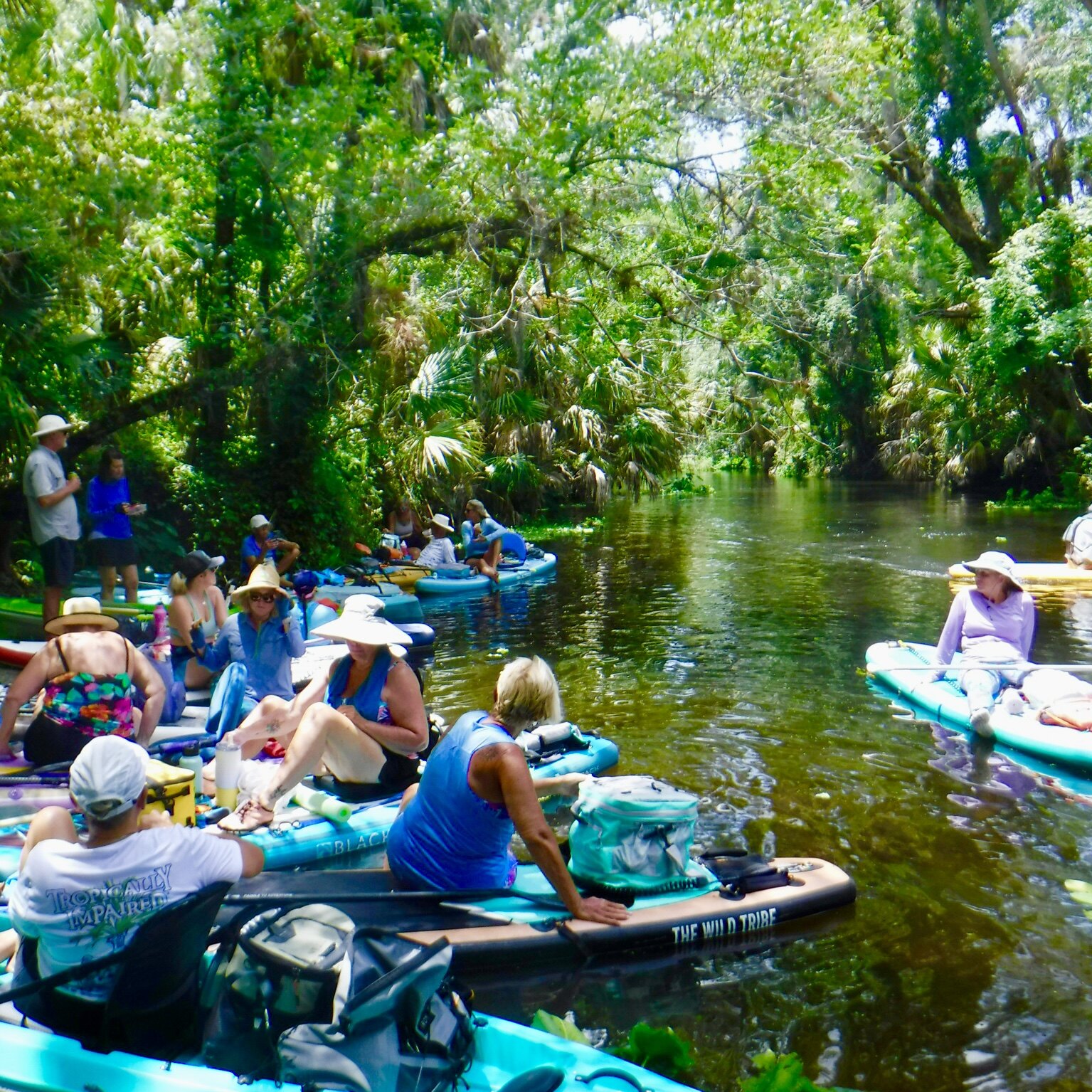
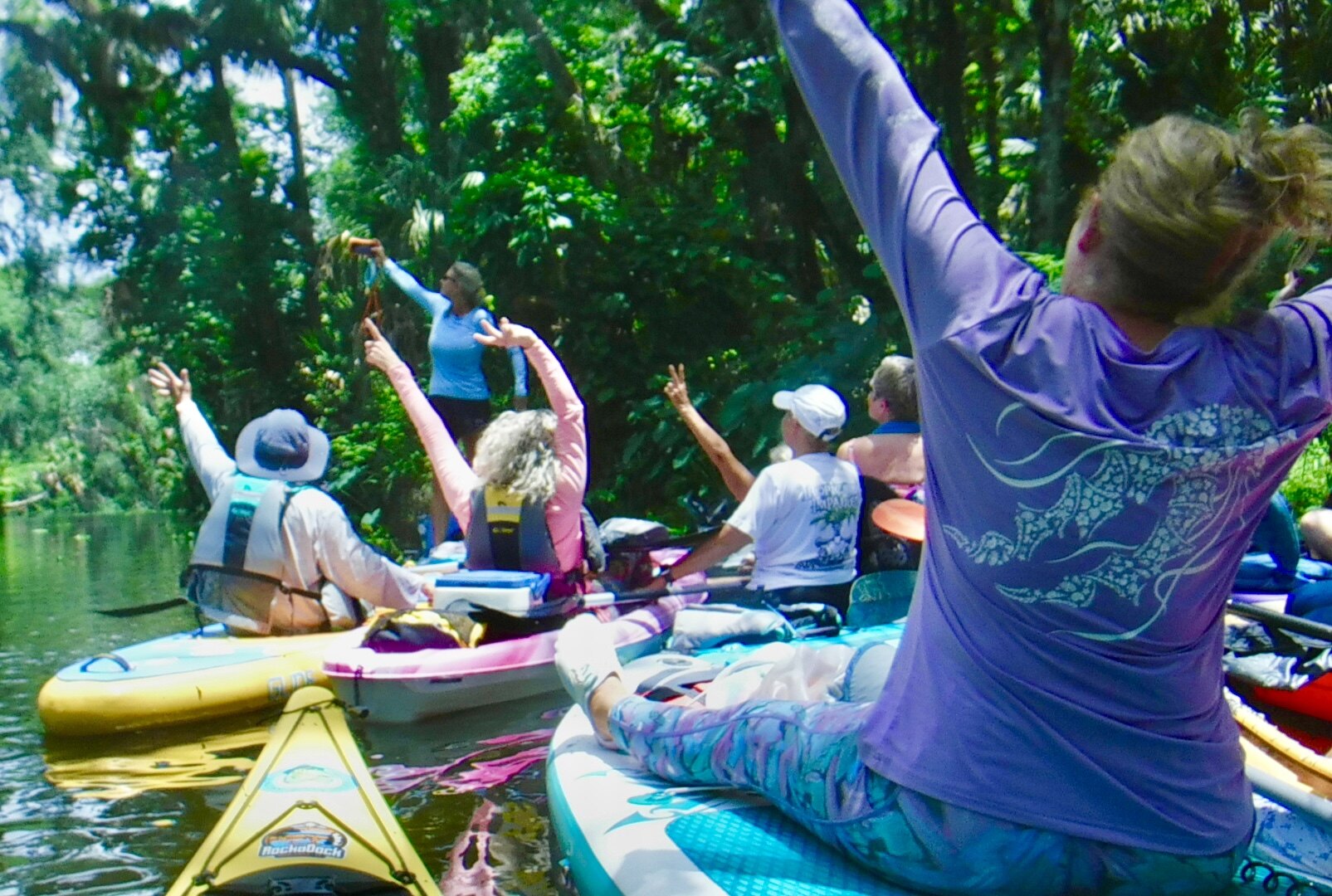
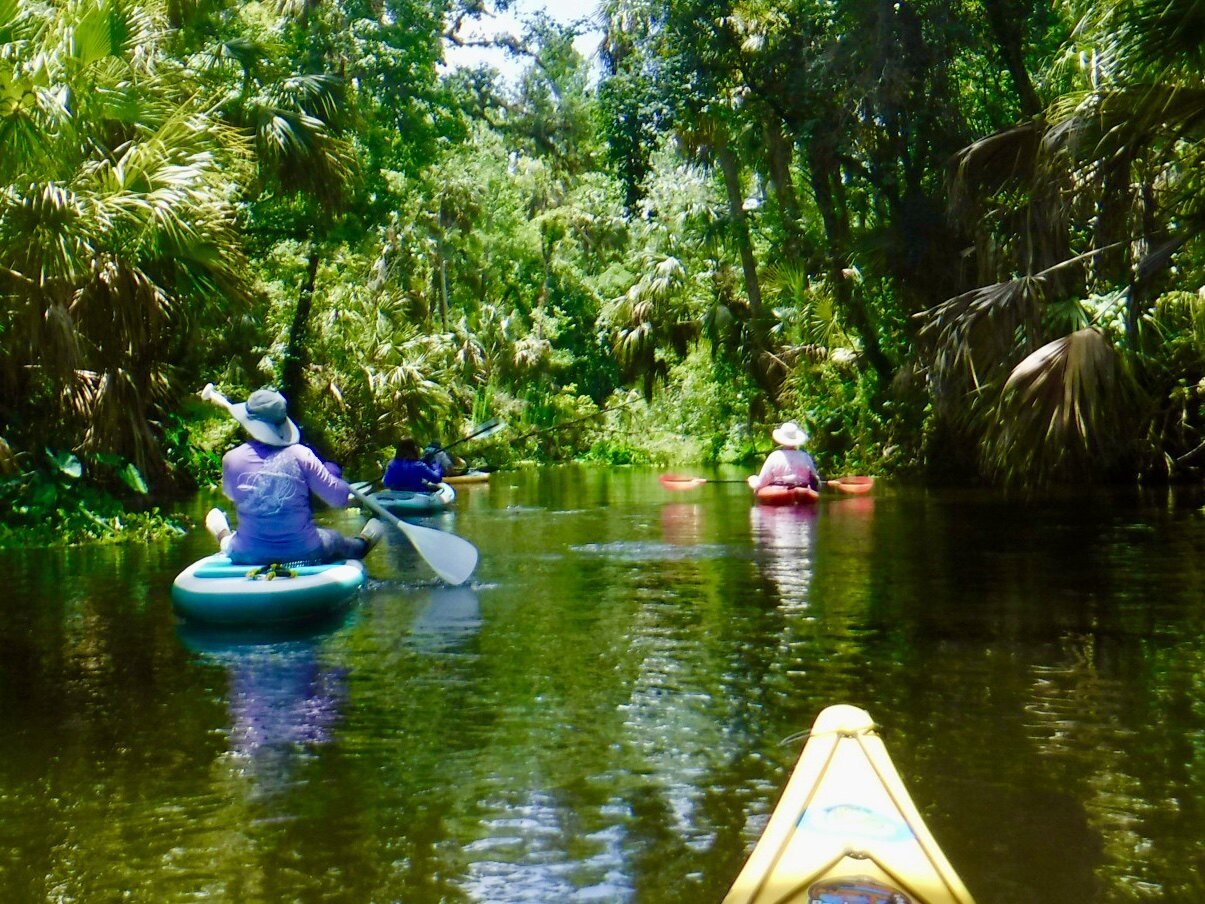
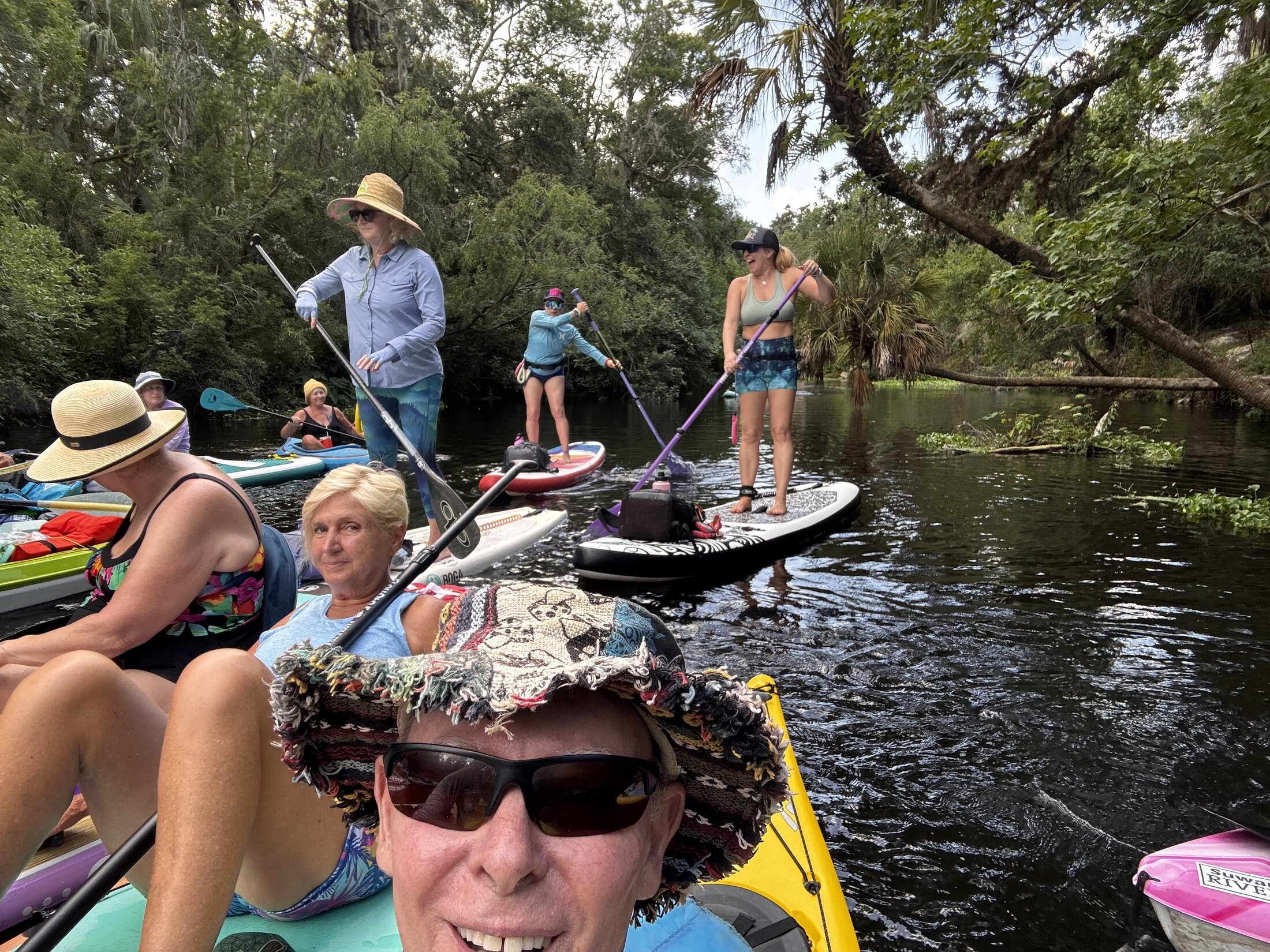
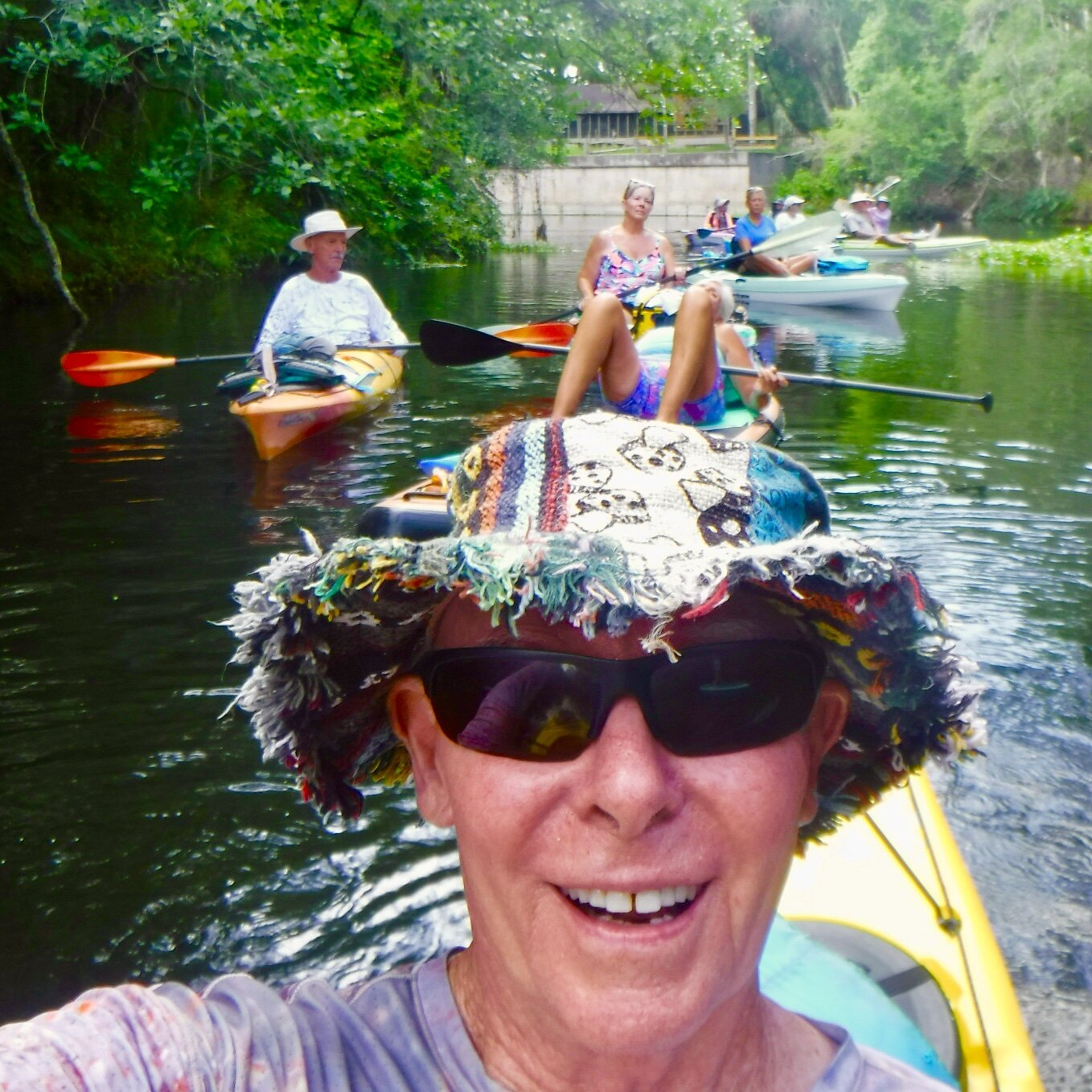
This was a substantial group, with both kayakers and stand-up paddleboarders taking on the twisting route together. Before long, the boats were packed into narrow water beneath a dense green canopy—exactly the kind of place where teamwork and good judgment matter as much as paddling skill.
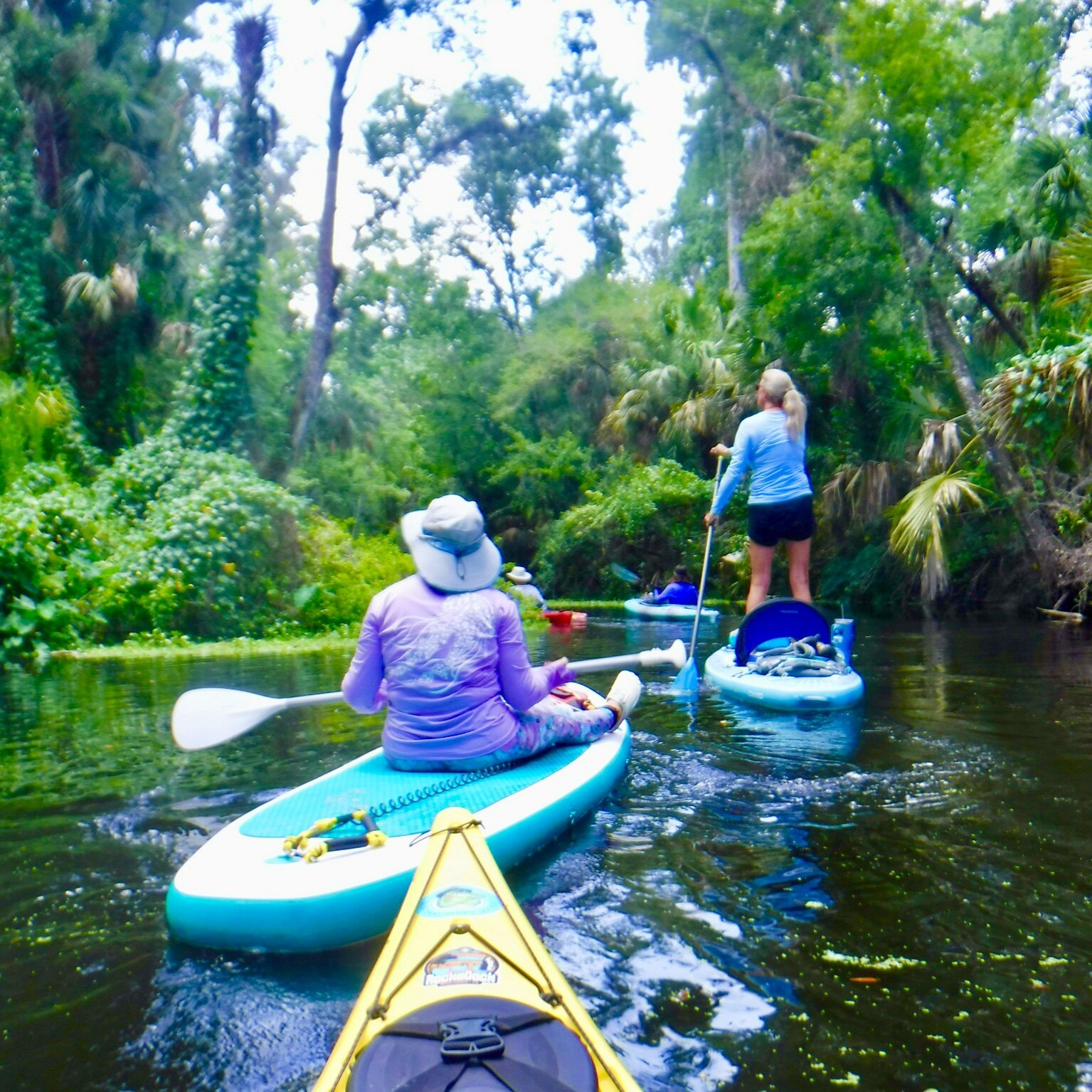
The group gathers on the river, with kayaks and paddleboards filling the channel.Frequent pauses kept the group together as the river narrowed.A smiling moment before the swamp demanded everyone’s attention again.Standing high on a paddleboard offered a useful view into the next bend.Inside the swamp, the broad river becomes a close, intimate passage among trees and vines.
Inside the floodplain forest
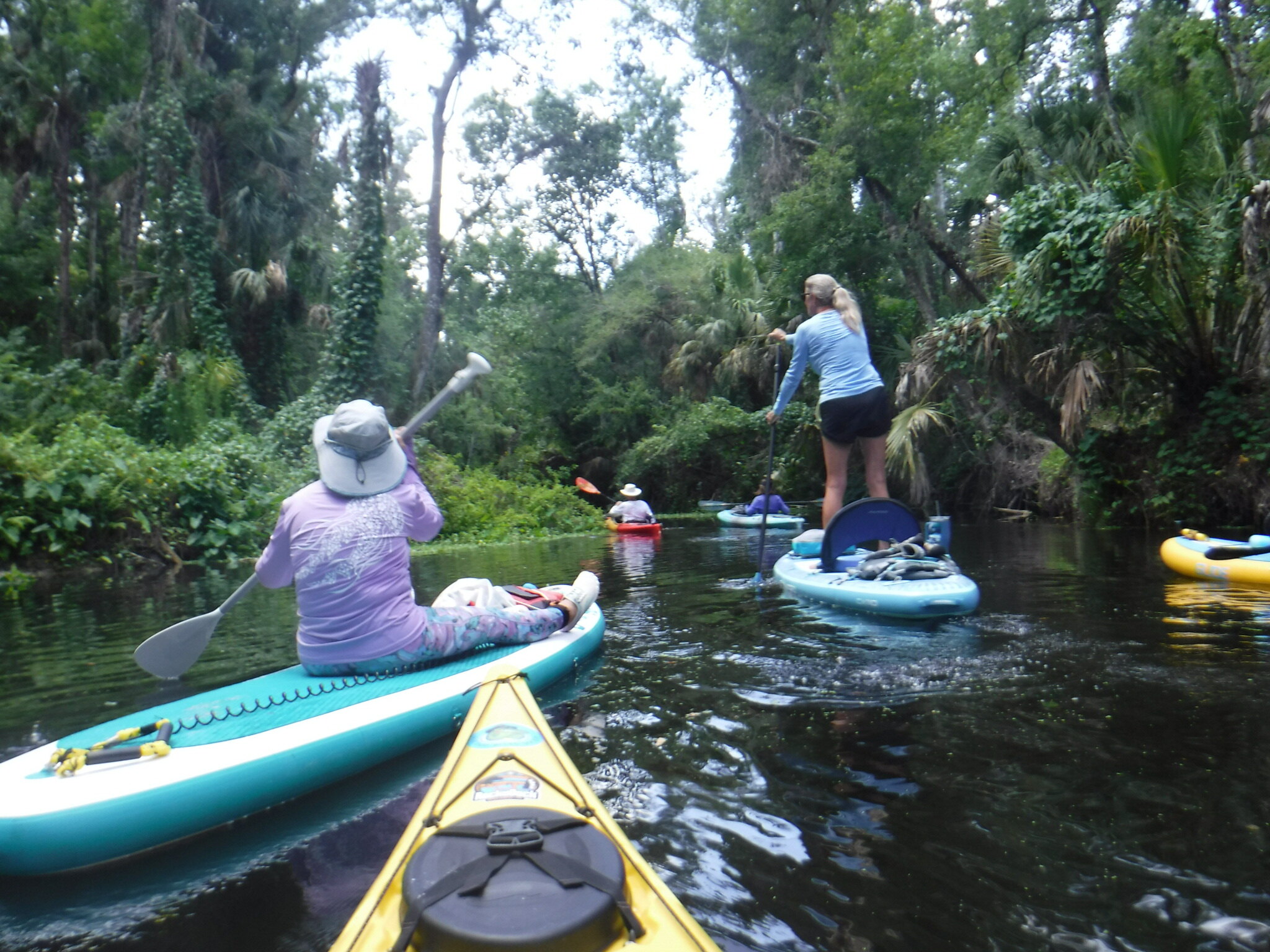
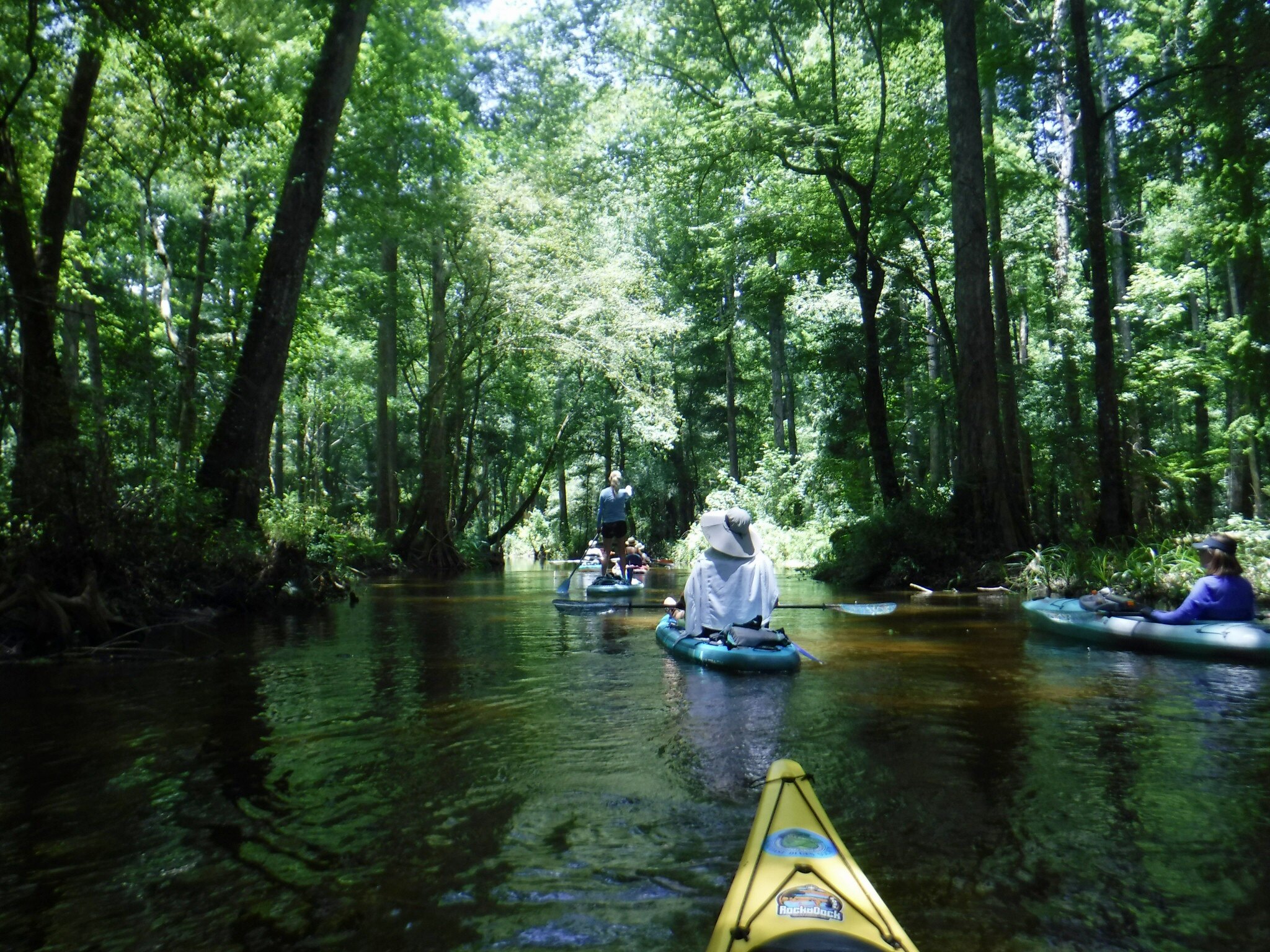
The modern world seems remarkably far away here. The river narrows beneath cypress, tupelo, oak and other swamp hardwoods. Cypress knees rise from the dark water, vines hang over the channels, and sunlight reaches the river in scattered patches. Pileated woodpeckers, limpkins, herons, turtles and alligators inhabit the surrounding wetlands.
Occasional enormous cypress trees hint at the forest that existed before extensive logging removed most of the region’s largest timber.
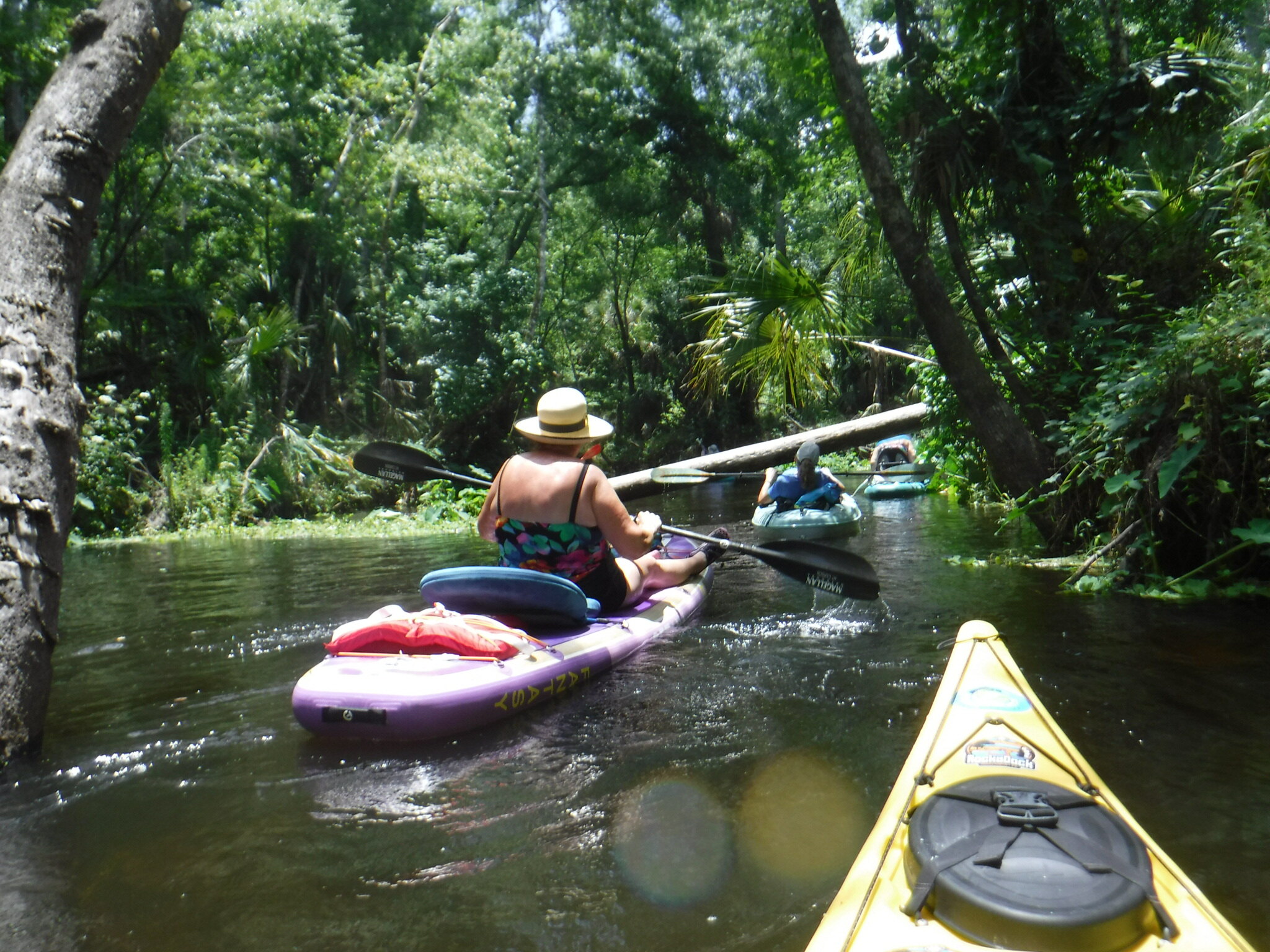
Tall trunks and reflected light create the cathedral-like atmosphere of the upper Hillsborough.Which way is the river? In Seventeen Runs, that can be a serious question.A quiet procession through the shaded hardwood swamp.From a standing position, paddlers scout the channel ahead.Another pause along a bank with almost no dry ground beyond it.A bit of swamp humor: “Abandon all hope, ye who enter here!”
Cleared does not mean predictable
This is a living floodplain forest, and the river can change after a single windy afternoon. Many trees grow in saturated soil with shallow root systems, making them vulnerable to high water, erosion and strong winds. A route that was open one week may be blocked by a newly fallen oak or cypress the next.
Water level also changes the trip. Higher water can open connections between channels and carry a stronger current, while low water can leave boats grounded among roots, logs and shallow side runs.
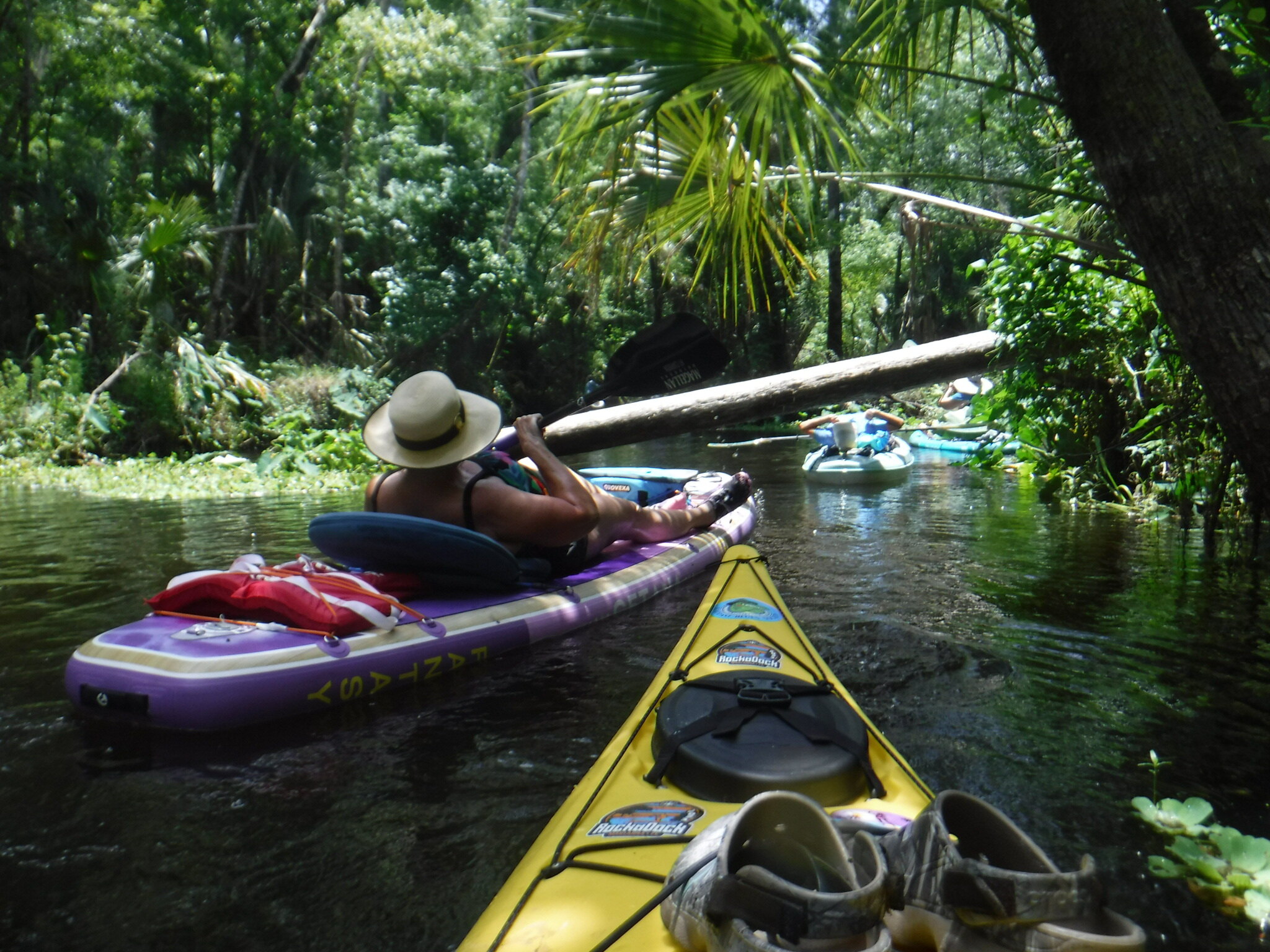
Even after the hurricane cleanup, Seventeen Runs still had plenty of reminders that this forest controls the route.
When the river becomes an obstacle course
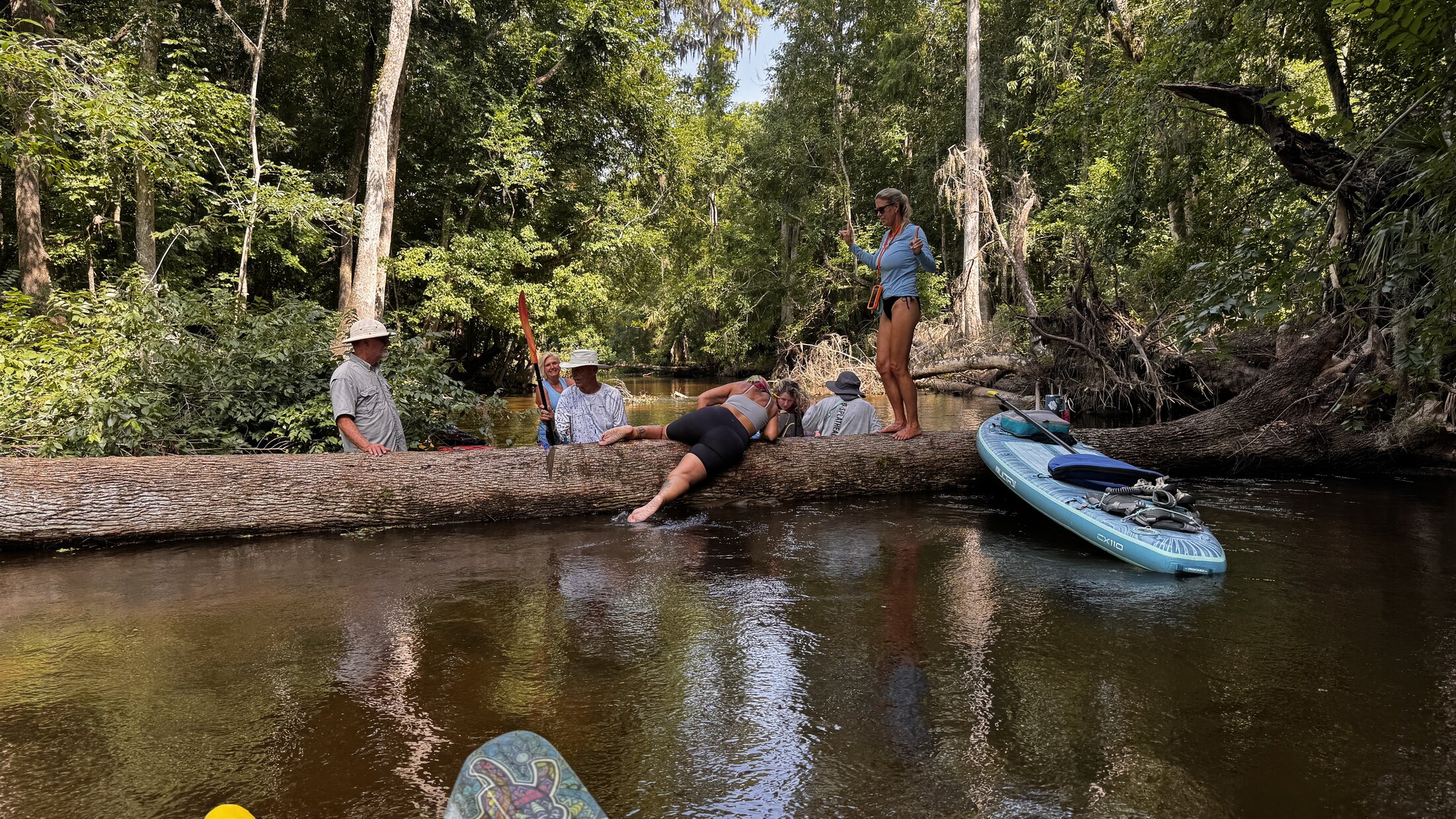
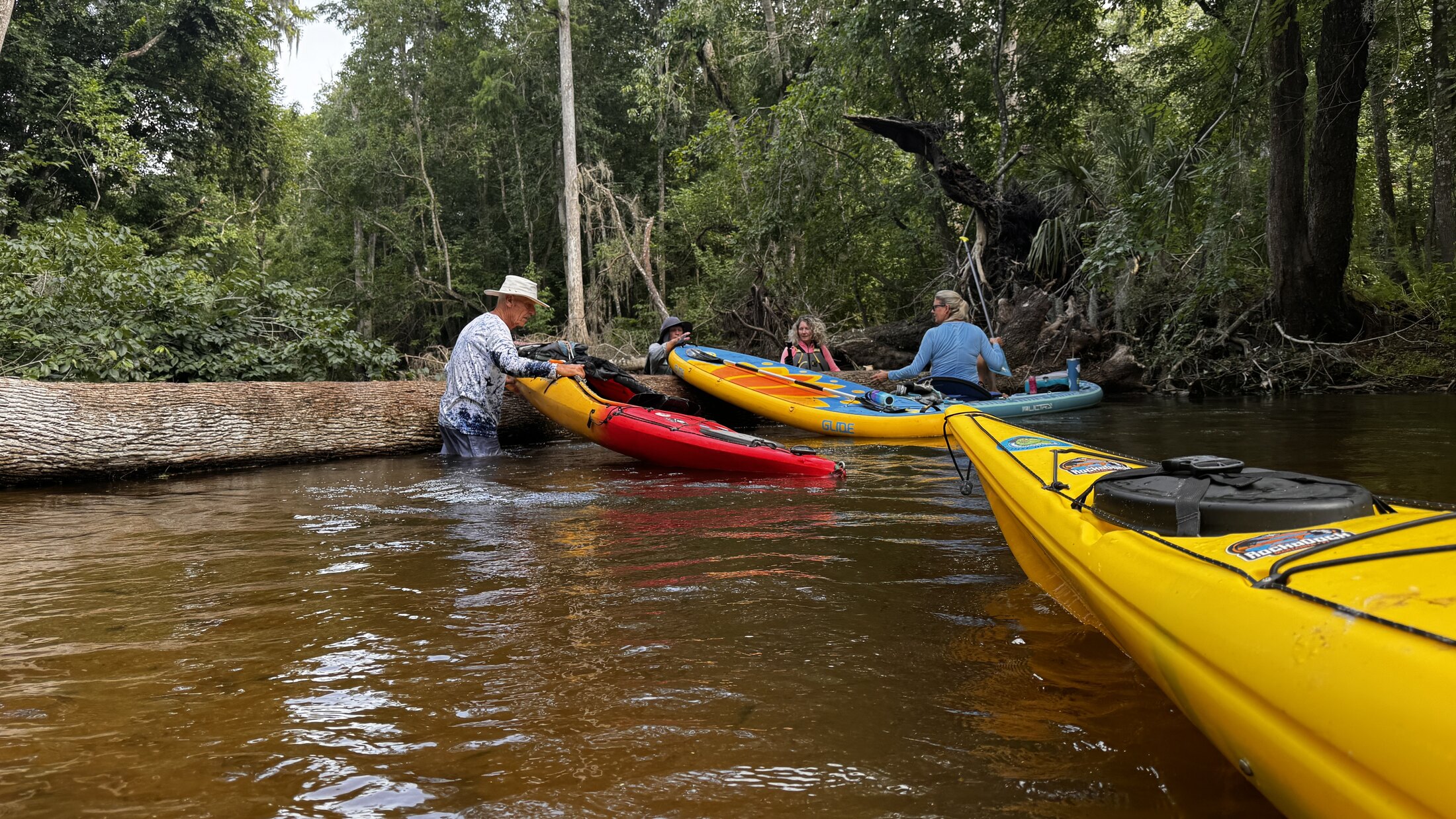
This is not a conventional recreational paddle with a broad channel and an obvious destination. Sometimes we paddled with the current, sometimes squeezed between trees, and sometimes stopped to work out how to move people and boats past the next obstruction.
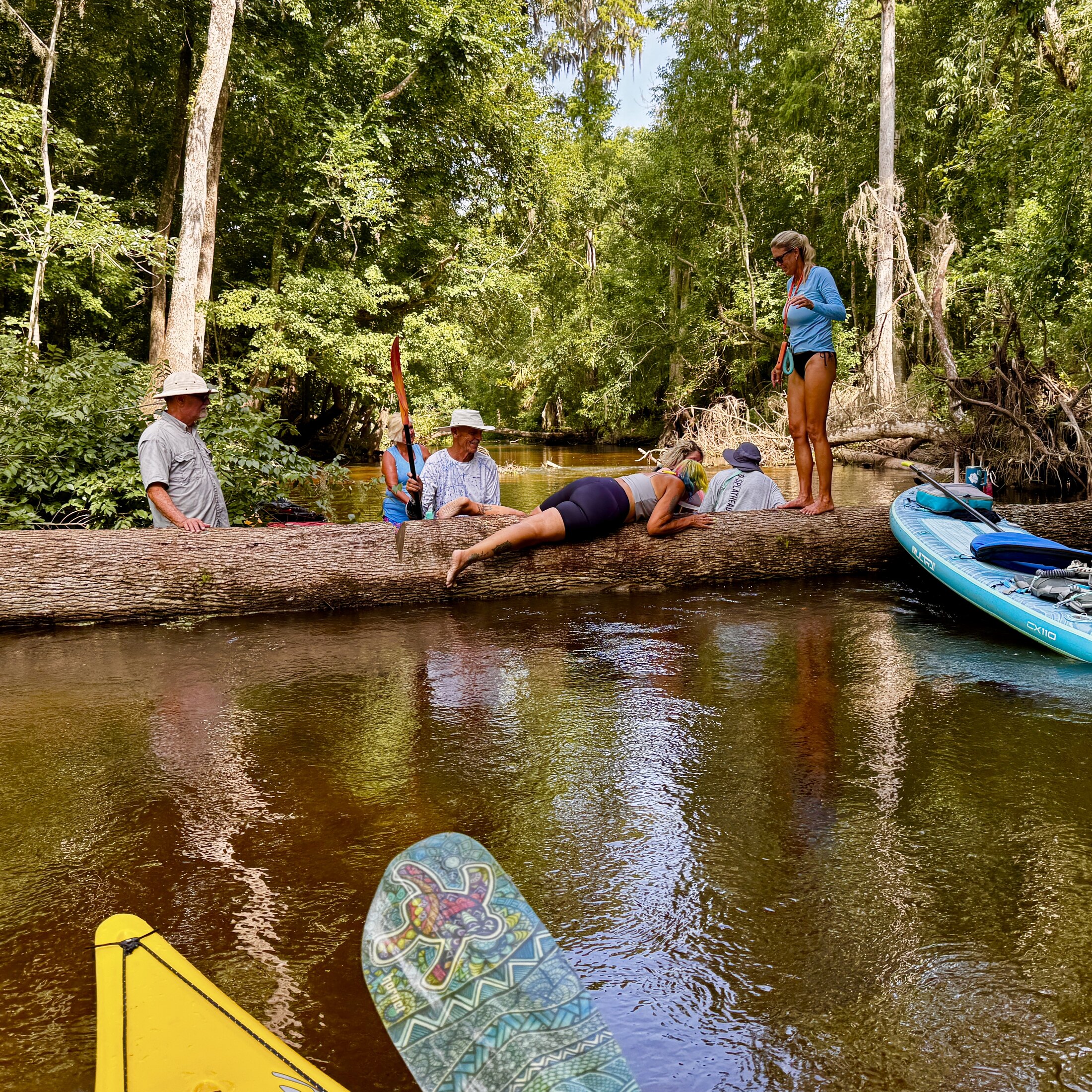
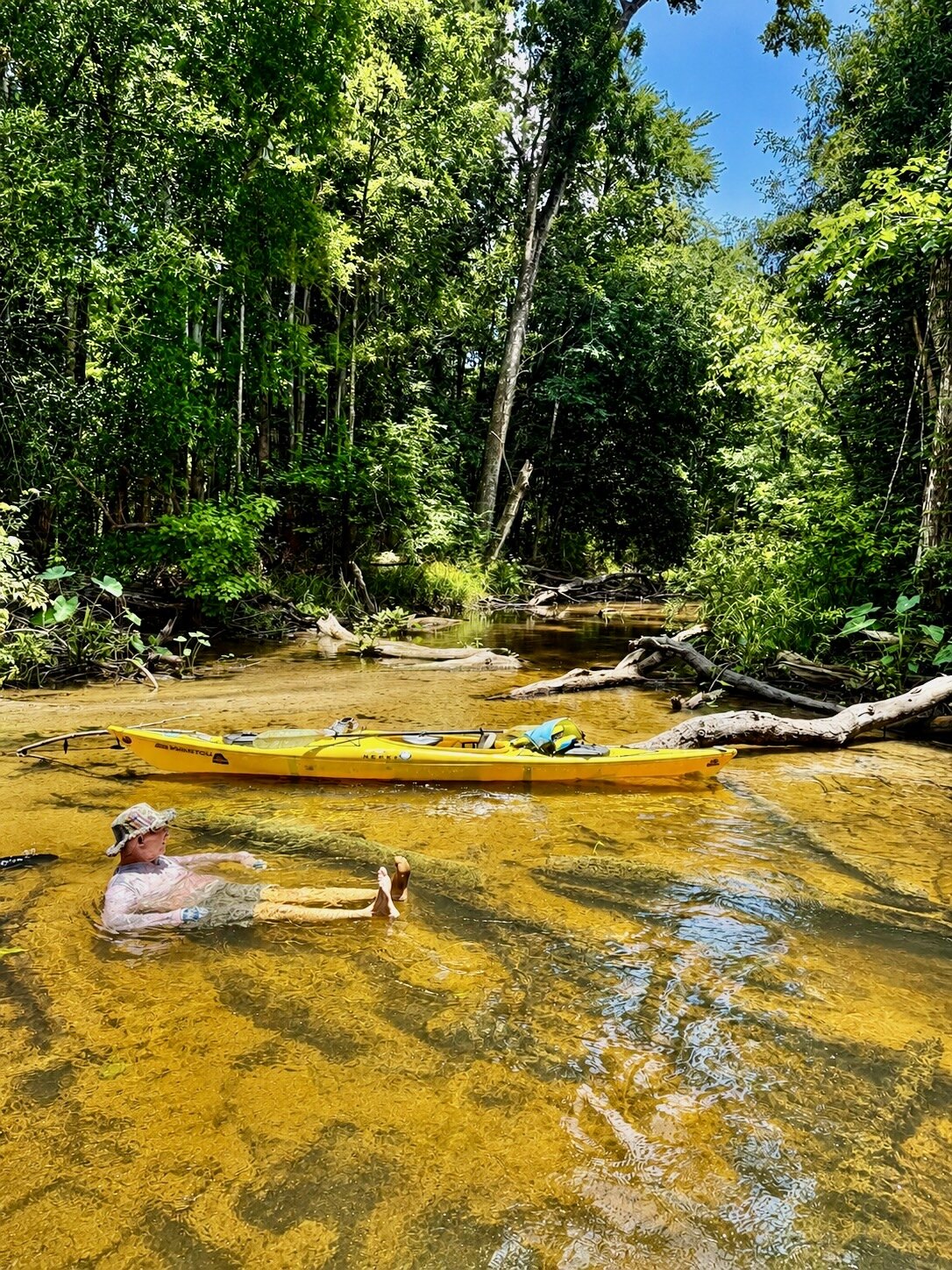
Finding the easiest line through a fresh tangle of wood.One person through, then the next boat—the group works together.A large trunk becomes both bridge and barrier.Crossing carefully while the boats wait below.Bright boats line up as the obstruction is negotiated one at a time.Low, tea-colored water exposes a sandy bottom beneath another blockage.
Video: working the group and boats past one of the fallen trees.
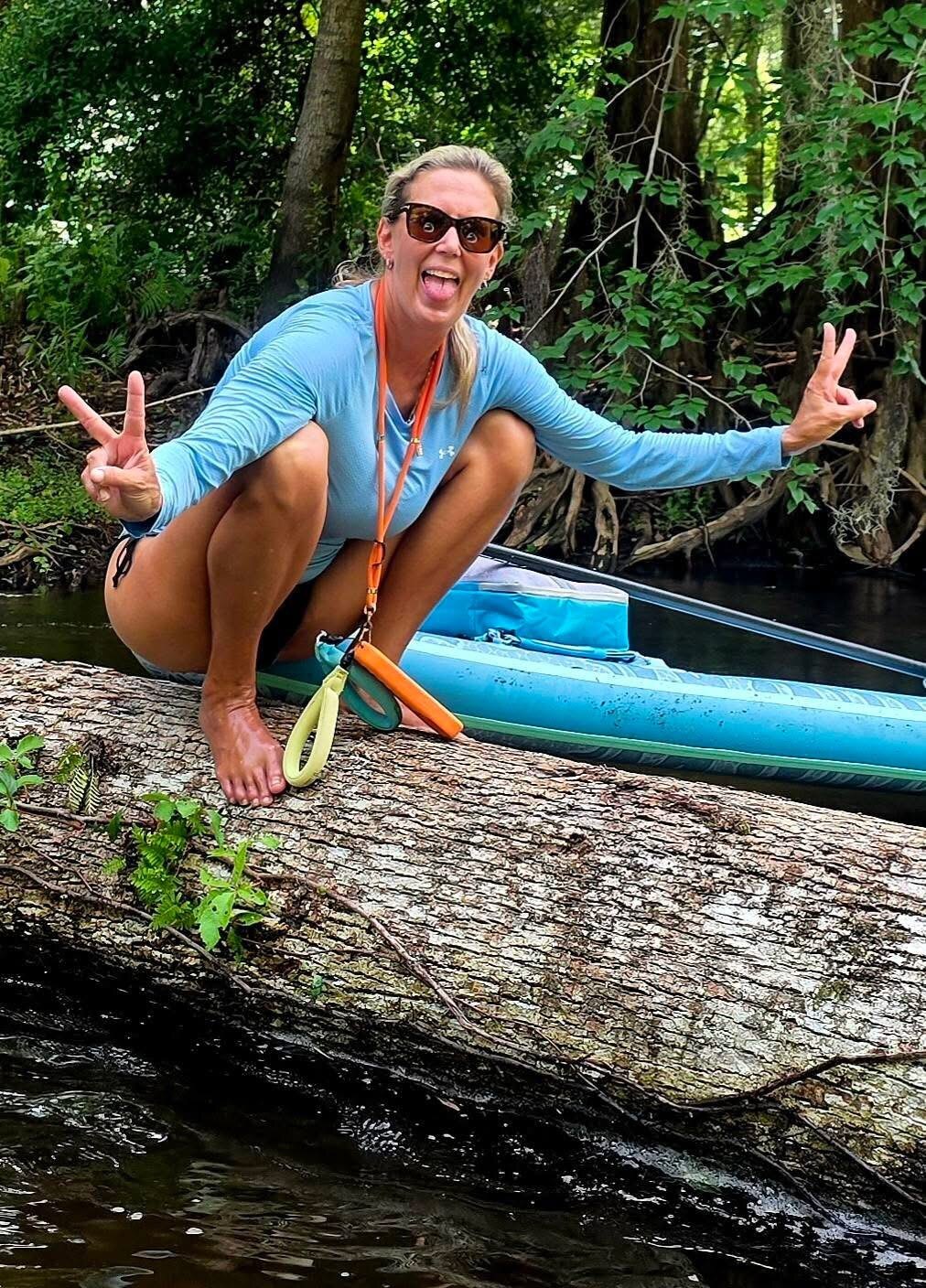
Tim takes a lighthearted moment beside one of the trees that made Seventeen Runs famous.
Still wonderfully wild
Our trip came during an unusual period when cleanup following the 2024 hurricanes had made Seventeen Runs considerably more passable than it had been historically. Even so, the downed timber, twisting channels and constant possibility of new obstacles remained part of the experience.
It was still Seventeen Runs: remote, unpredictable and wonderfully wild—a place that never promises to be the same river twice.
The recorded day: 16.4 miles in 7 hours and 2 minutes.
Do not underestimate this river
The official paddling guide historically described Seventeen Runs as extremely difficult even for experienced paddlers, warning about branching channels, current, deep-water wading and frequent tree obstacles. Although cleanup improved passage, conditions can change rapidly. Anyone attempting it should obtain a very recent report and be prepared for navigation problems, portages and a much longer day than expected.