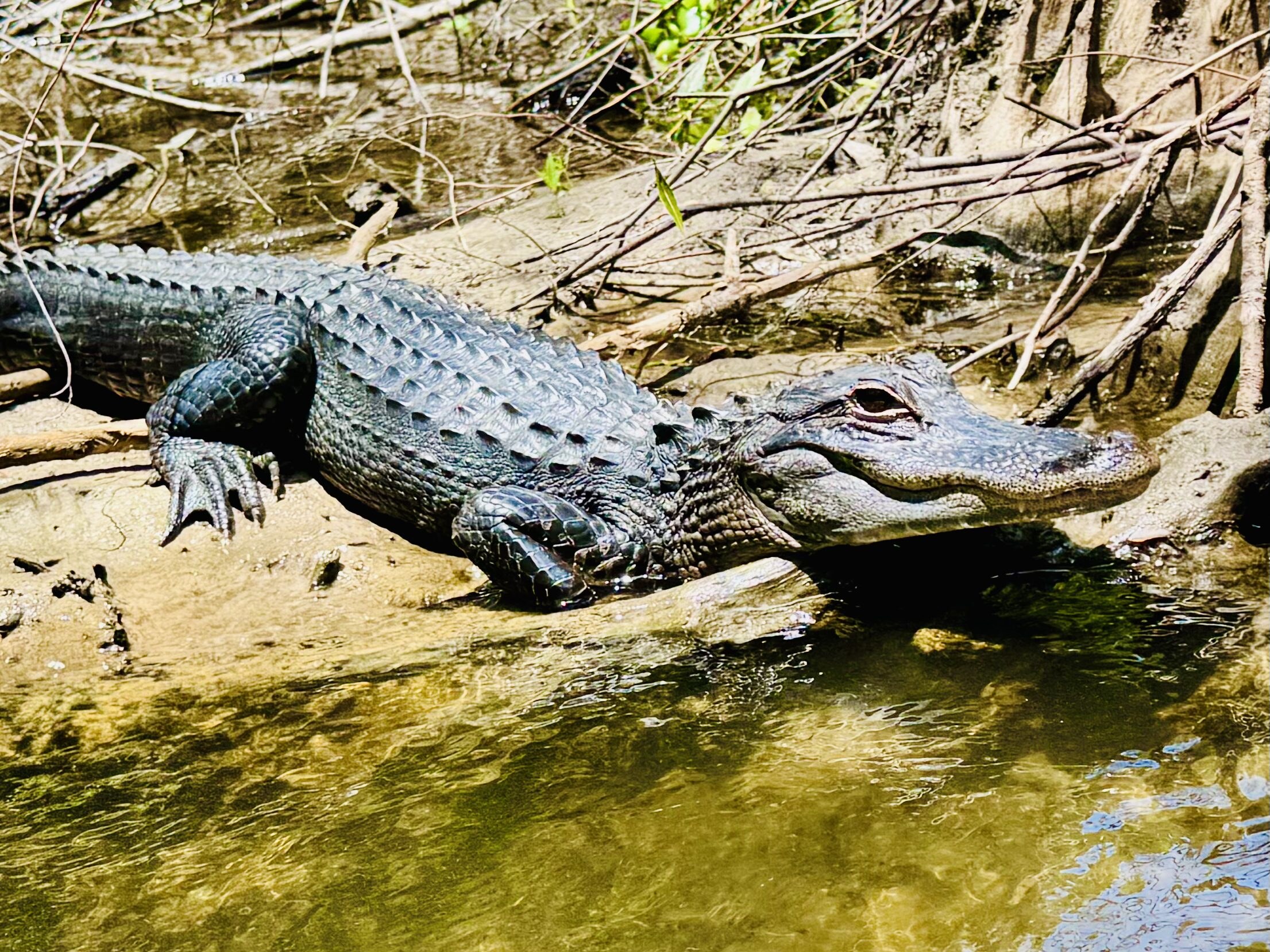
Seventeen Runs is the kind of place that makes a paddling day feel like an expedition. The Hillsborough River divides, bends and squeezes between cypress, palms and fallen timber, then opens briefly before drawing the boats back into the forest. On this warm May day, our group stayed together through the turns, shallows and narrow passages—and shared one especially memorable encounter with a large alligator resting along the bank.
Gathering at the river
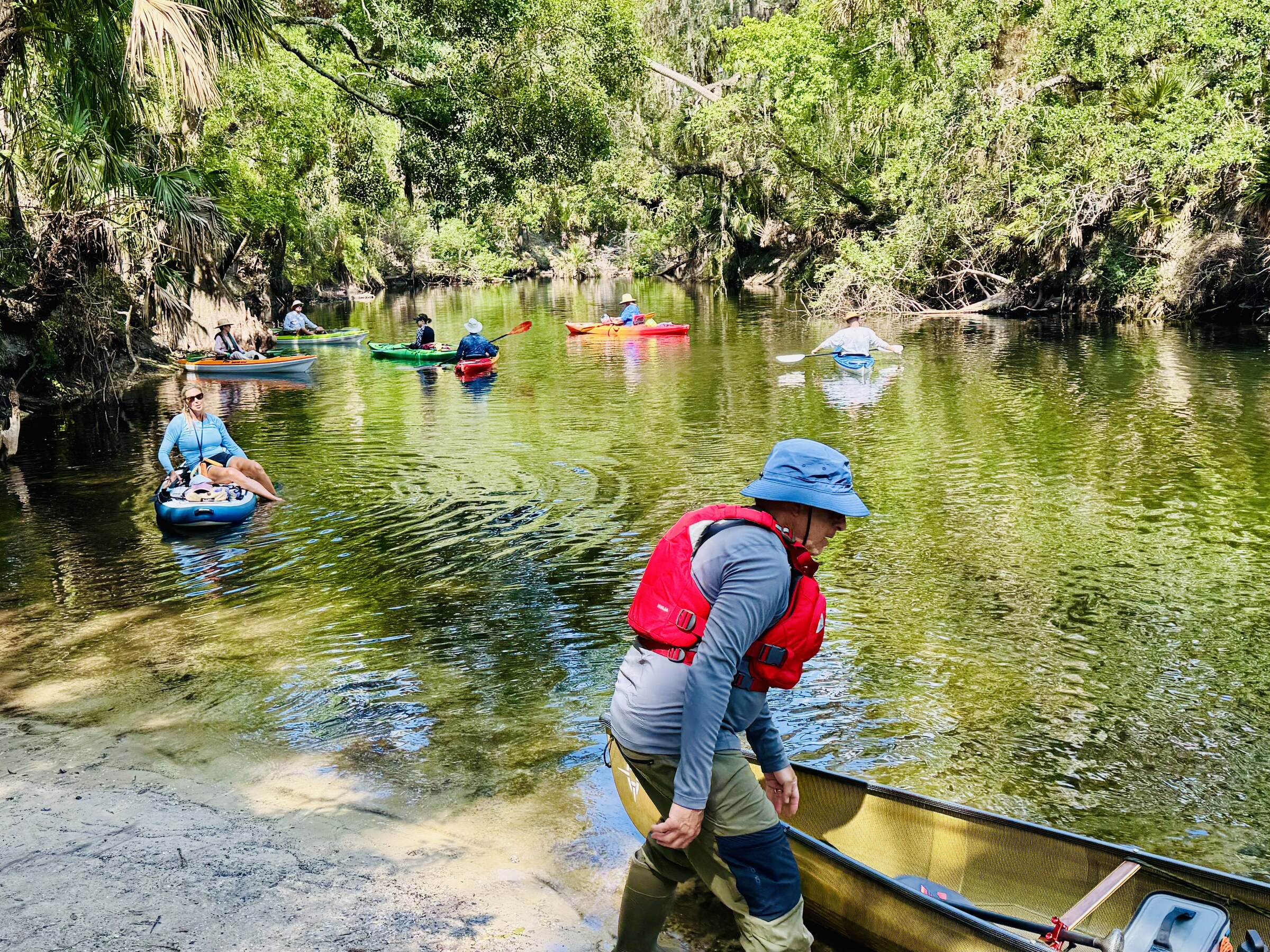
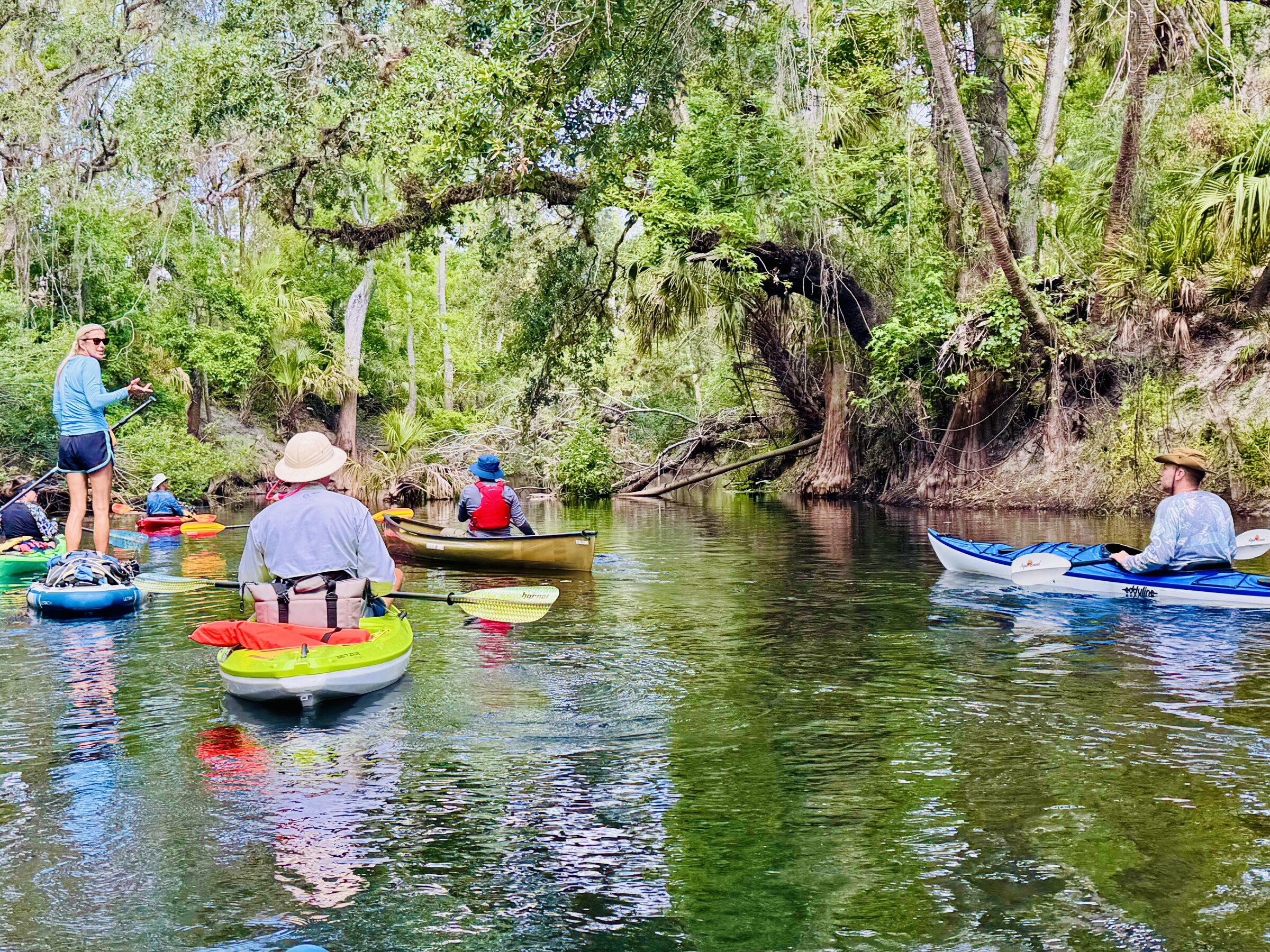
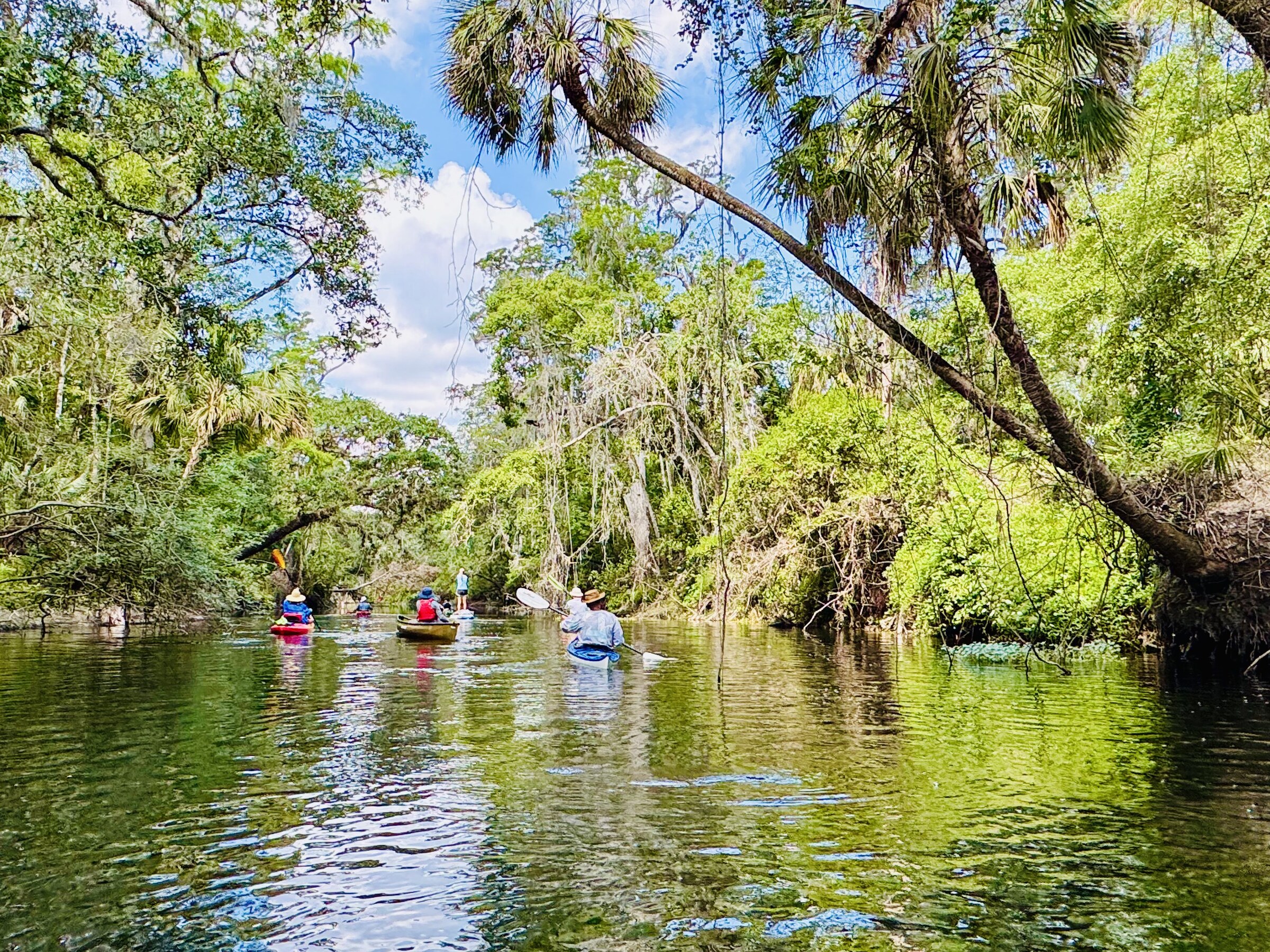
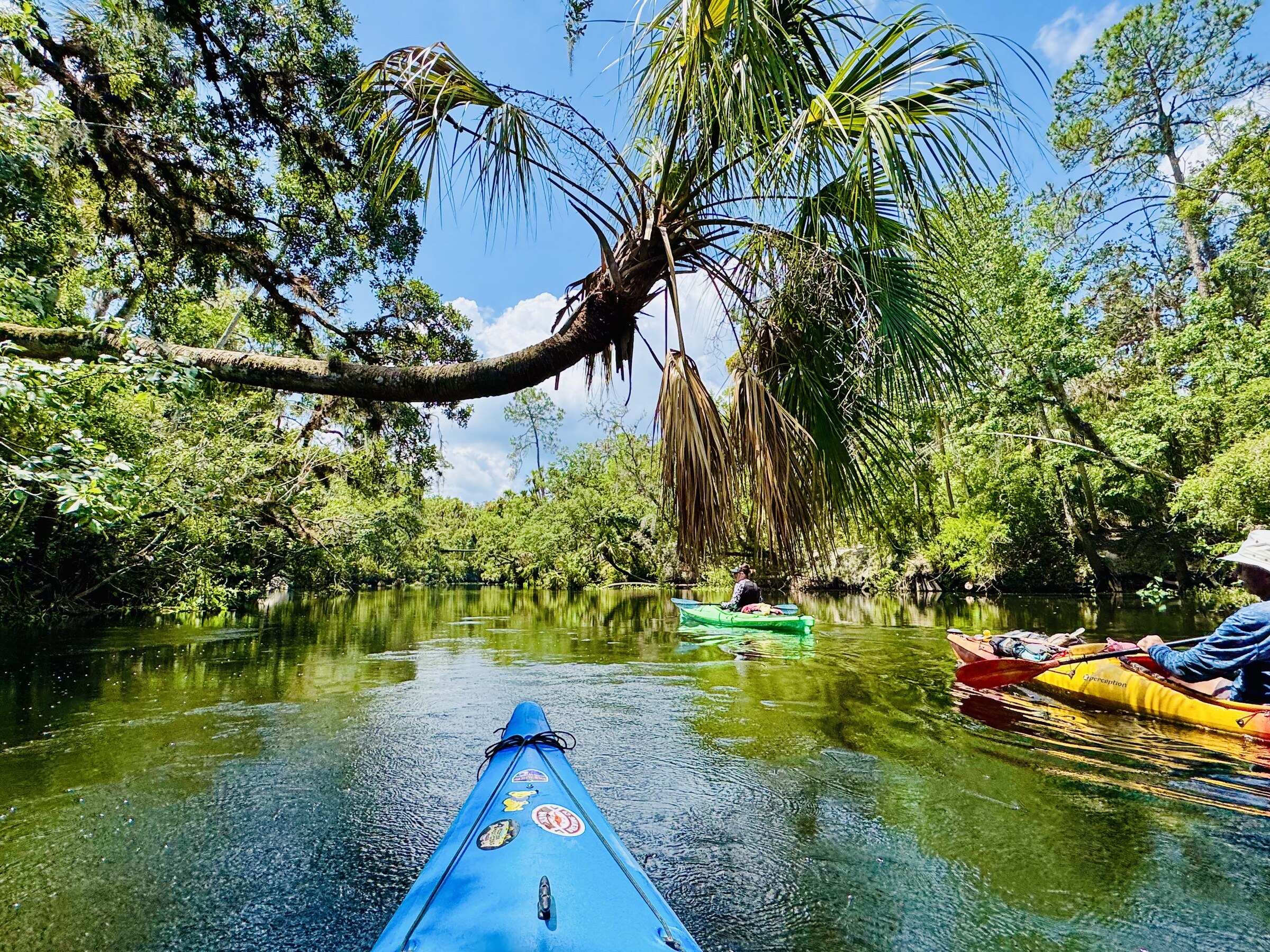
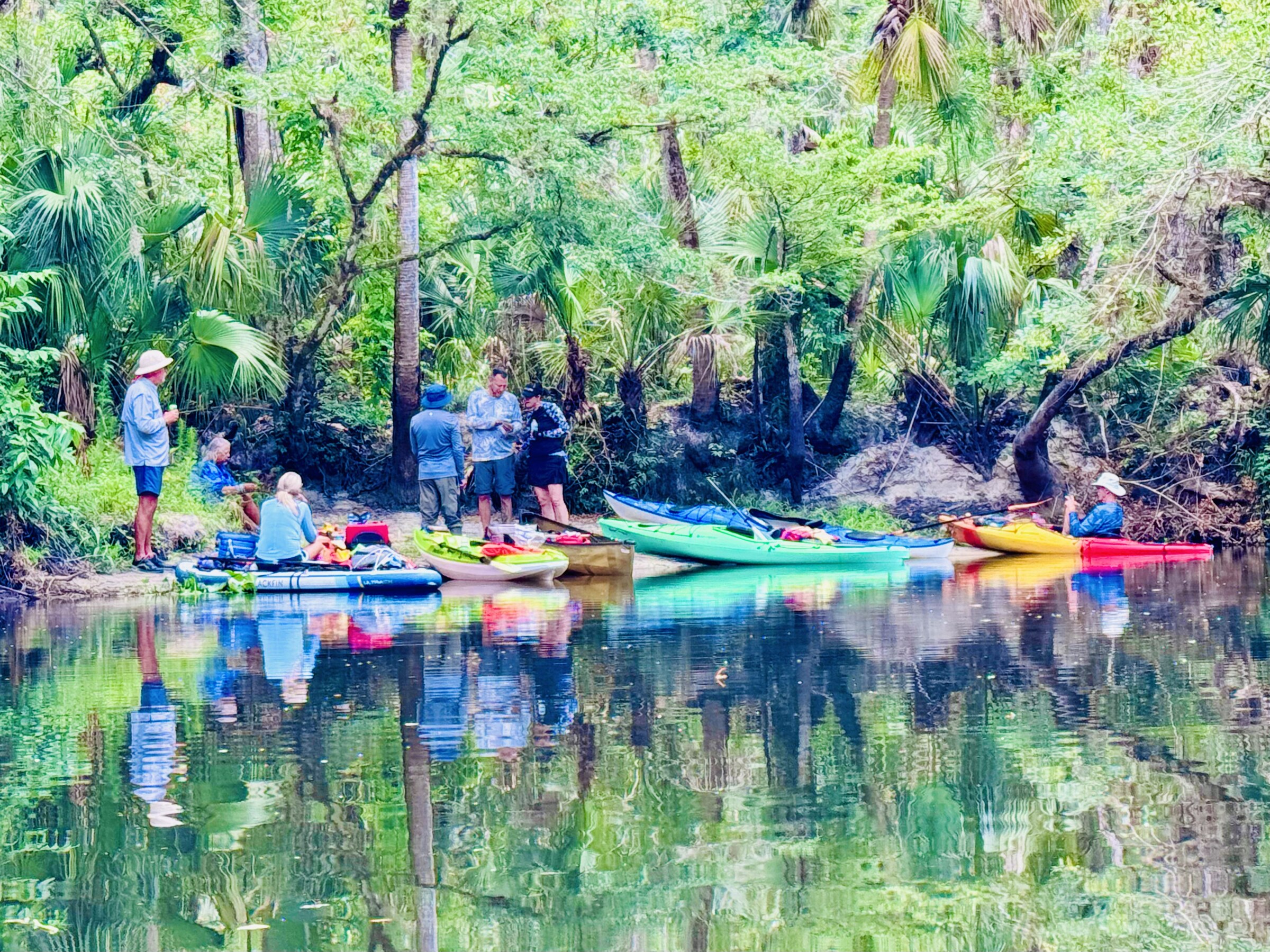
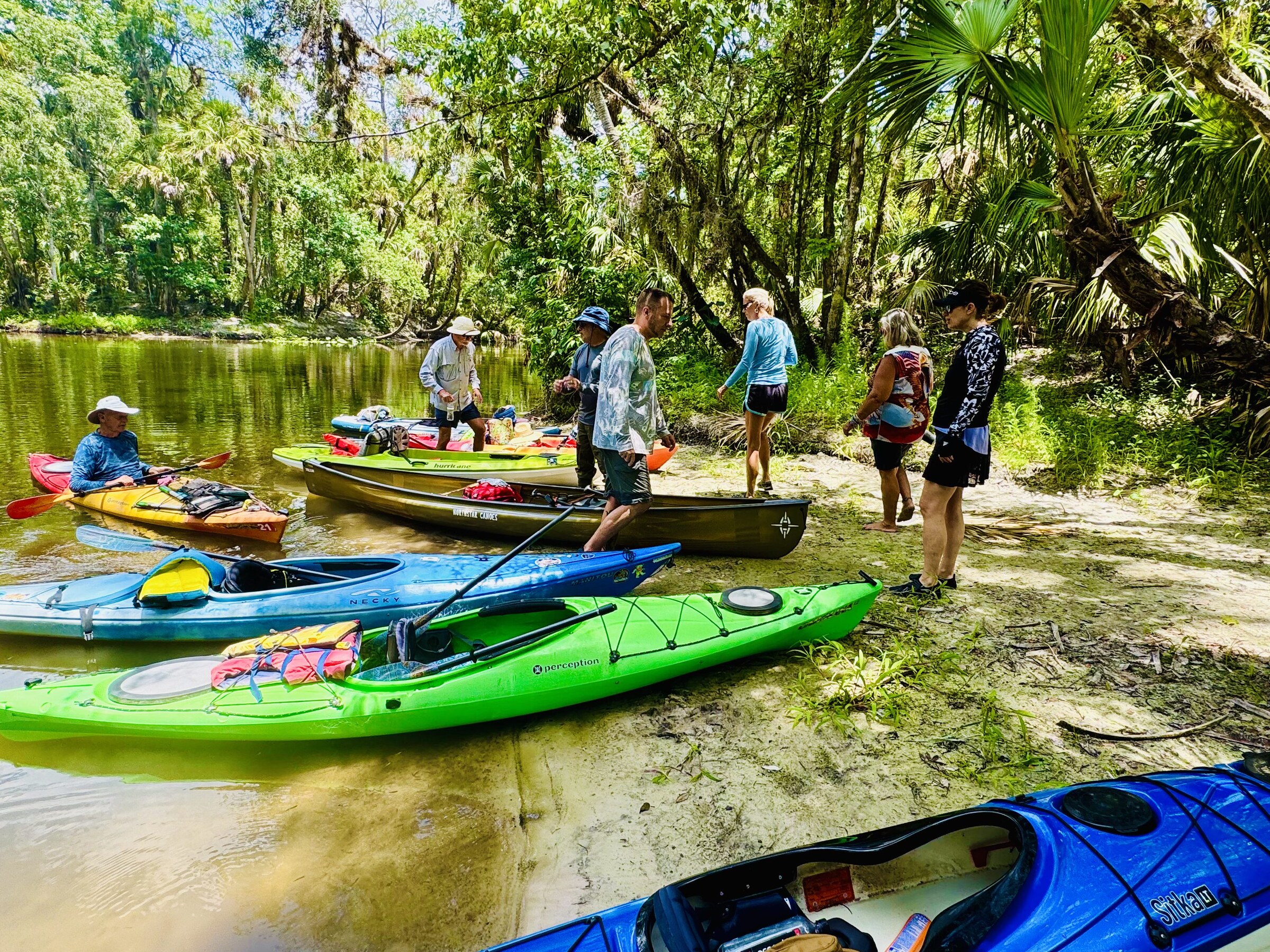
The day began in bright Florida sun as boats came off the vehicles and everyone gathered at the water. Once the group was afloat, the developed edge quickly disappeared behind us. Live oaks arched over the river and the first bends gave us a preview of the green corridor ahead.
Into Seventeen Runs
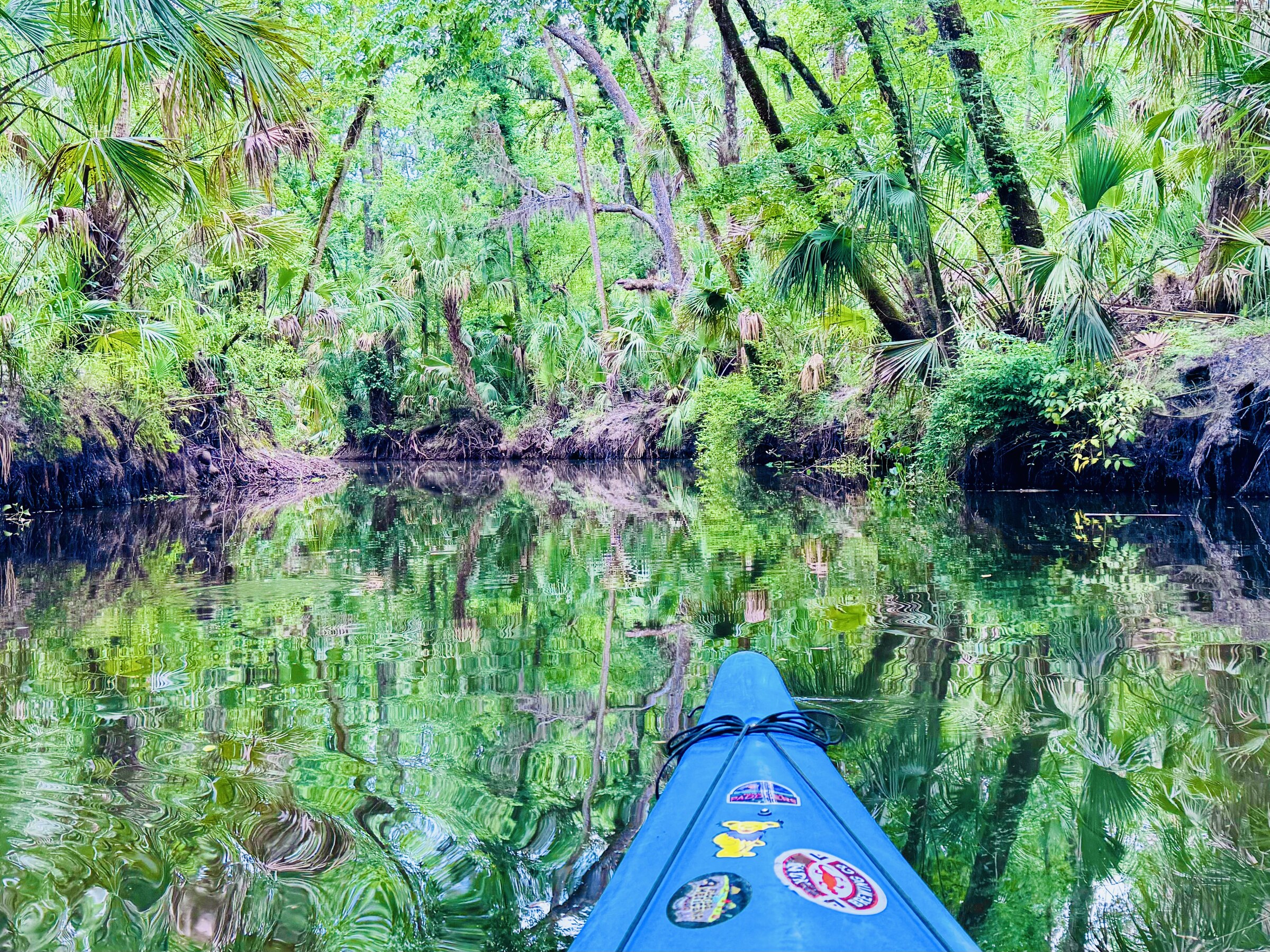
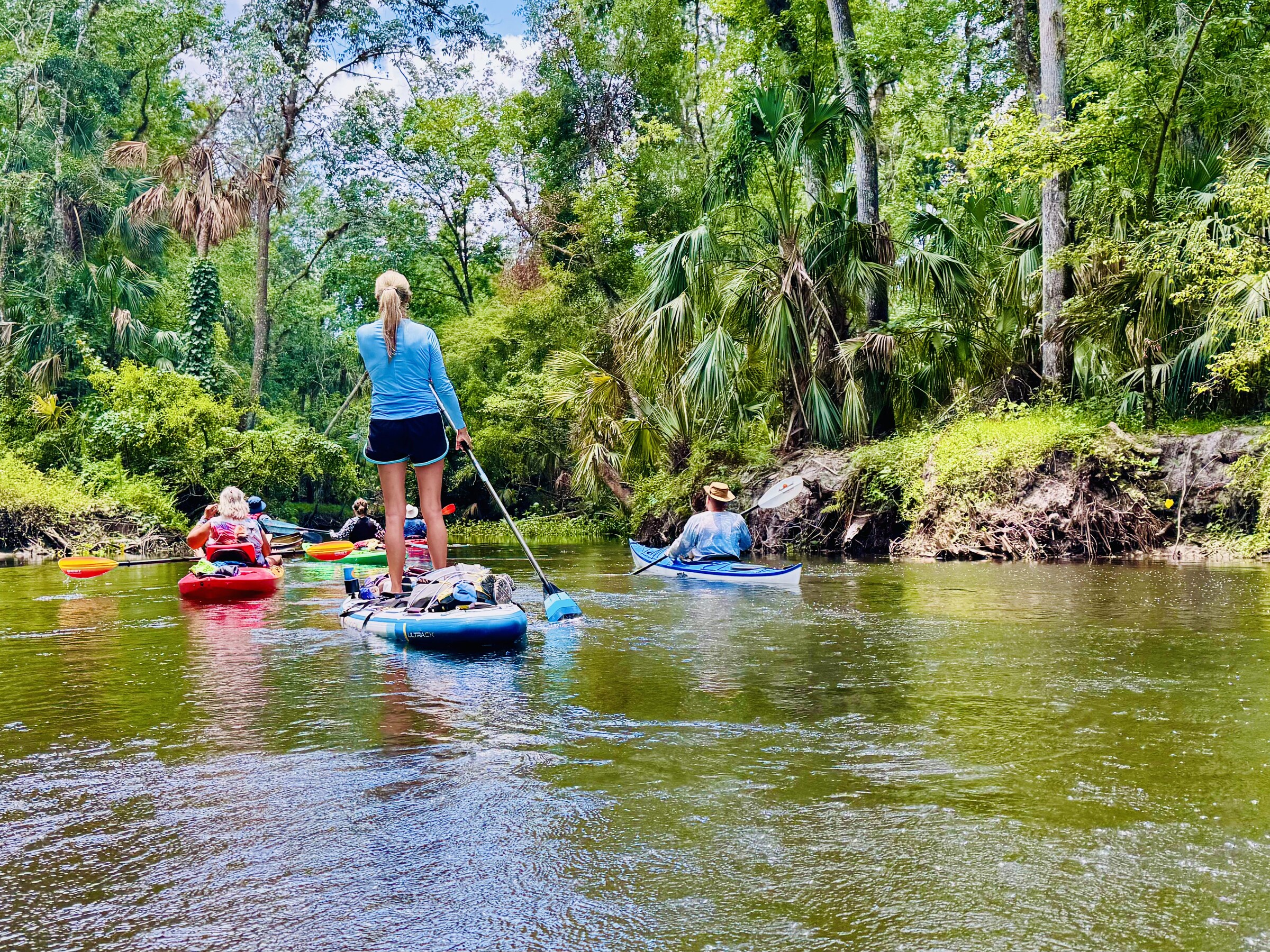
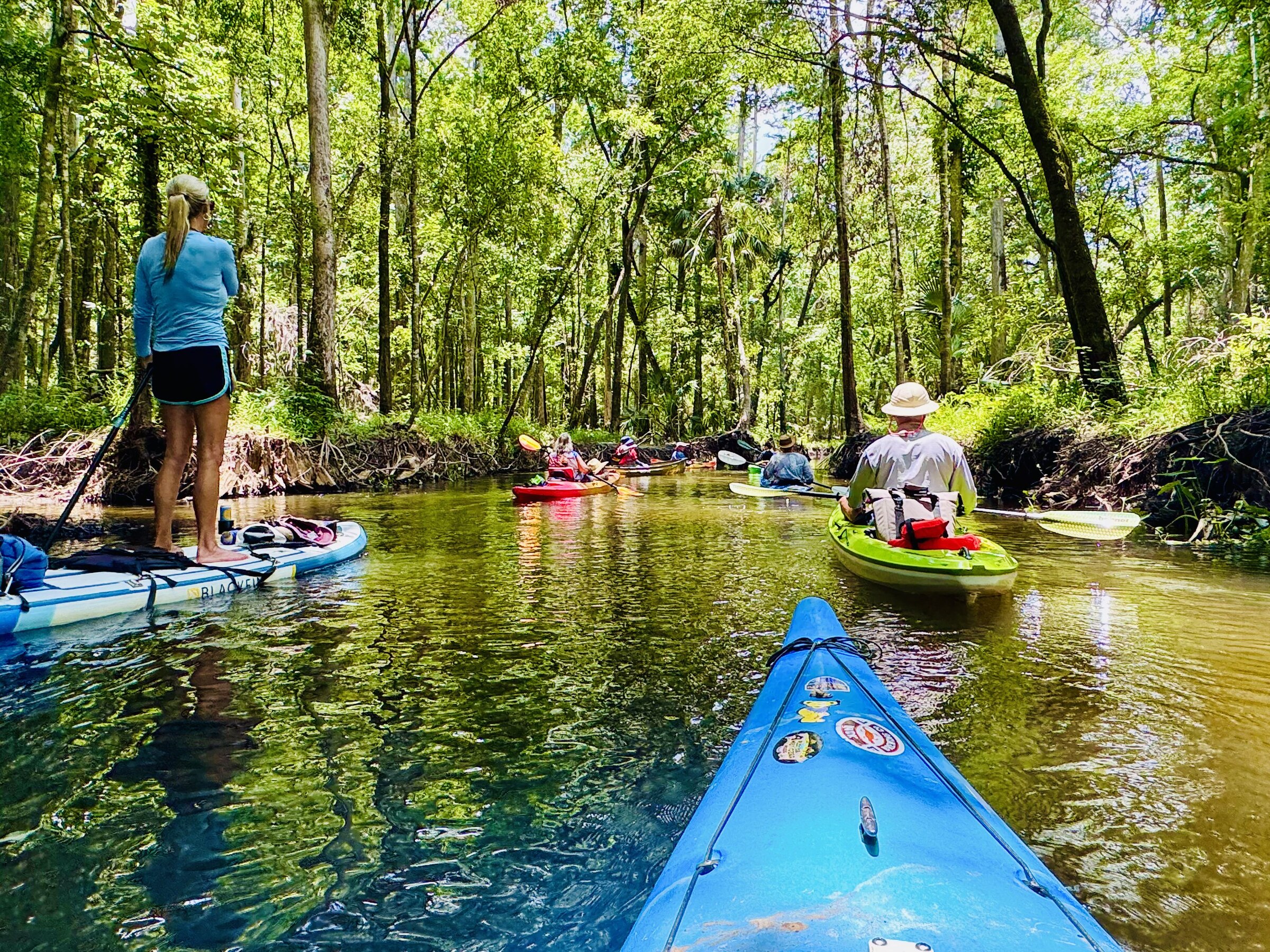
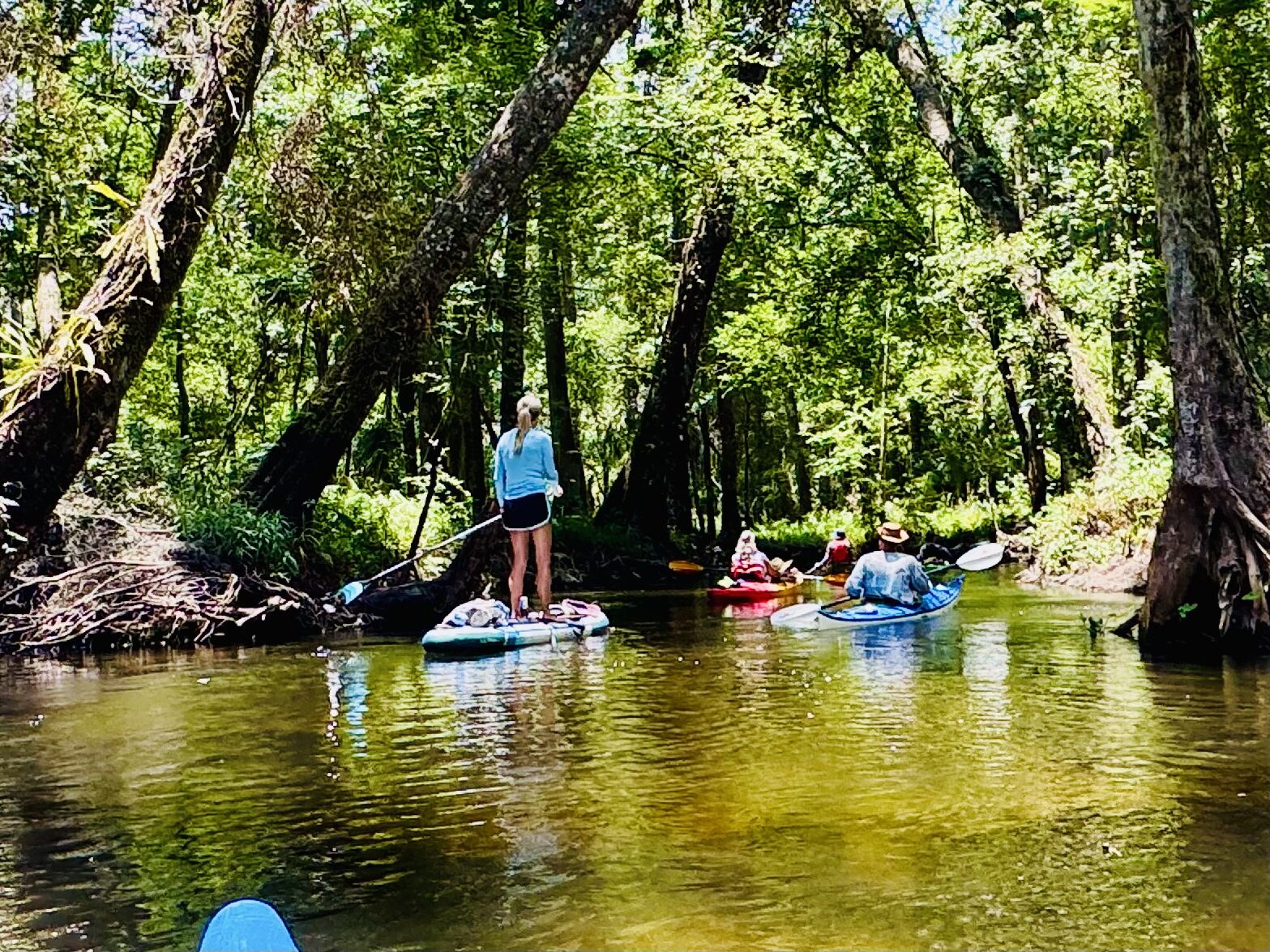
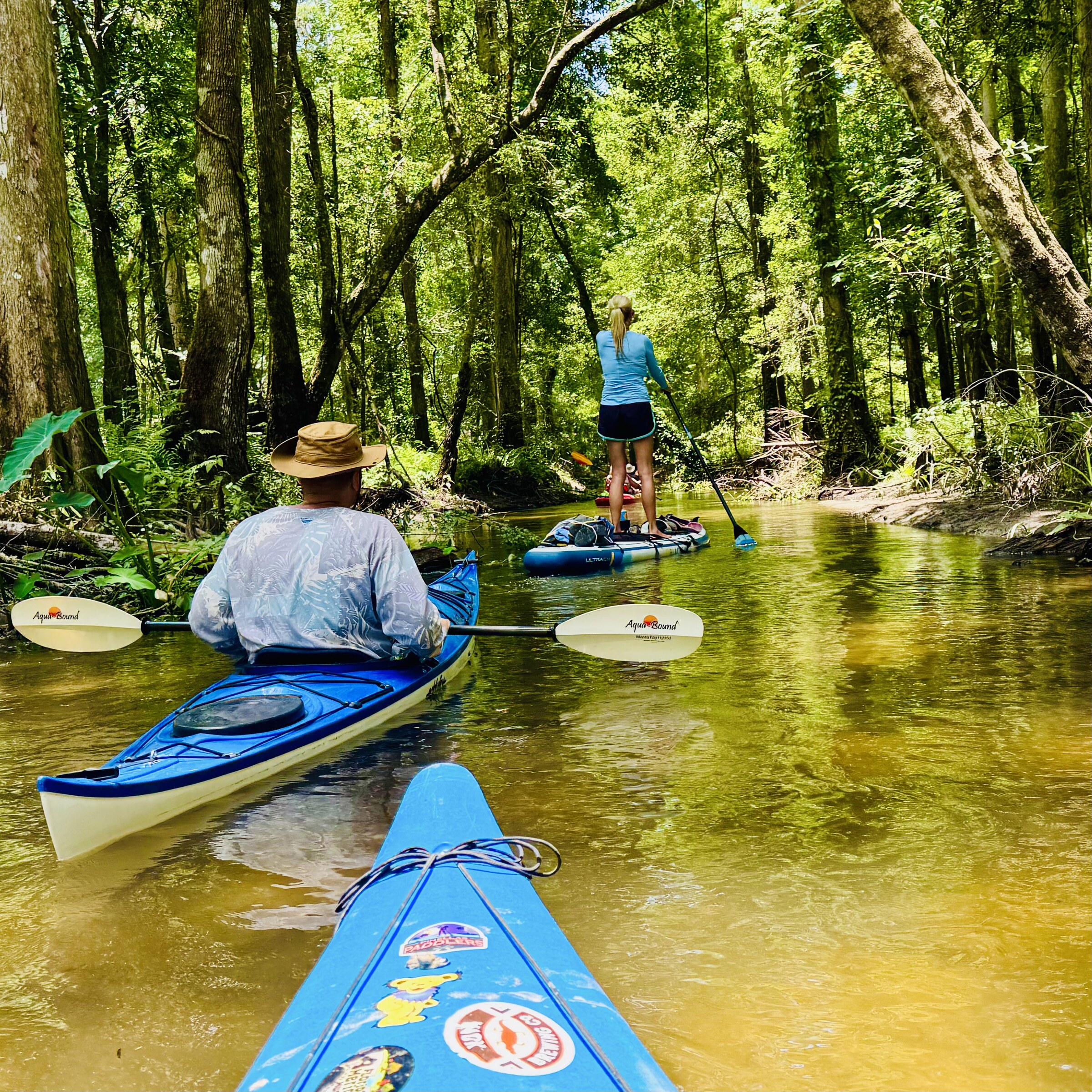
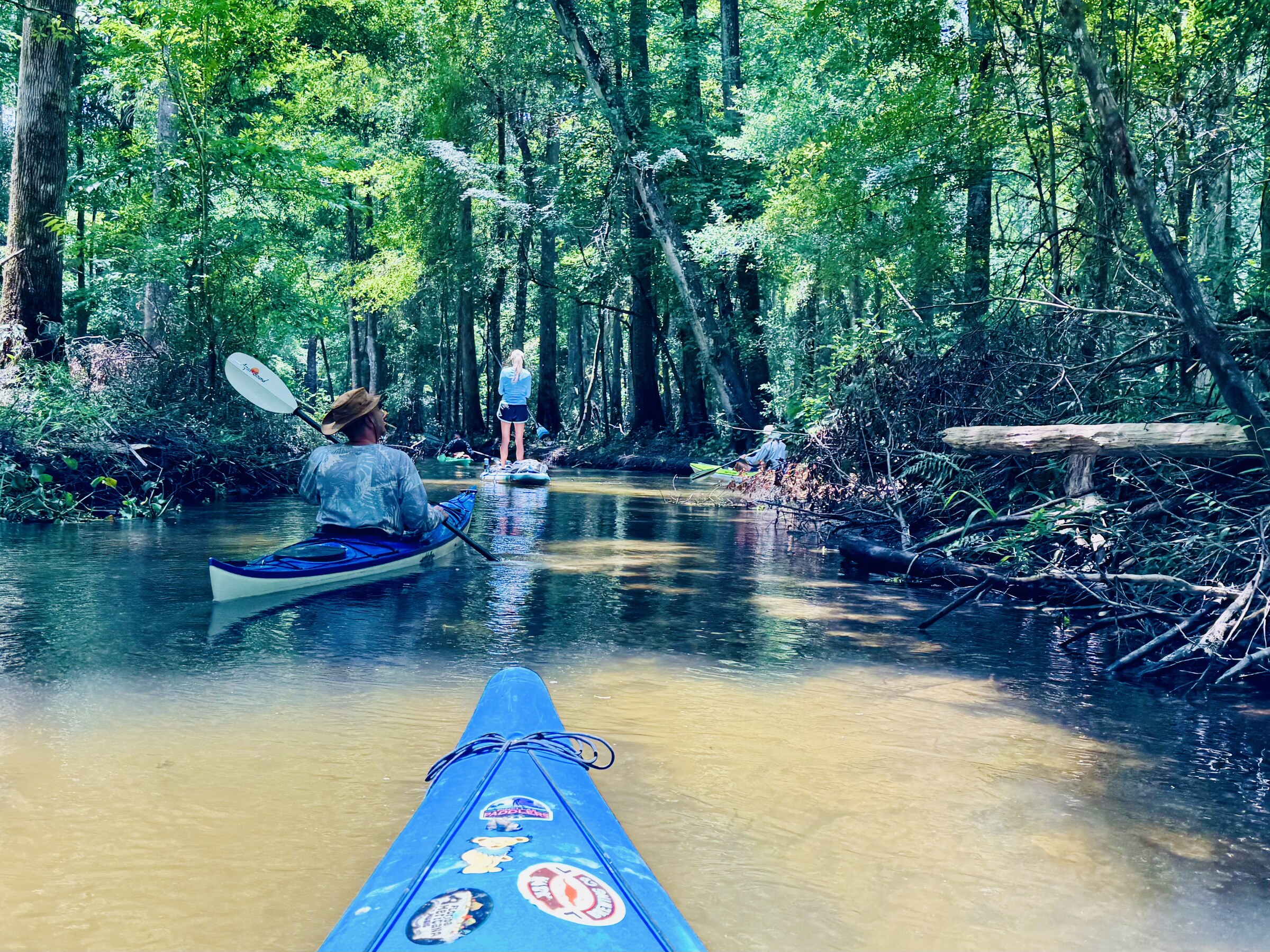
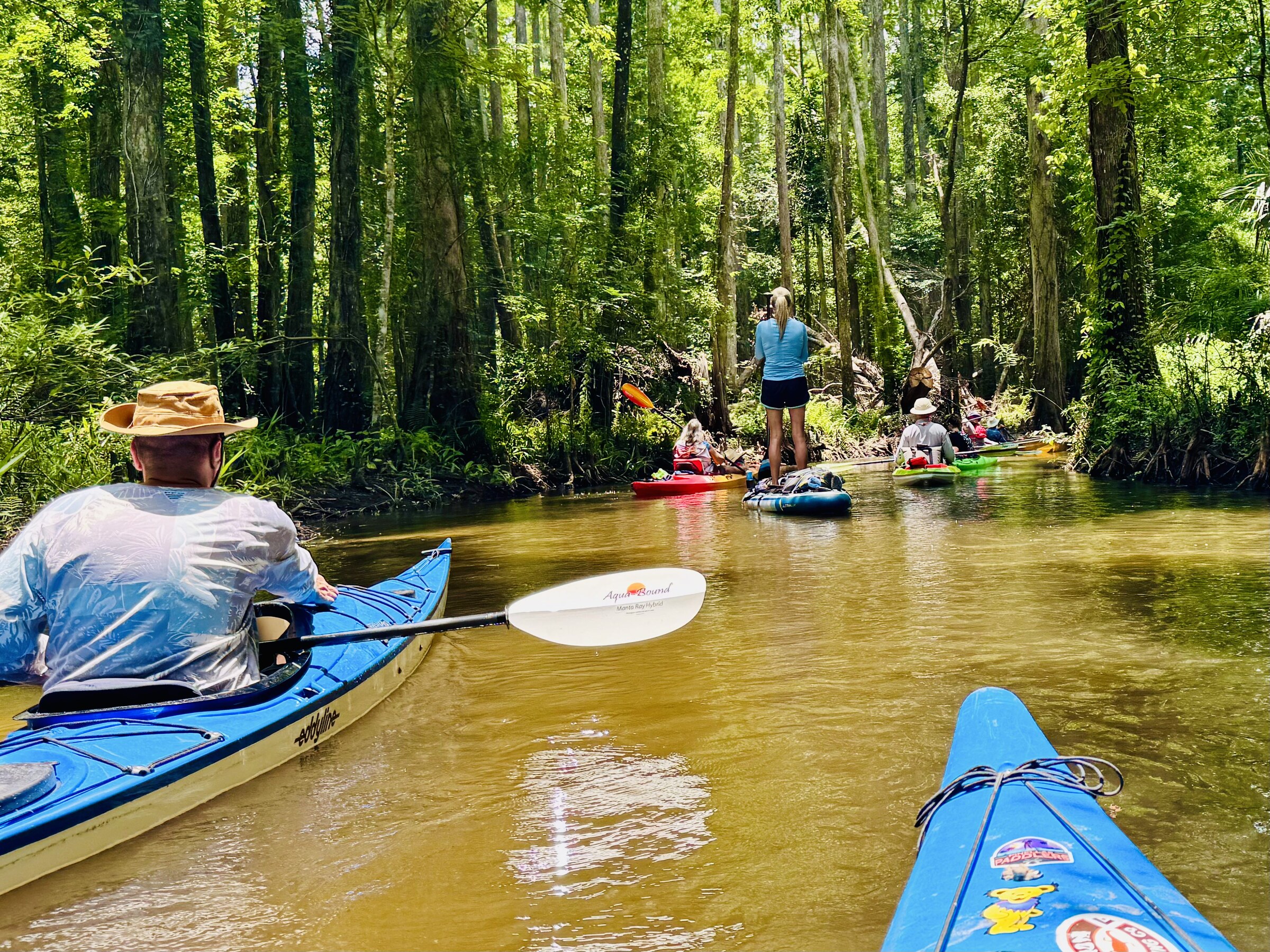
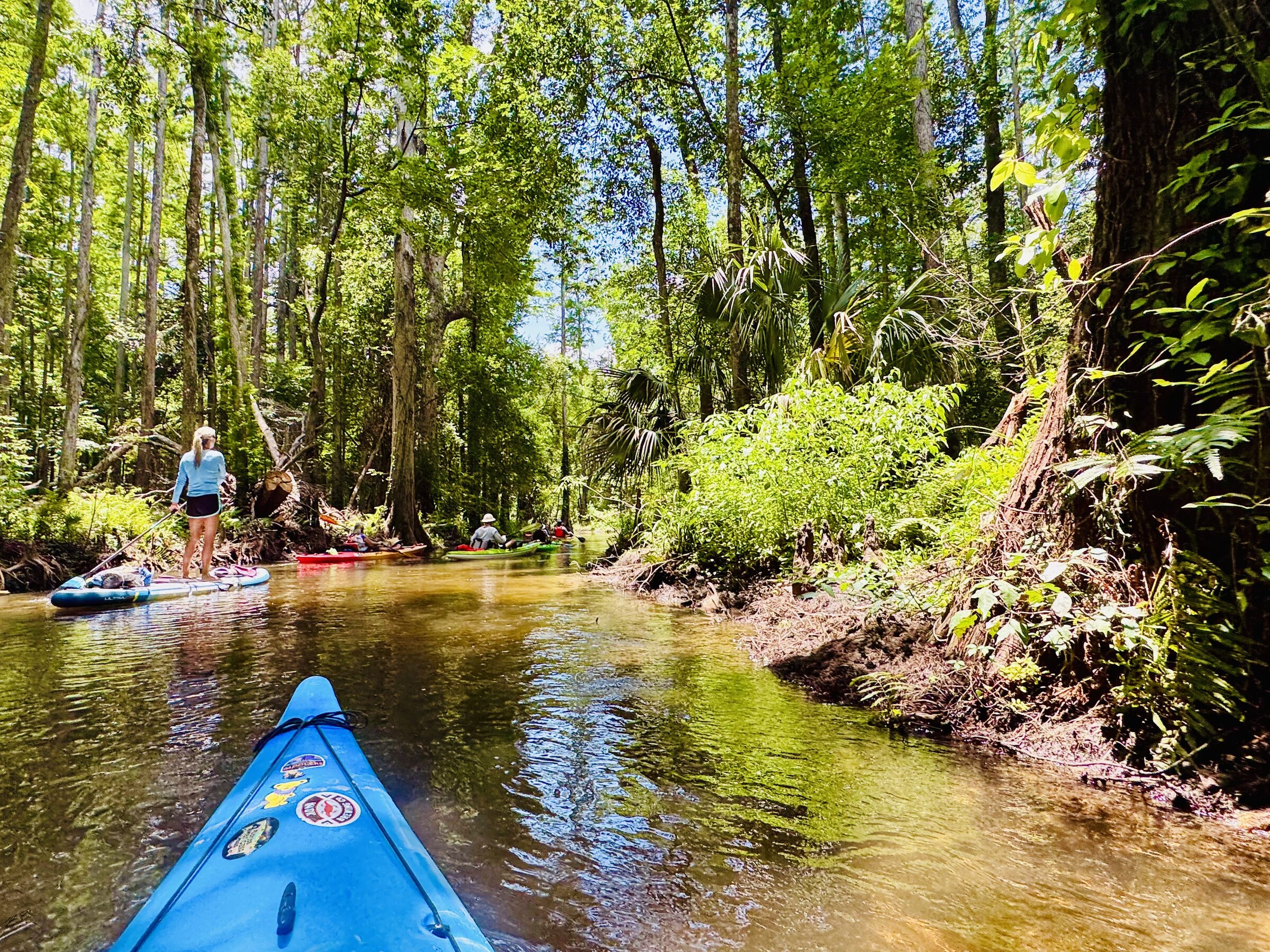
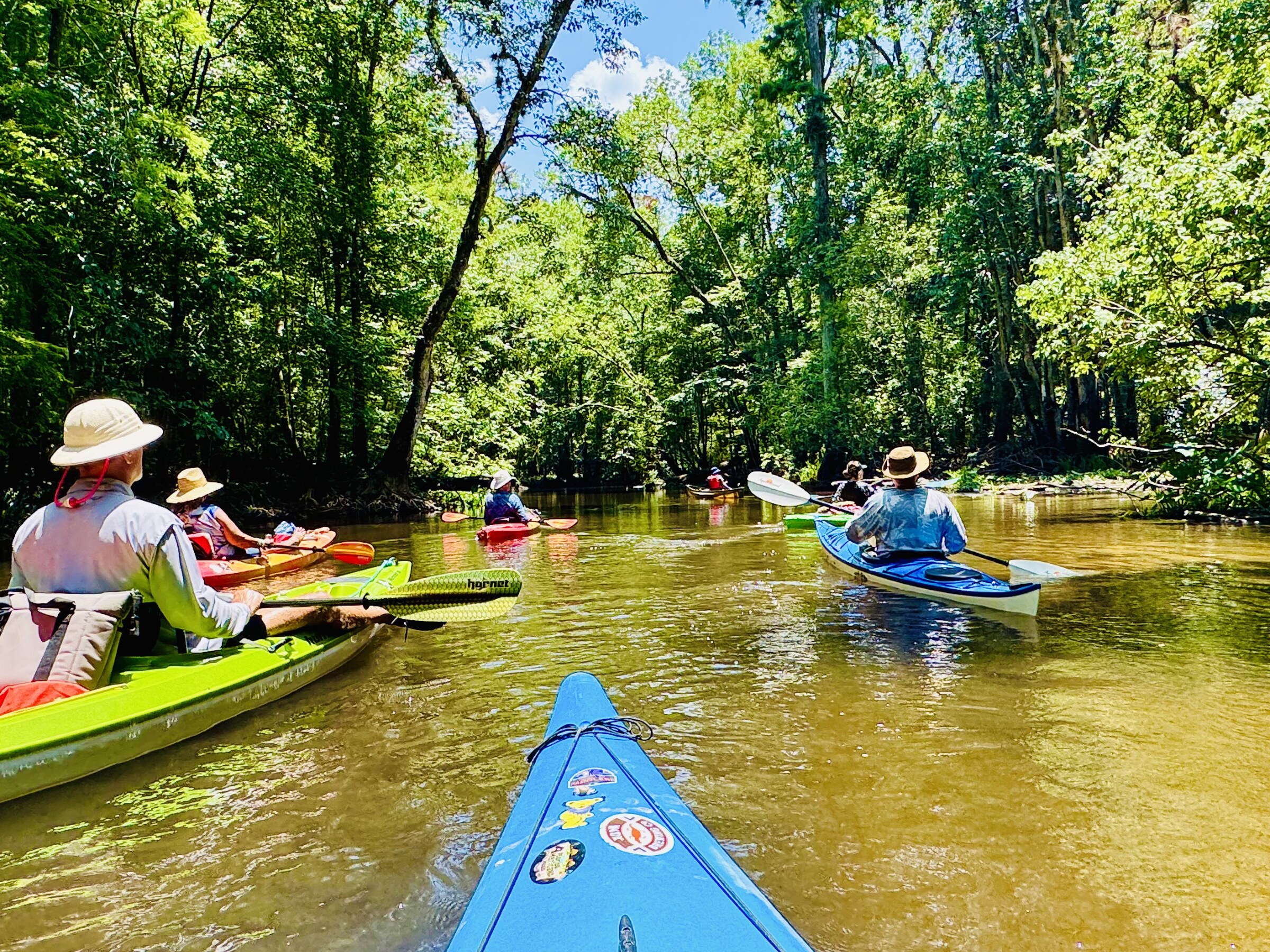
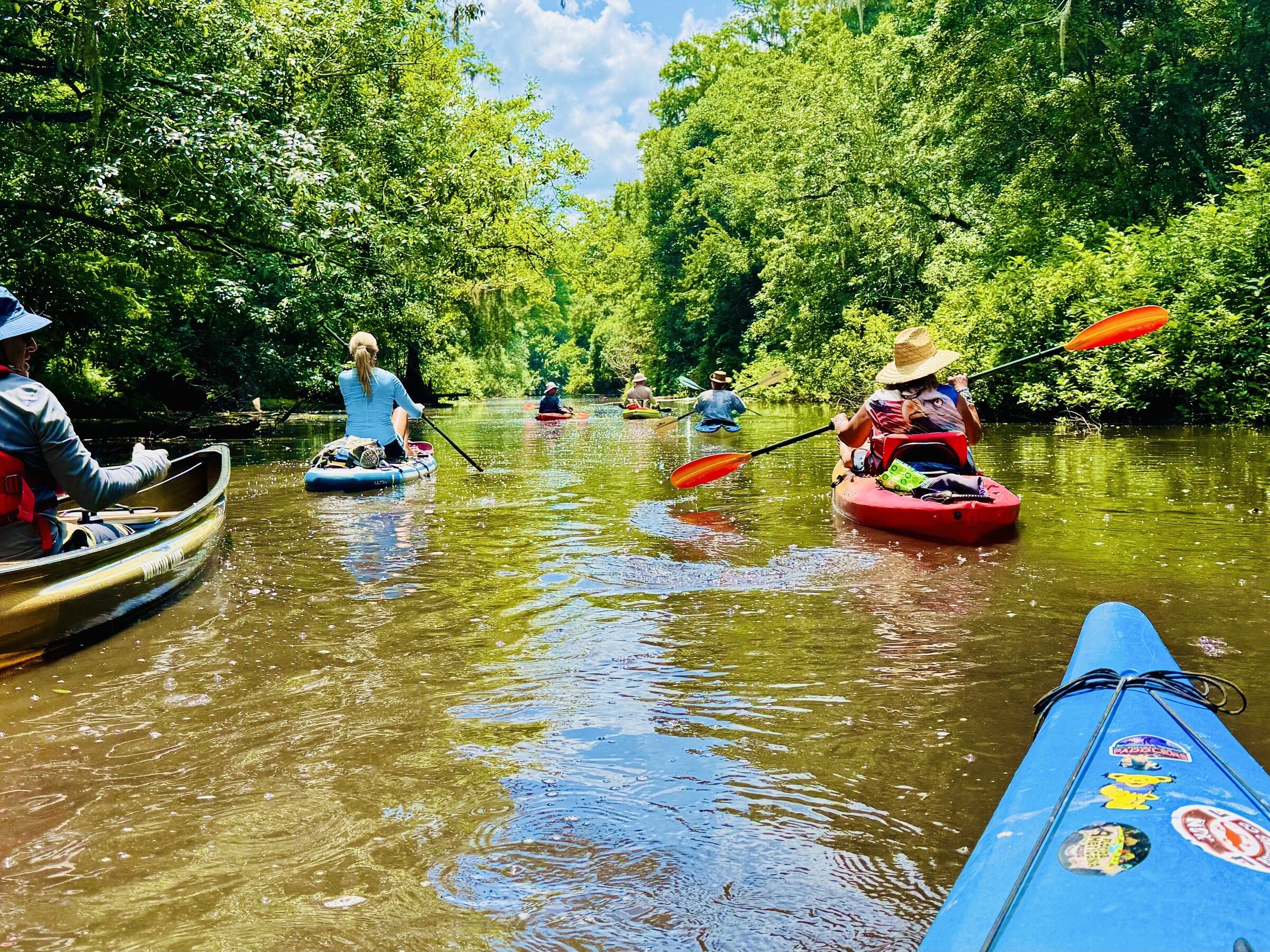
In the upper reaches near Hillsborough River State Park, the river is wide, deep and slow. Farther downstream, as it enters the Seventeen Runs section, its character changes dramatically. The channel narrows considerably—sometimes to only about 10 feet wide—and the current moves much faster than it does upstream. The later photographs from this paddle show that change clearly: shallow, swiftly moving water over a sandy and gravelly bottom, hemmed in by the floodplain forest.
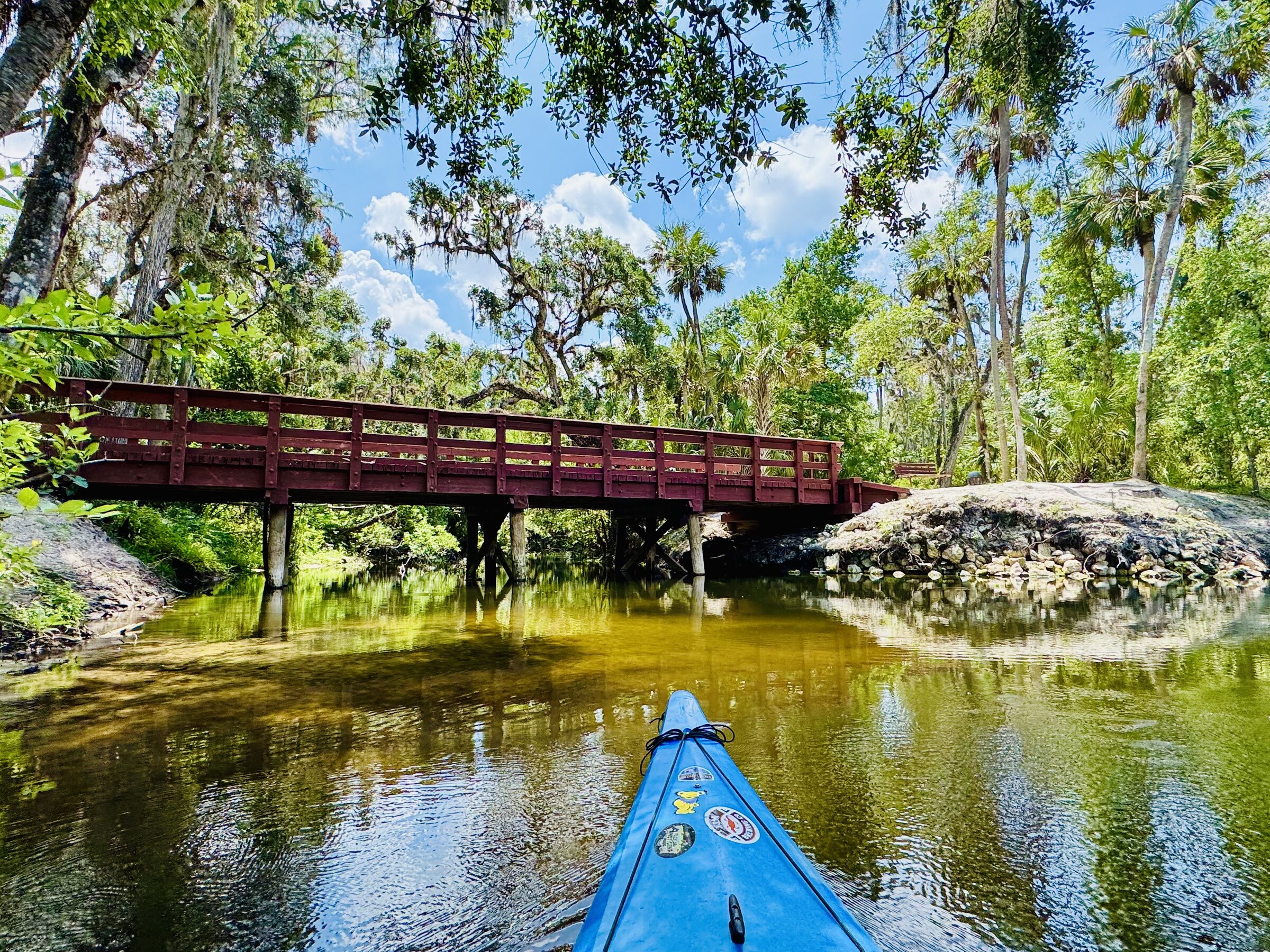
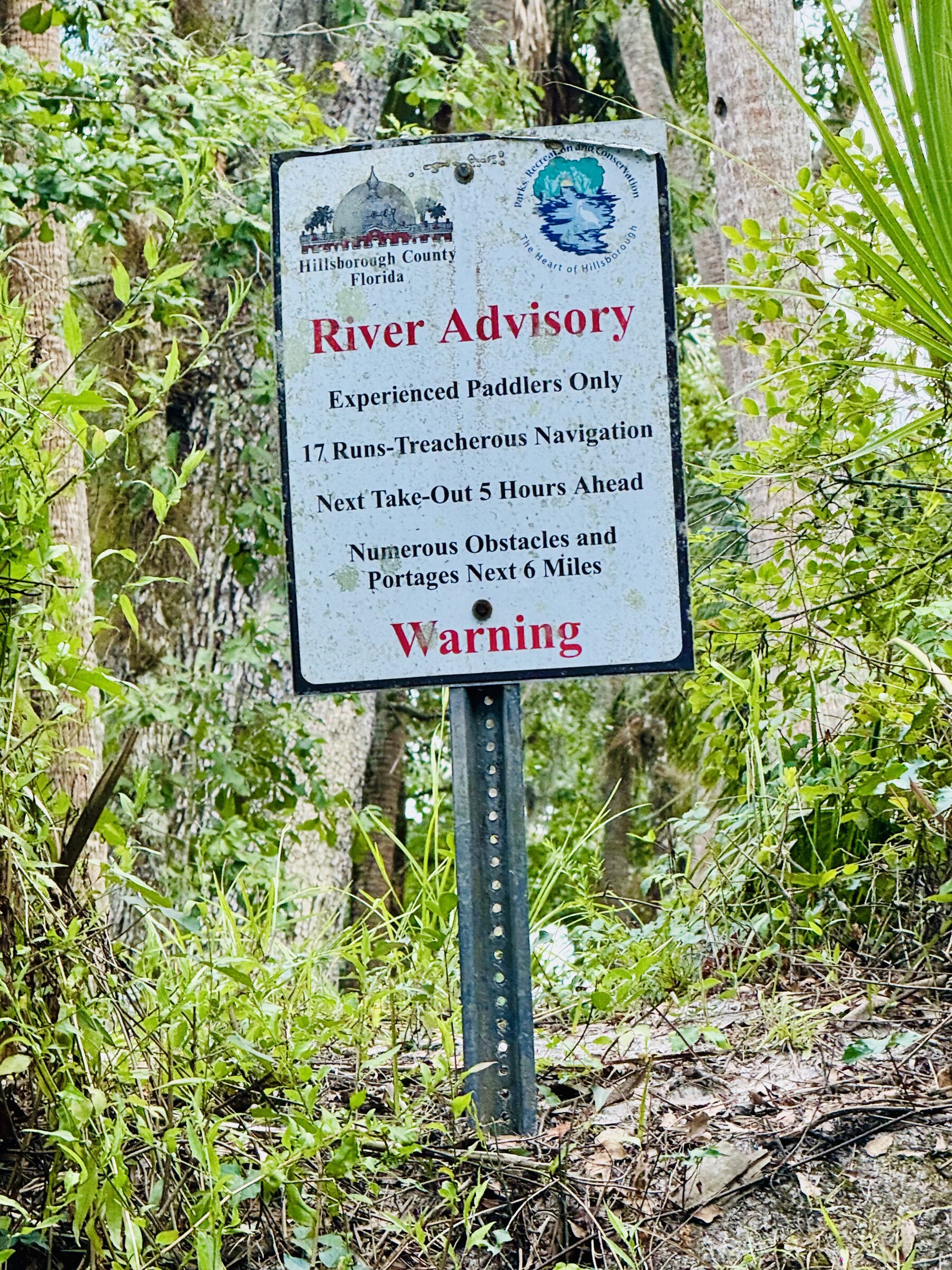
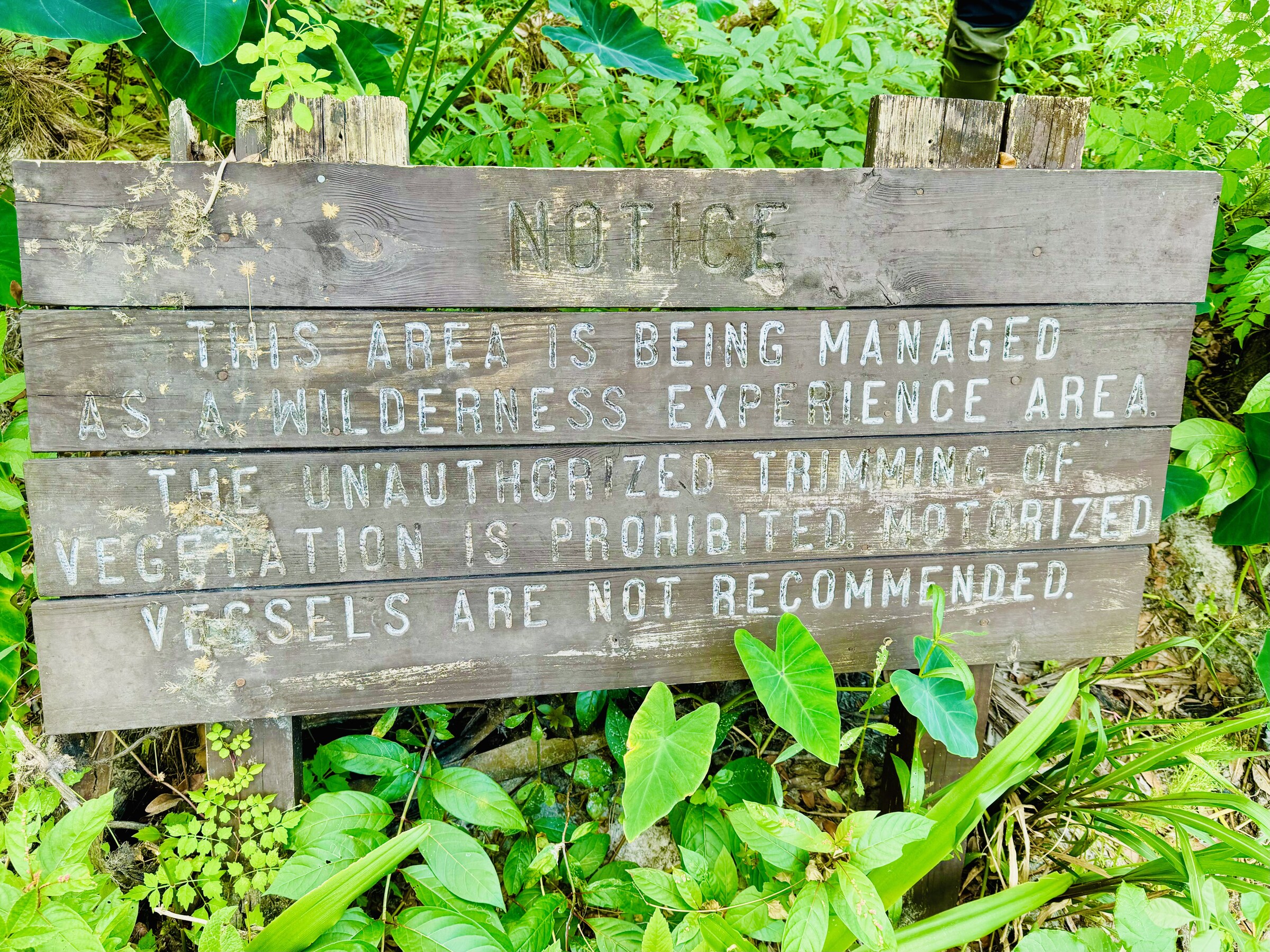
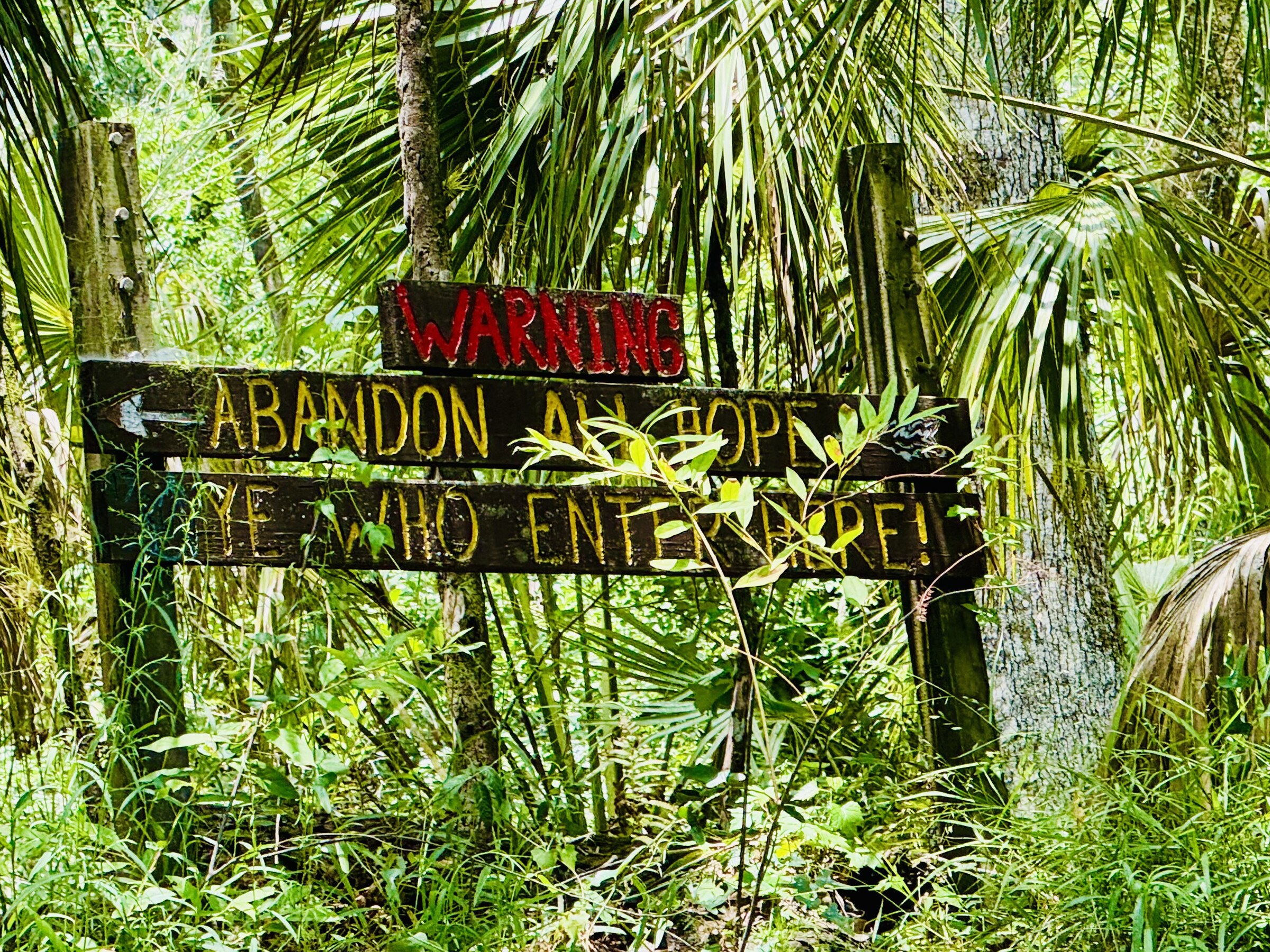
Beyond the broad river, navigation became more interesting. The route slipped into a maze of side channels where the current, the most open water and the group ahead offered the best clues. Old signs along the banks added to the feeling of entering a place set apart from everyday Florida.
May is normally the final part of the dry season, just before the summer rains begin, so the Hillsborough River is often near its lowest level. That was especially evident on May 21, 2025. Later in the rainy season, higher water spreads far out into the surrounding floodplain, giving alligators, wading birds and other wildlife a much larger area in which to disperse.
Wild neighbors
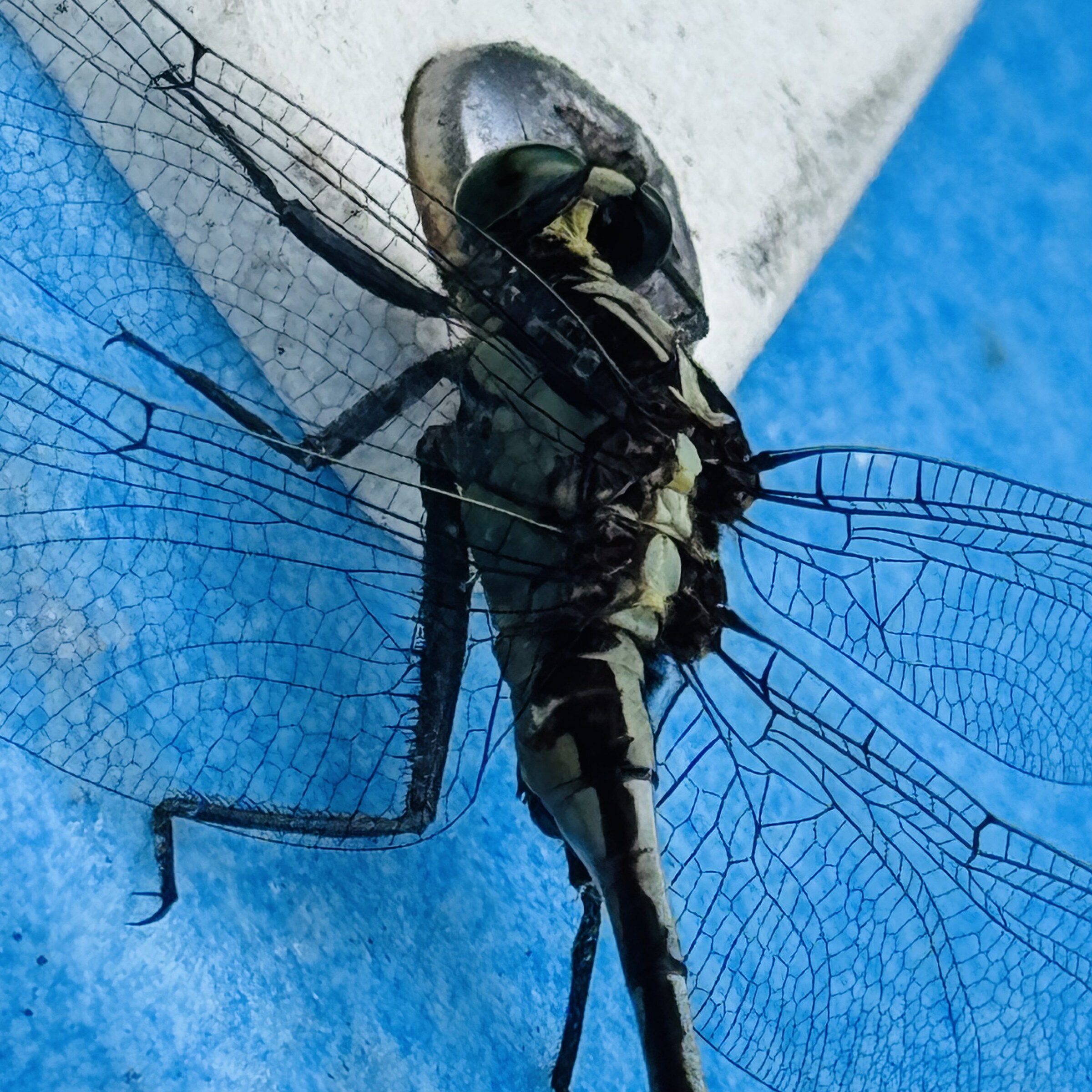
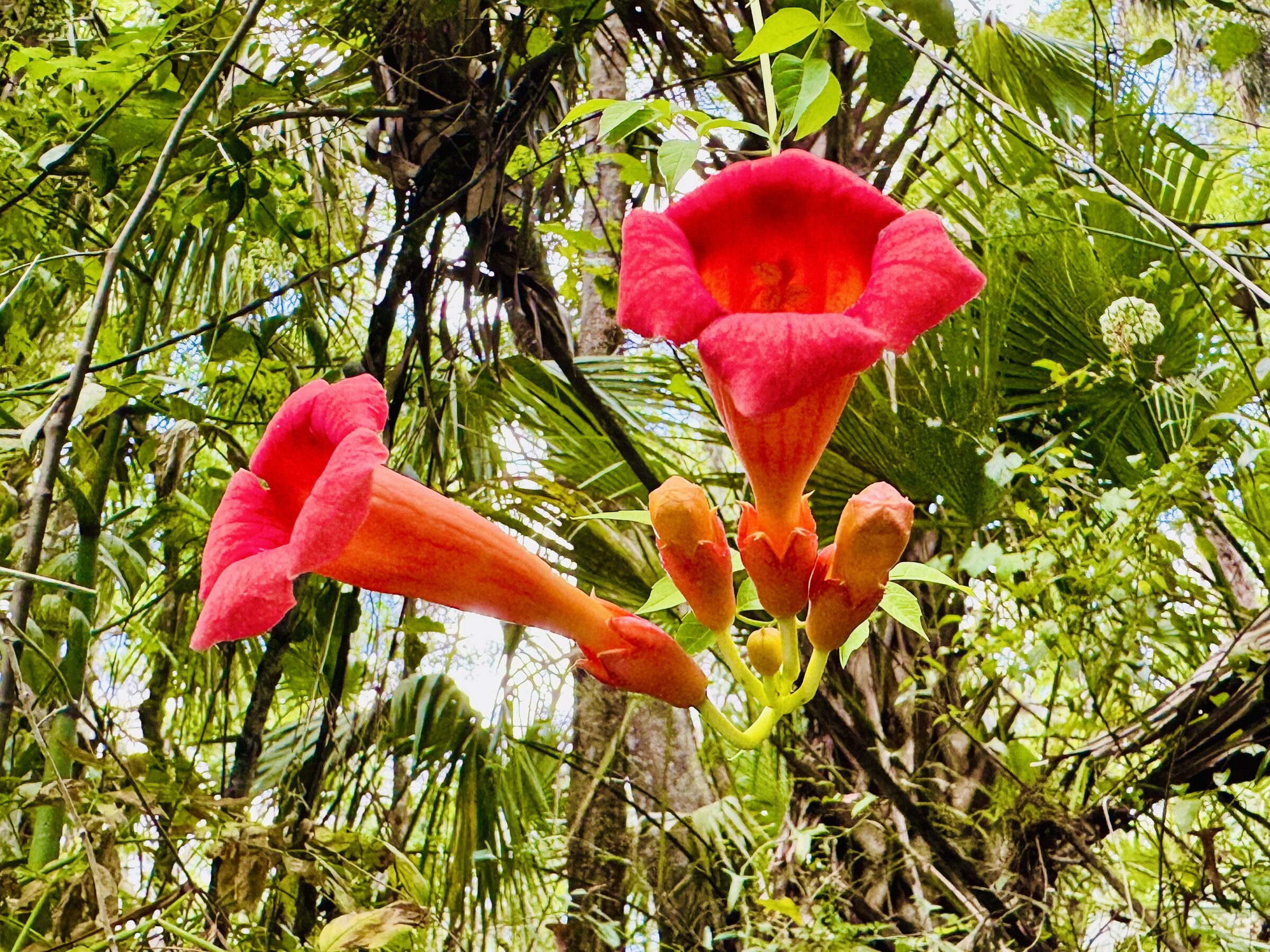
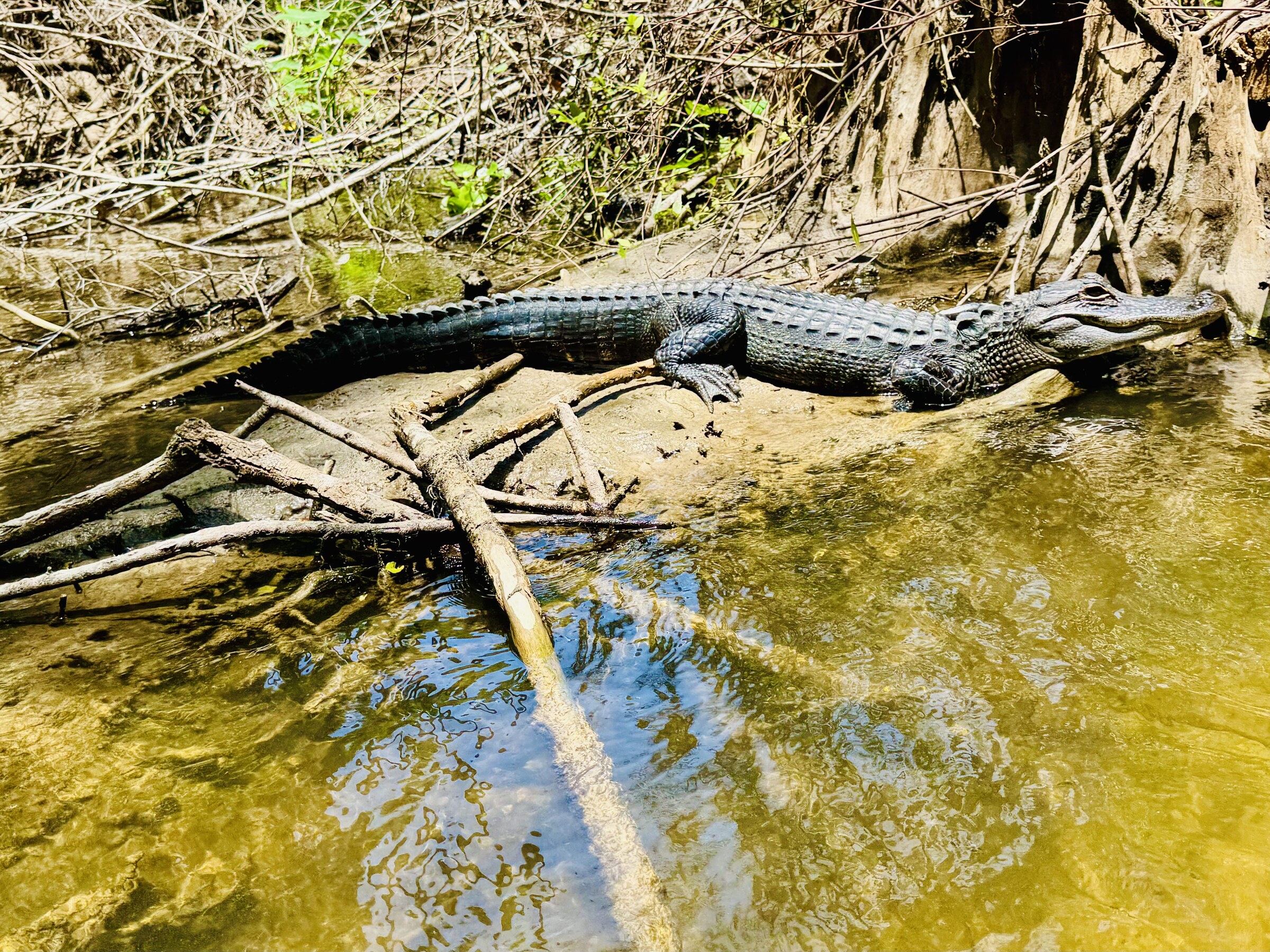
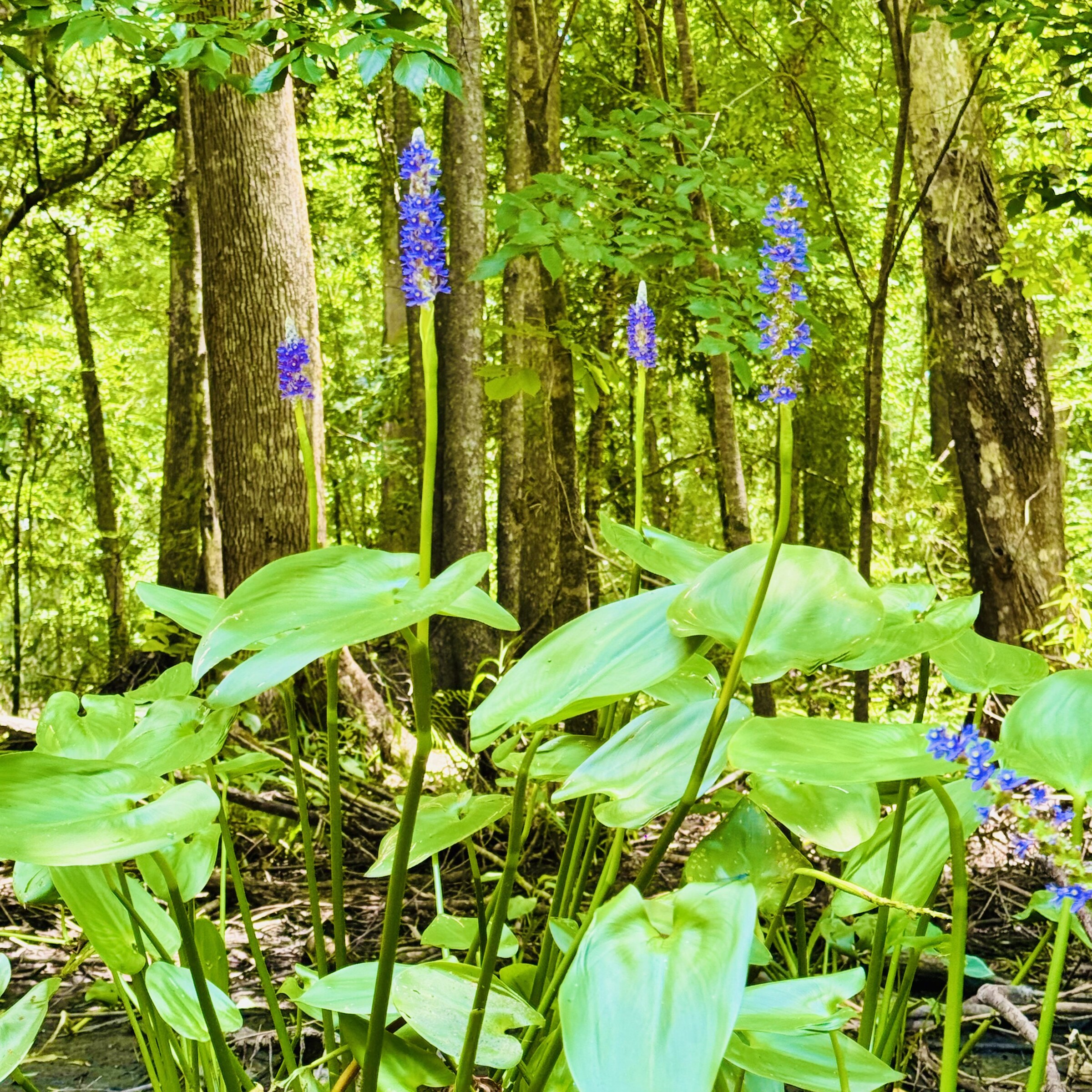
The floodplain was alive with small details, from insects and flowers to the unmistakable form of an alligator stretched along the bank. Many alligators can be seen along this course. I have photographed so many alligators over the years that I included only a couple of them in this set, but those two photographs should not suggest that they were the only ones present.
Most of the gators are usually seen along the deeper sections of the river, although at this time of year they can occur almost anywhere along the route. Extreme caution is warranted in the narrow runs. In places the channel is only about 10 feet wide, while some of the alligators are longer than 10 feet. A paddler coming around a sharp bend at a good clip could suddenly surprise a gator on the bank. If it jumps into the water, it may temporarily block nearly the entire channel while several paddlers are trying to stop and back away in the fast current. We stayed alert, gave every animal room and passed quietly without disturbing it.
Following the winding water
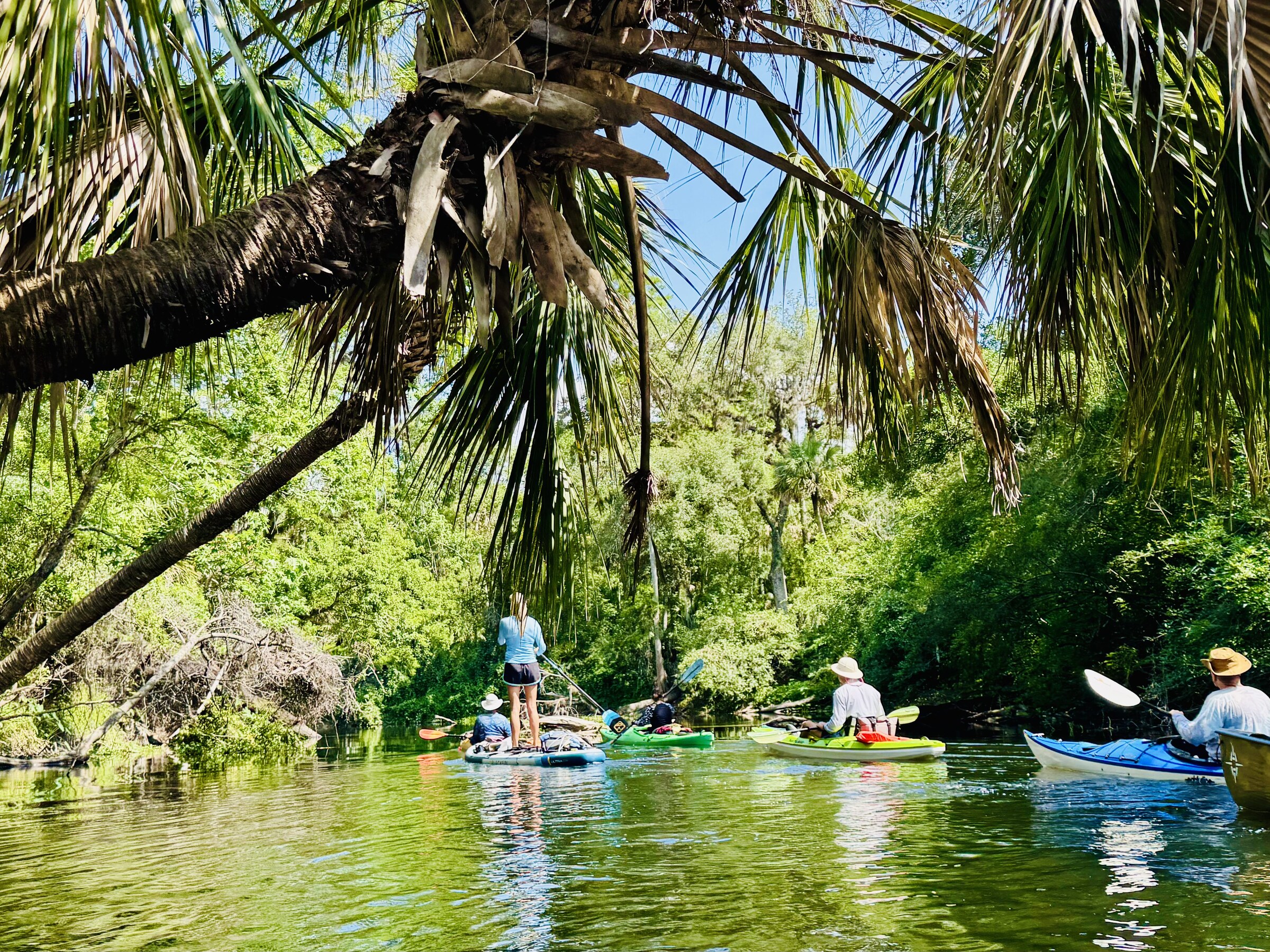
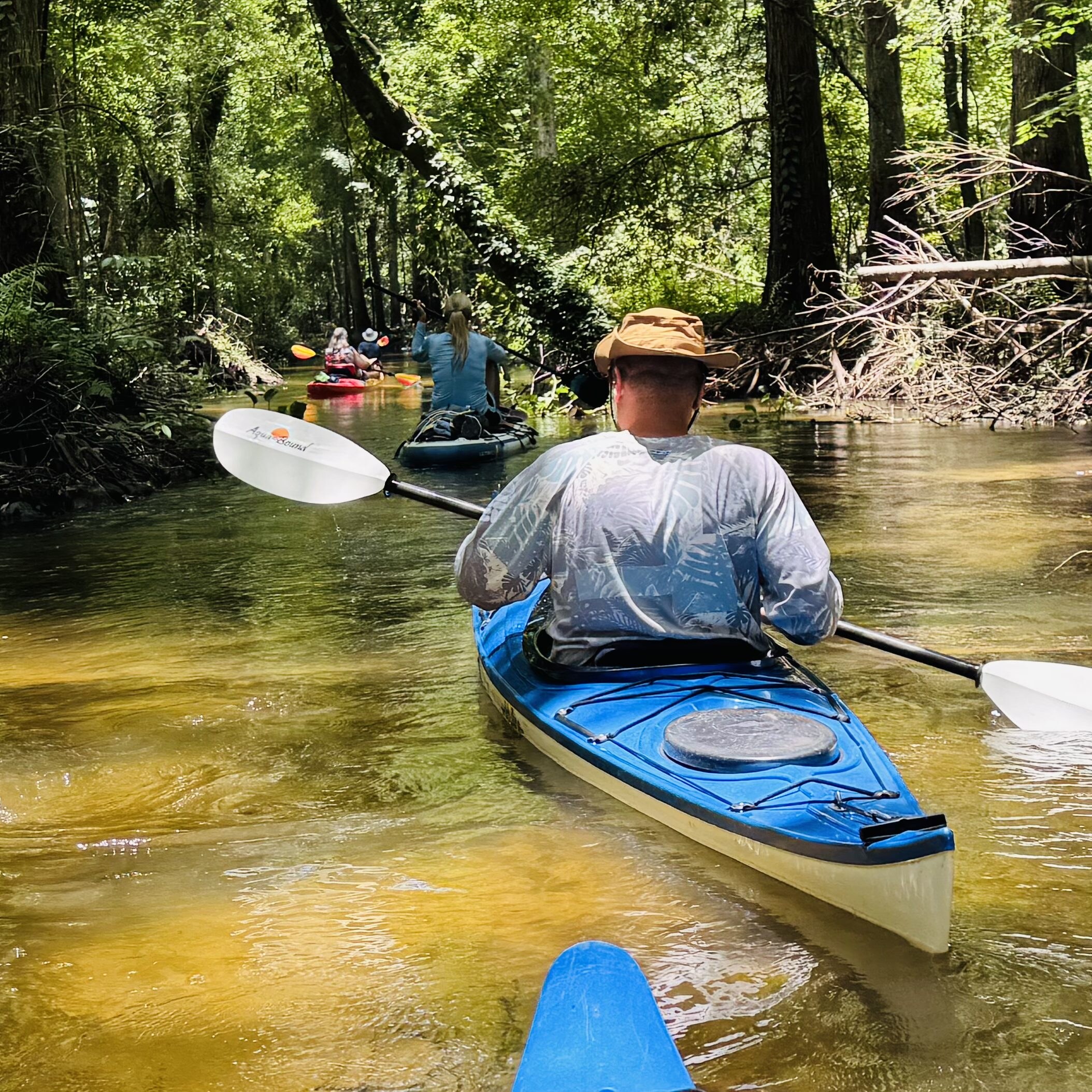
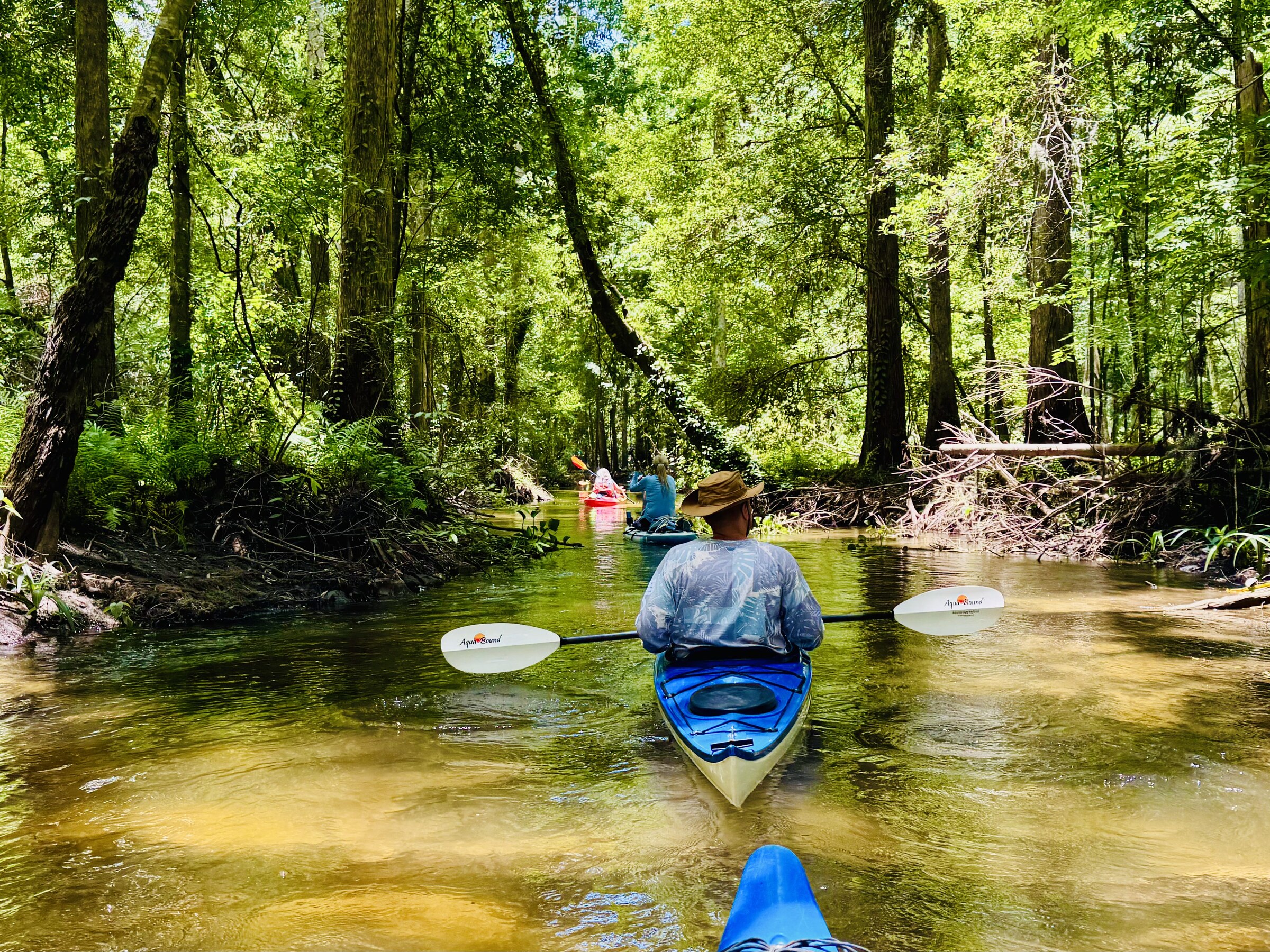
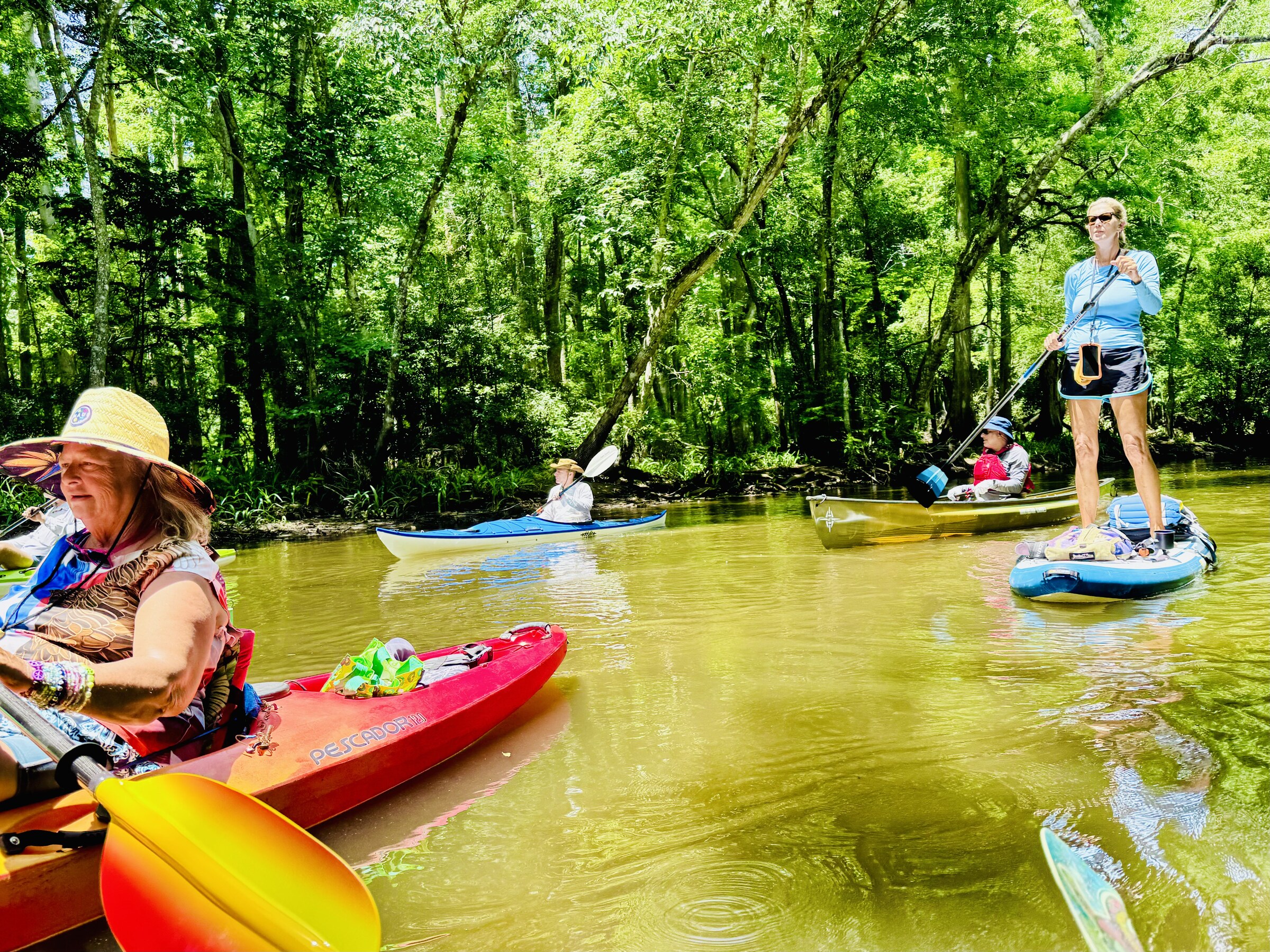
For long stretches the channel felt barely wider than the kayaks. The shallow sandy and gravelly bottom was visible beneath us, but the constricted channel accelerated the current. Sunlight filtered through the canopy, turning the water alternately green, gold and almost black. Every bend revealed another fallen tree, sandy patch or narrow slot to negotiate.
Out of the maze
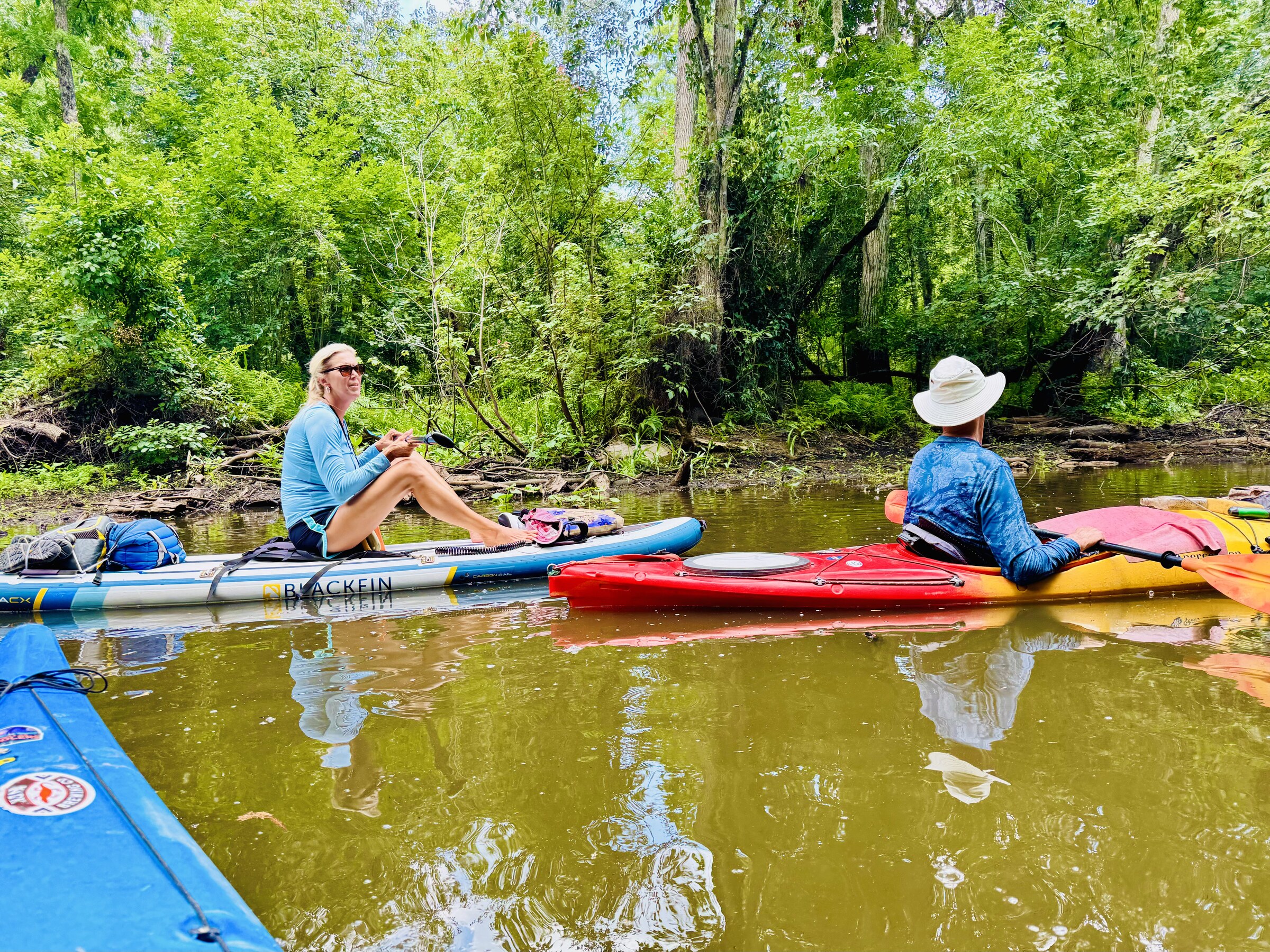
Once the channel broadened, there was time to float side by side, talk about the route and enjoy an easier final reach. The forest still enclosed the river, but the toughest navigation was behind us.
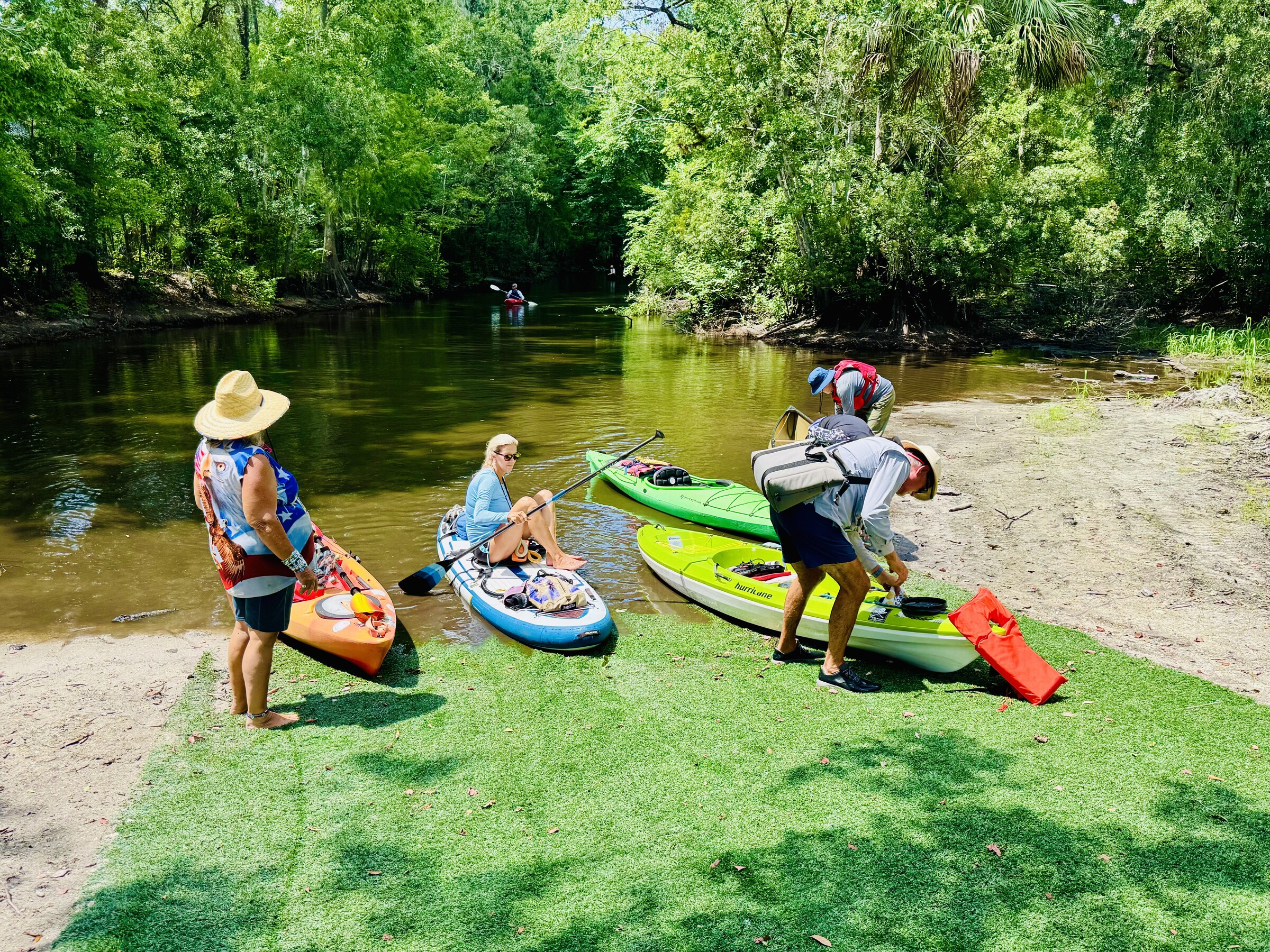
The route
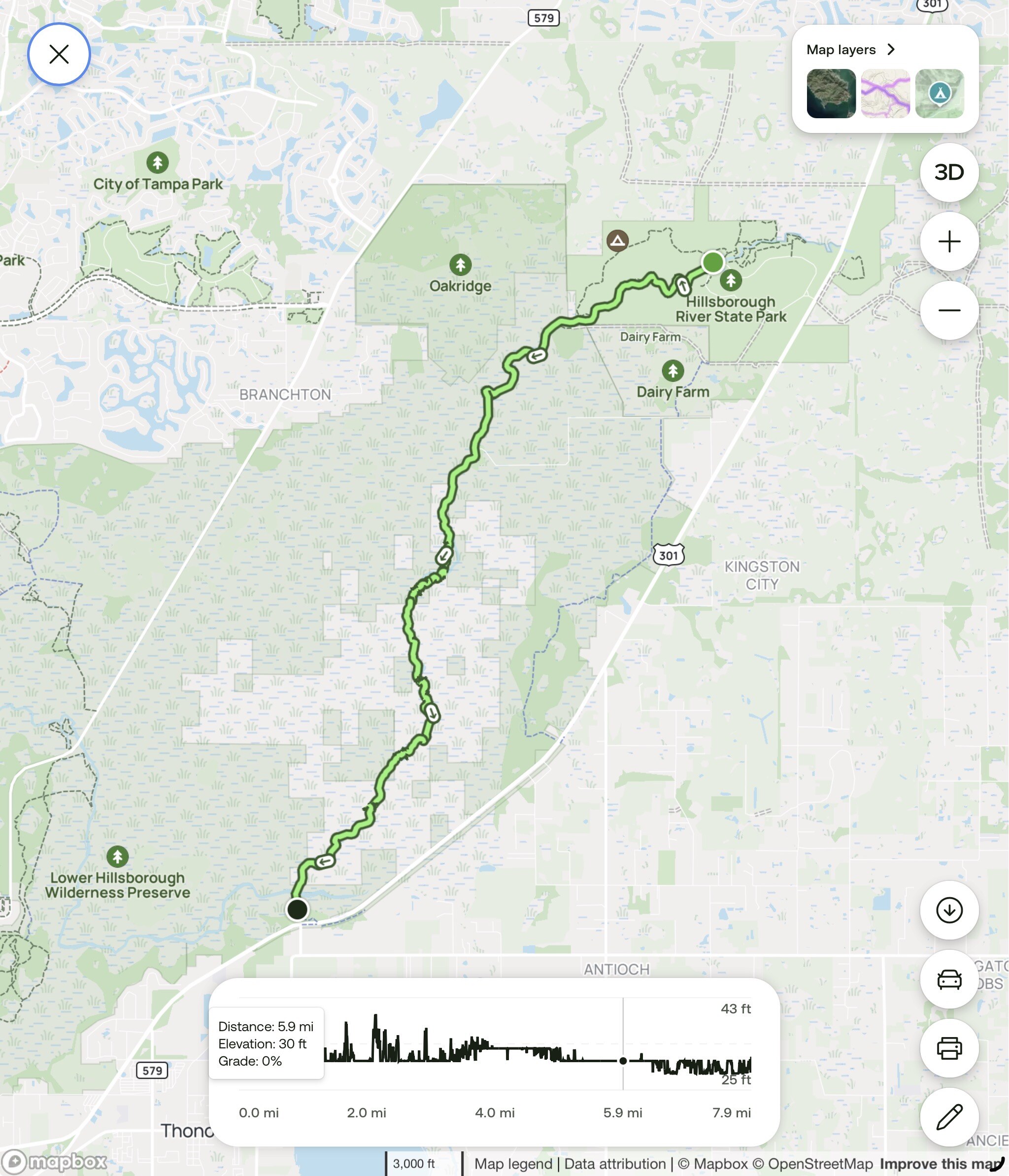
The map makes the contrast clear: a relatively direct river at either end and a tightly twisting middle section where the many turns give Seventeen Runs its distinctive character.
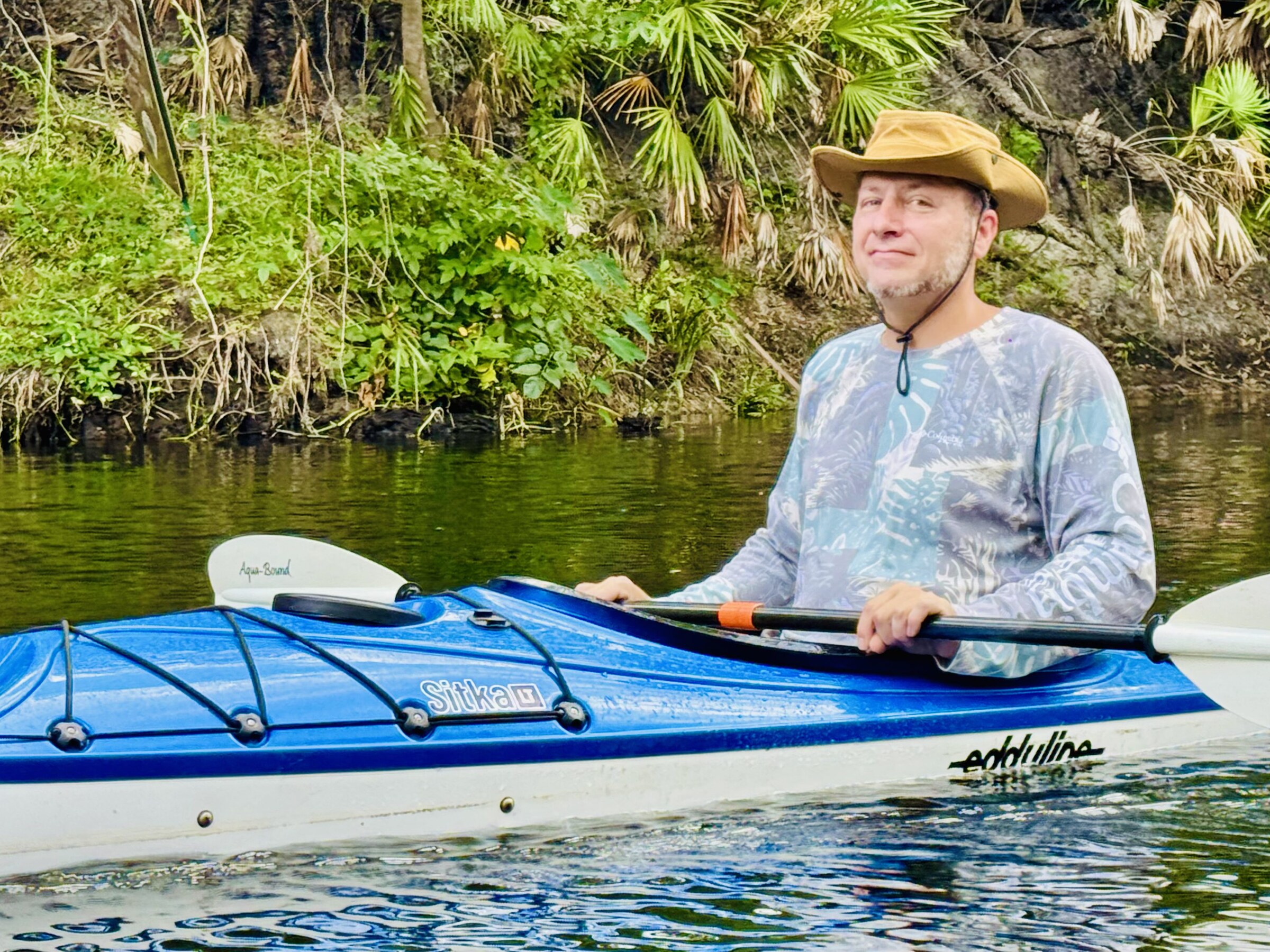
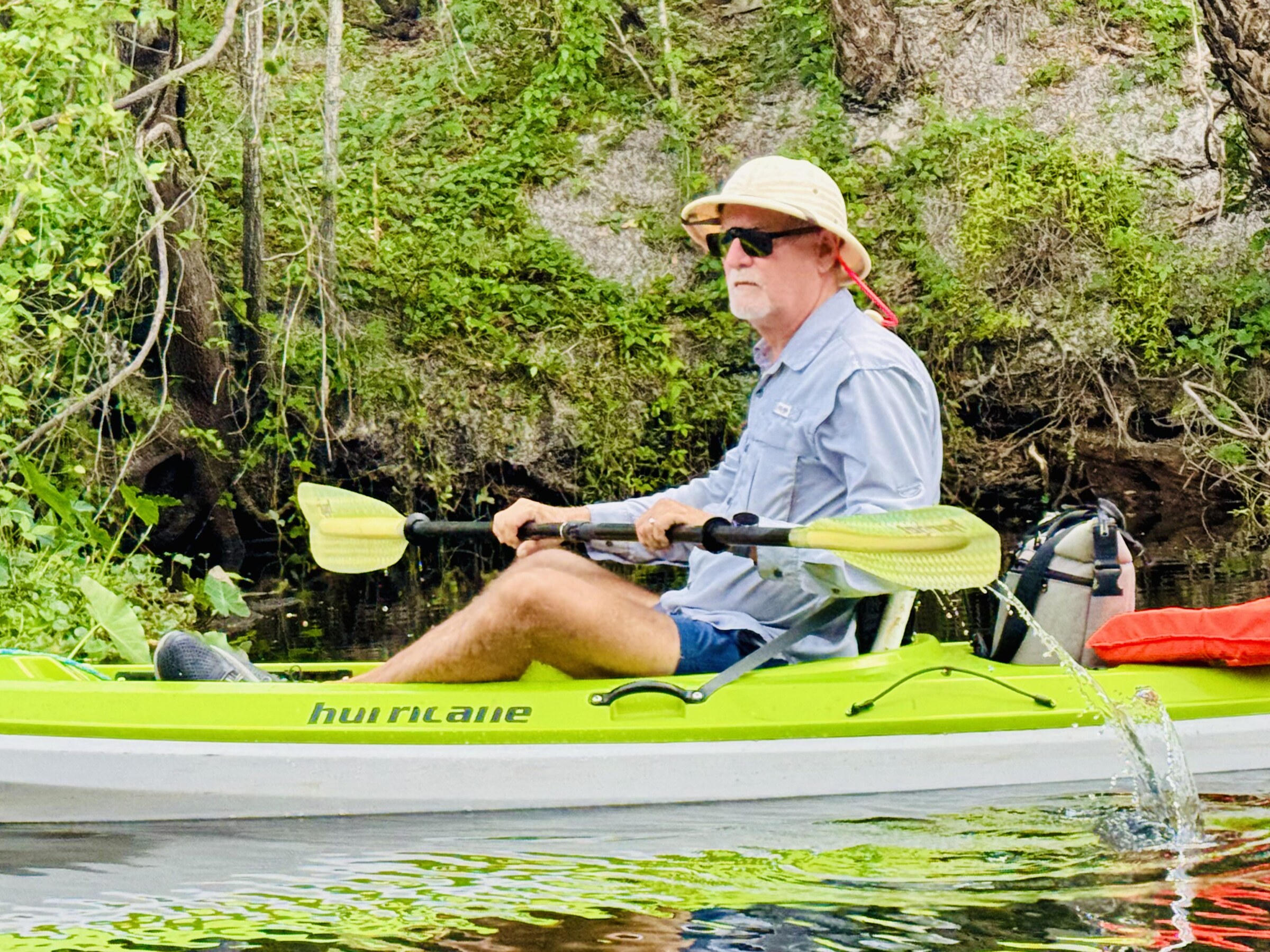
All photographs by Tim Driskell, except photographs of Tim, which were taken by other paddlers in the group.