Chasing a River That Wasn’t Supposed to Be There
Most Florida paddles are planned around distance, tides, wind, or a familiar water level. This one began with radar, experience, and a river that might be runnable for only a very short time.
(Click any photograph to open the full-size image.)
Reading the Radar
The decision came together late at night, around dinnertime, when Jimi DaBeard realized from watching the weather radar that a lot of rain had fallen across the Sopchoppy watershed. The river is usually too low to run, but it can rise quickly after heavy rain. The problem is that it also runs off quickly, so the timing has to be almost perfect.
We talked about changing the next day’s plans, but nobody could make the final call yet. Jimi, Sue, Walter, Ed, and the other experienced paddlers knew rivers all over Florida and understood how quickly conditions could change. We went to bed knowing that we might wake up and head somewhere completely different.
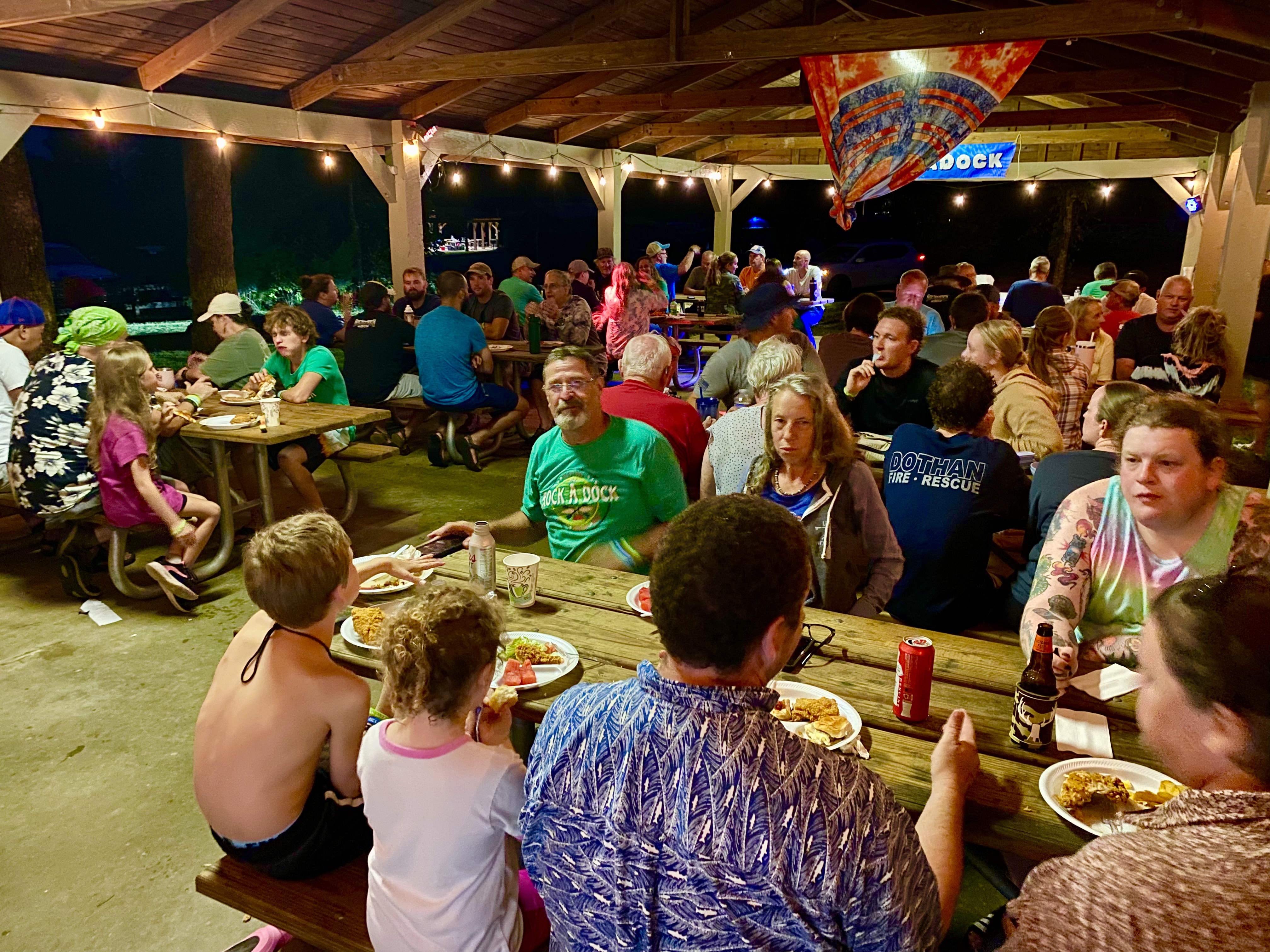
By morning, Jimi and Sue believed the river level was looking just right. That was exciting, but it also raised a serious question: did we have a strong enough team? This would not be a leisurely float with easy pull-outs. It would be a fast-moving, committing run with sharp bends, drops, and plenty of potential for capsizes.
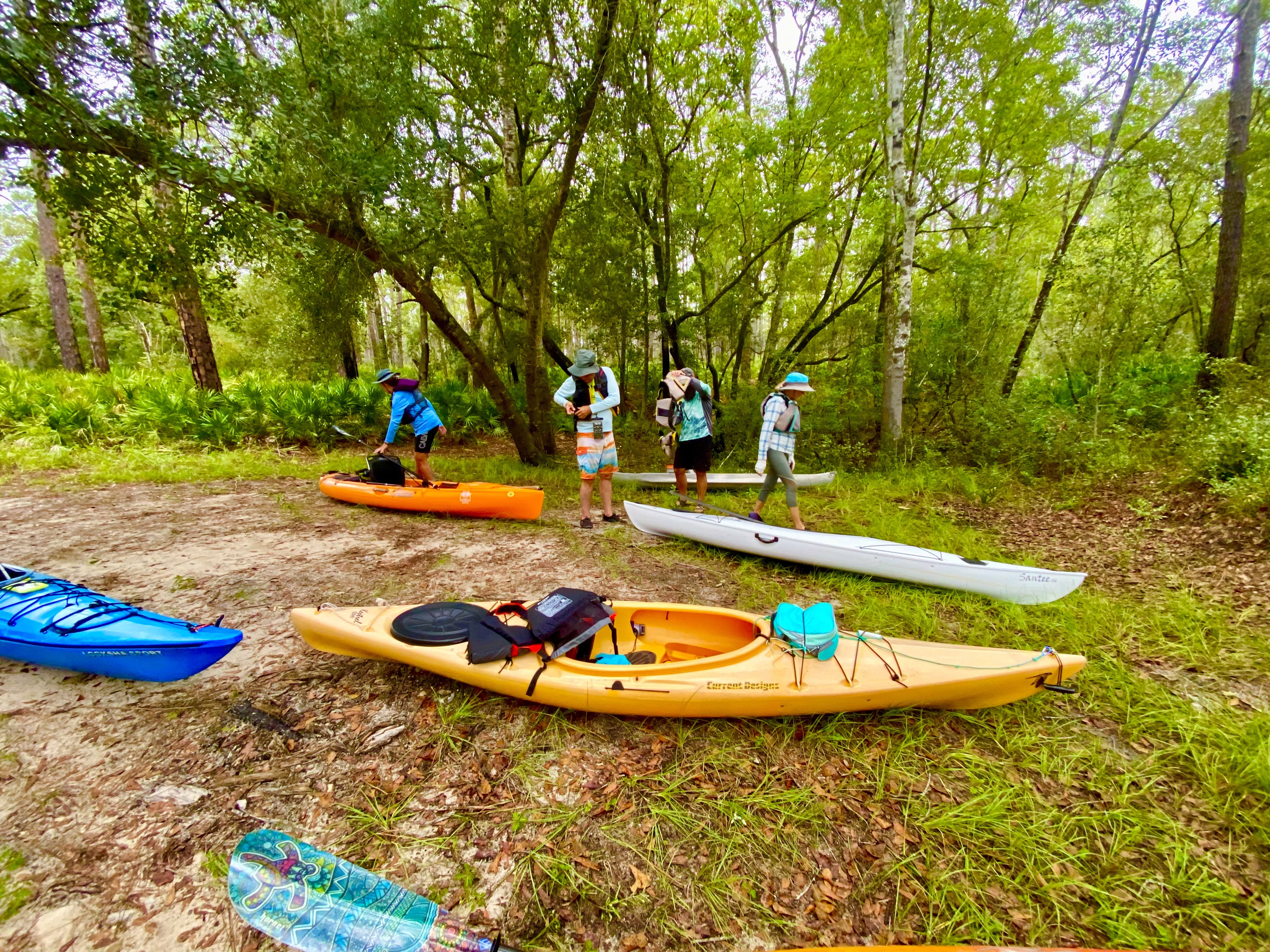
The banks were high and heavily wooded. Once we put in, there would be no simple roadside exit and no practical way for someone to decide halfway through that they were finished. The next dependable access was another Forest Service road farther downstream. Everyone would need to stay with the group and keep moving.
Finding the Launch
Even getting to the put-in was part of the adventure. We had a long drive toward the river and then had to work our way through a confusing network of dirt roads and Forest Service roads. Some of the directions depended on old maps, and the launch was not obvious. It took patience, several vehicles, and people comparing routes before we finally found the right place.
The farther we drove, the more remote it felt. This was not a polished commercial launch with signs, pavement, and a boat ramp. It was a wilderness access hidden down back roads, exactly the kind of place that rewards local knowledge and careful navigation.
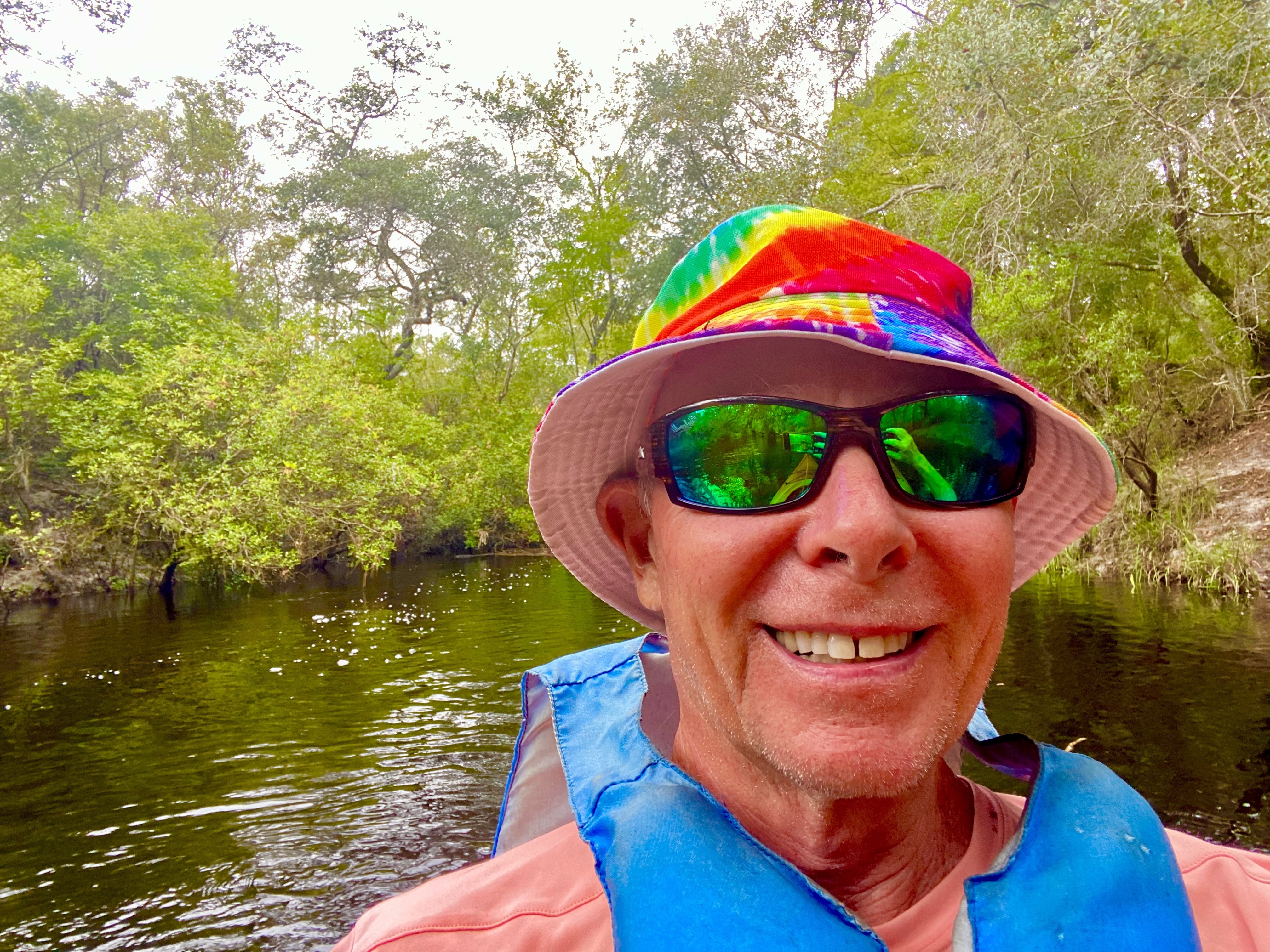
Once we located the put-in, we still had to unload the boats and arrange the shuttle. Because the roads were difficult to follow, the shuttle required nearly as much thought as the paddle itself. When everything was finally in place, we gathered at the water and reviewed the plan.
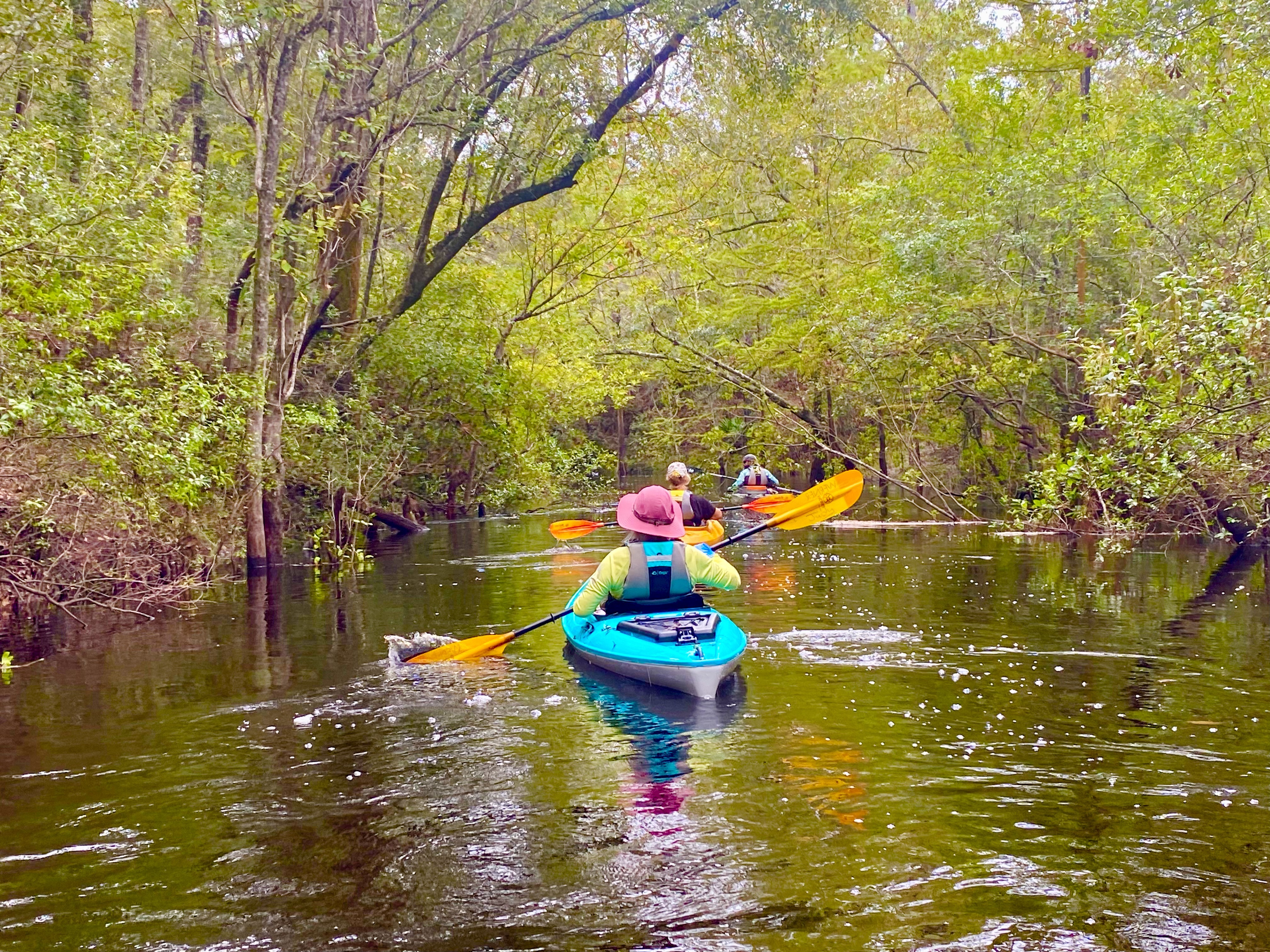
A Committing Run
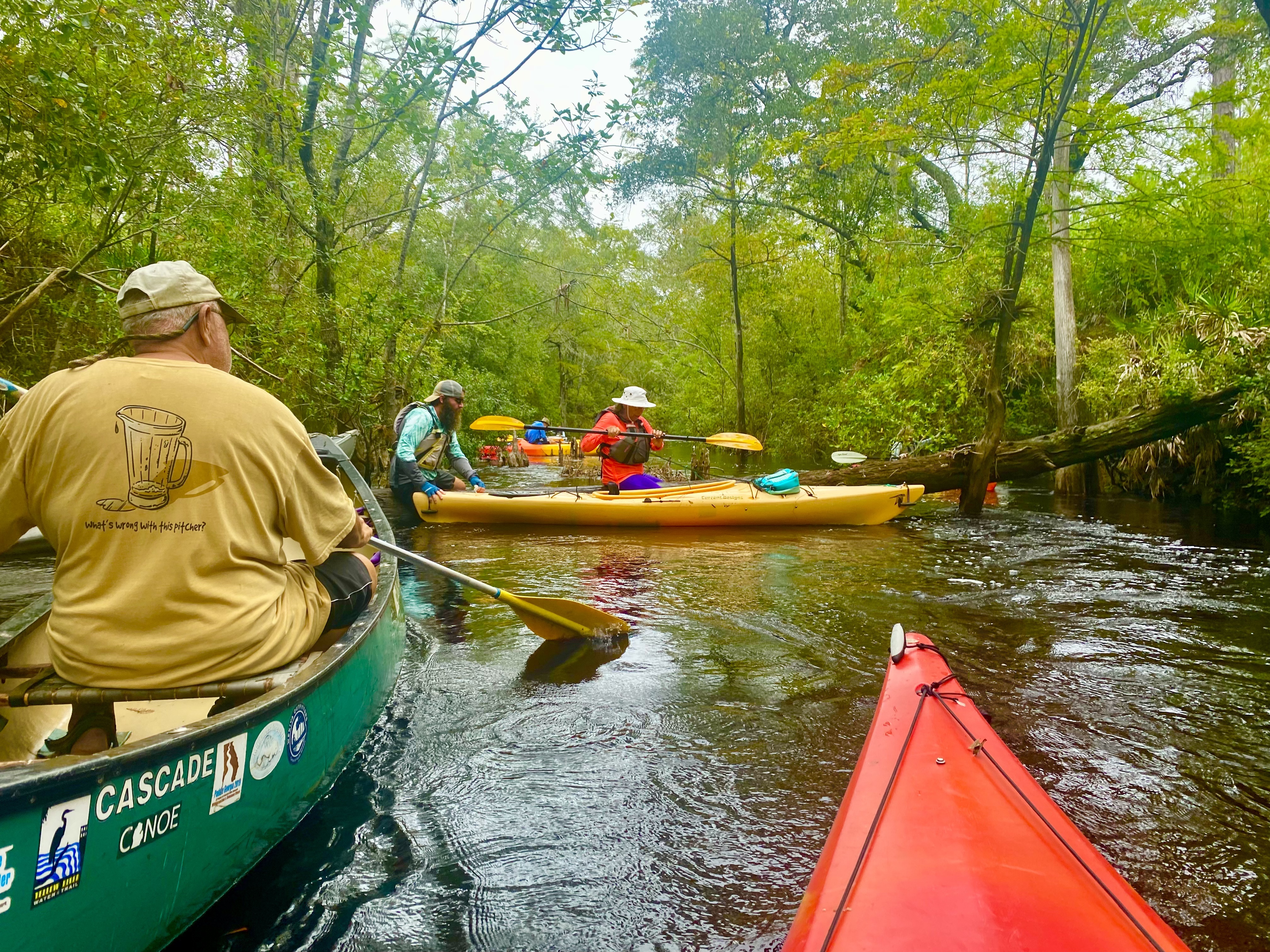
Almost as soon as we launched, the current began pulling us through sharp turns, quick drops, and narrow passages. This was short and steep by Florida standards, very different from the long, gentle runs most people picture when they think about paddling in the state.
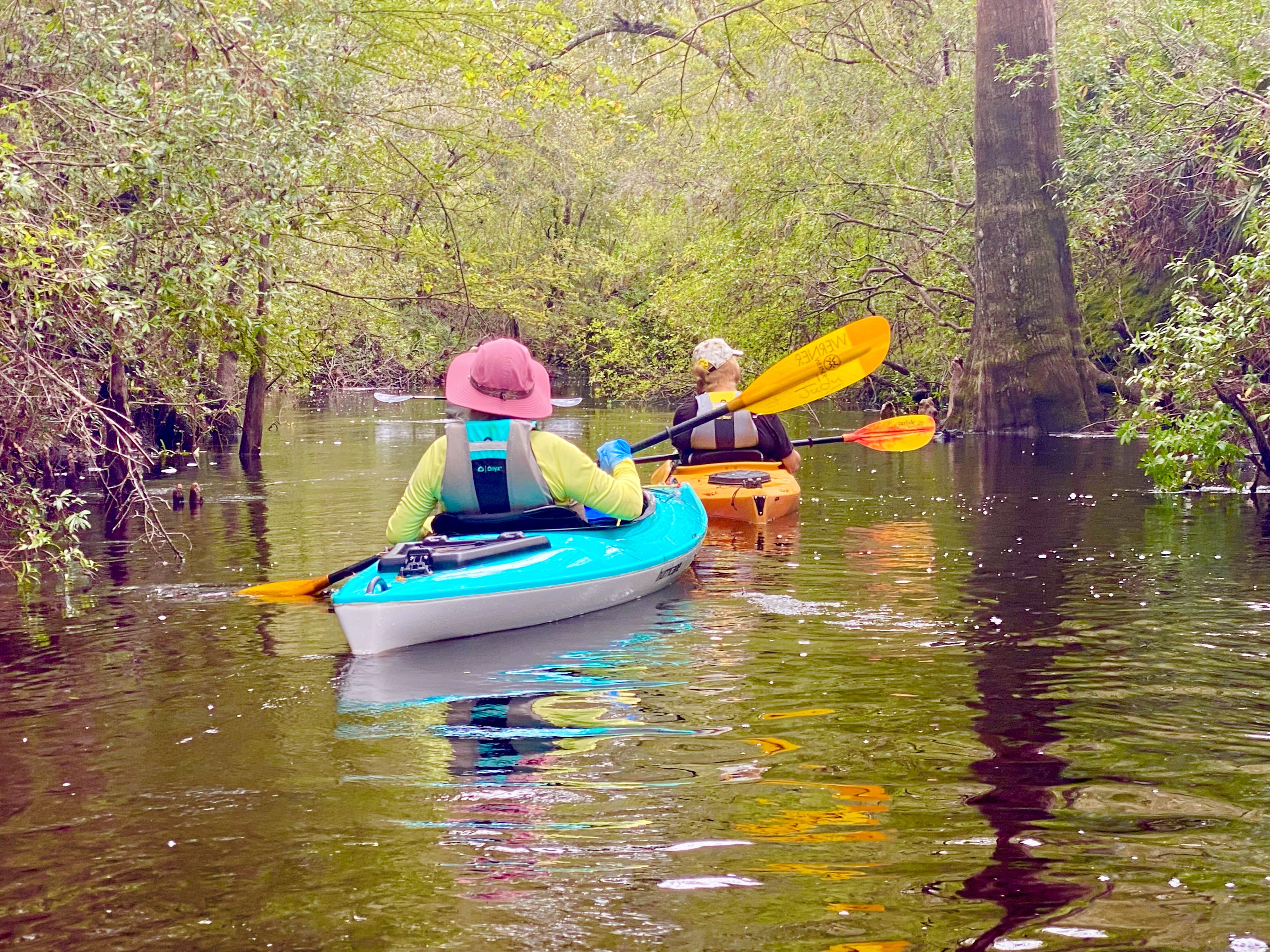
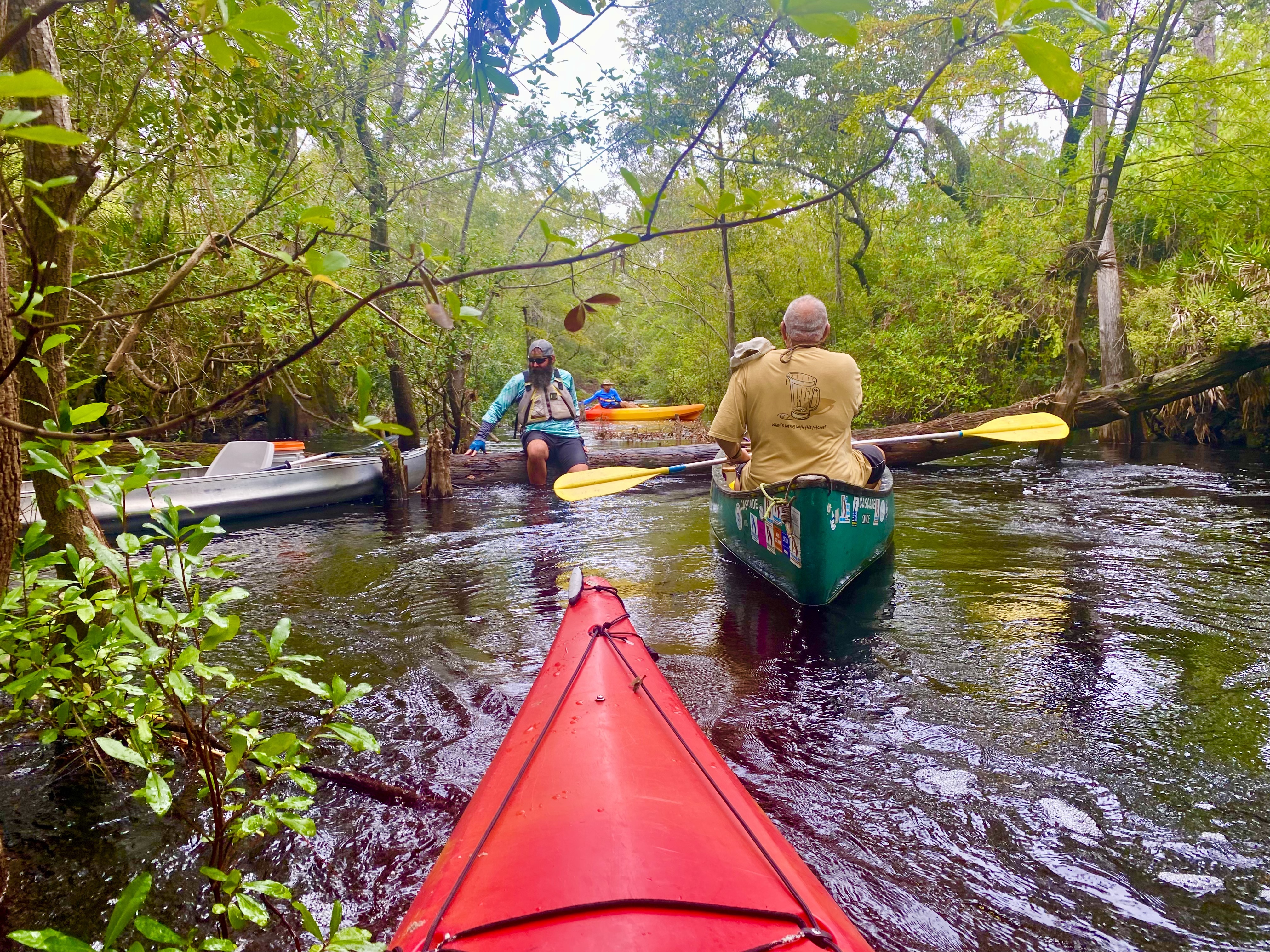
At every meaningful drop, the group worked as a team. The strongest paddlers moved through first, found a safe place below, and helped guide everyone else. We stopped when we could, scouted where necessary, and made sure each person got through before the group continued.
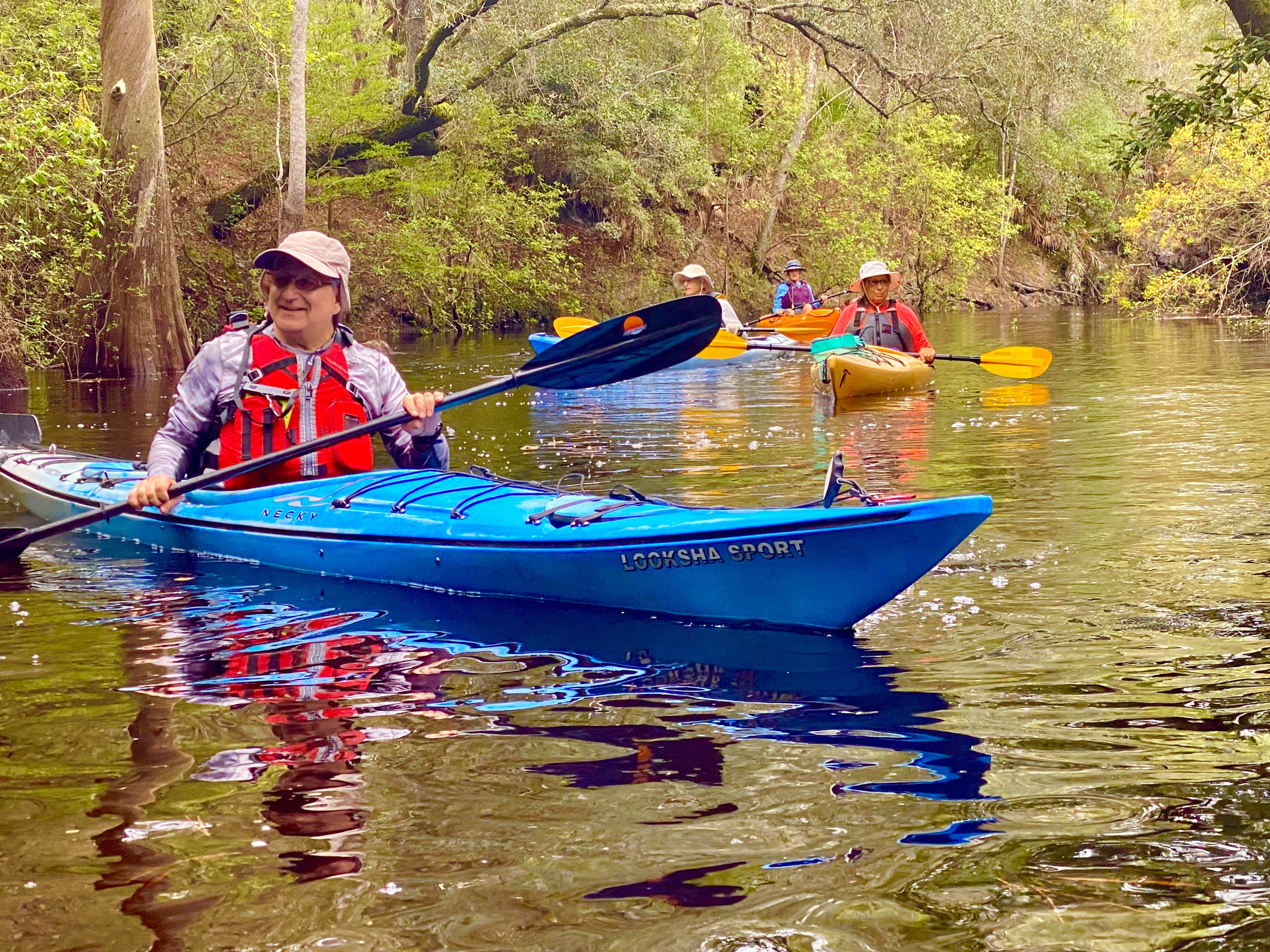
There was very little time to relax. The current kept carrying us downstream, and the steep, brushy banks offered few places where a group could pull over safely. We knew the river was already beginning its quick runoff, so the same water that made the run possible would not remain for long.
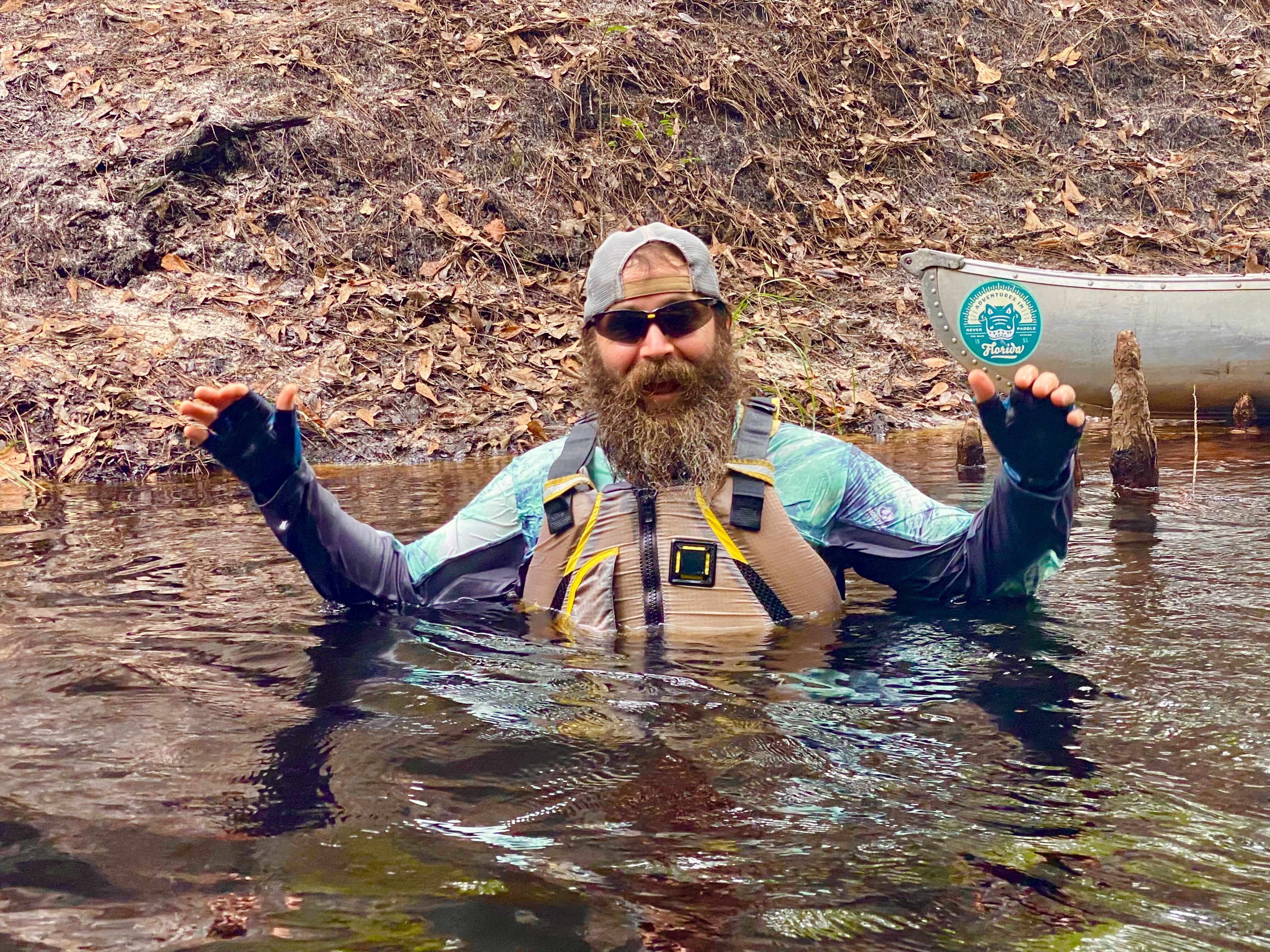
Once everyone found the rhythm, the uncertainty turned into pure fun. The river twisted, dropped, accelerated, and then twisted again. Every successful line brought another shout, another laugh, and plenty of people yelling “Yahoo!” as they came through.
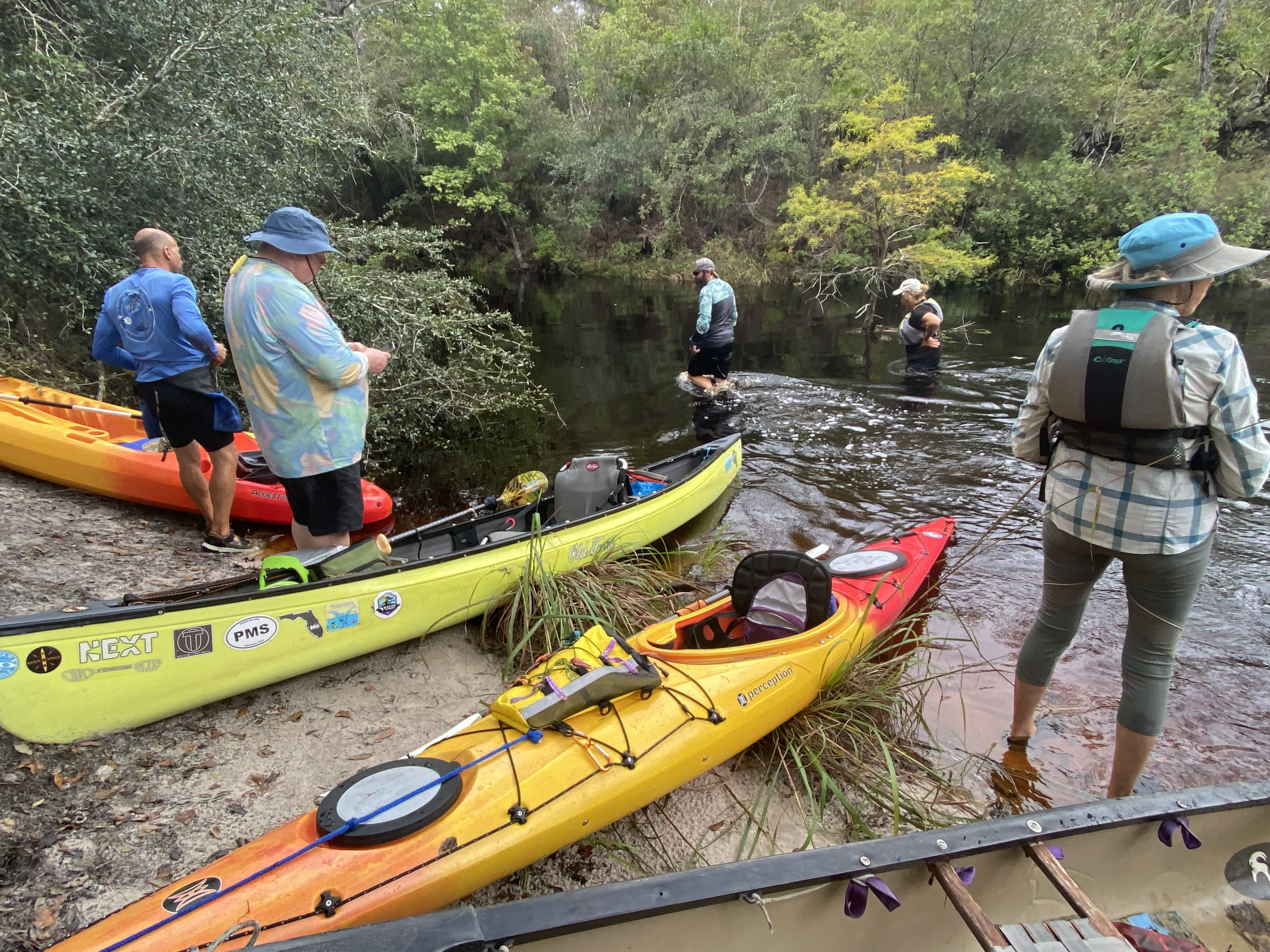
The wilderness was one of the most memorable parts of the paddle. There were no houses, lawns, docks, or easy road crossings—only moving water, high banks, trees, and the group working its way downstream through the forest.
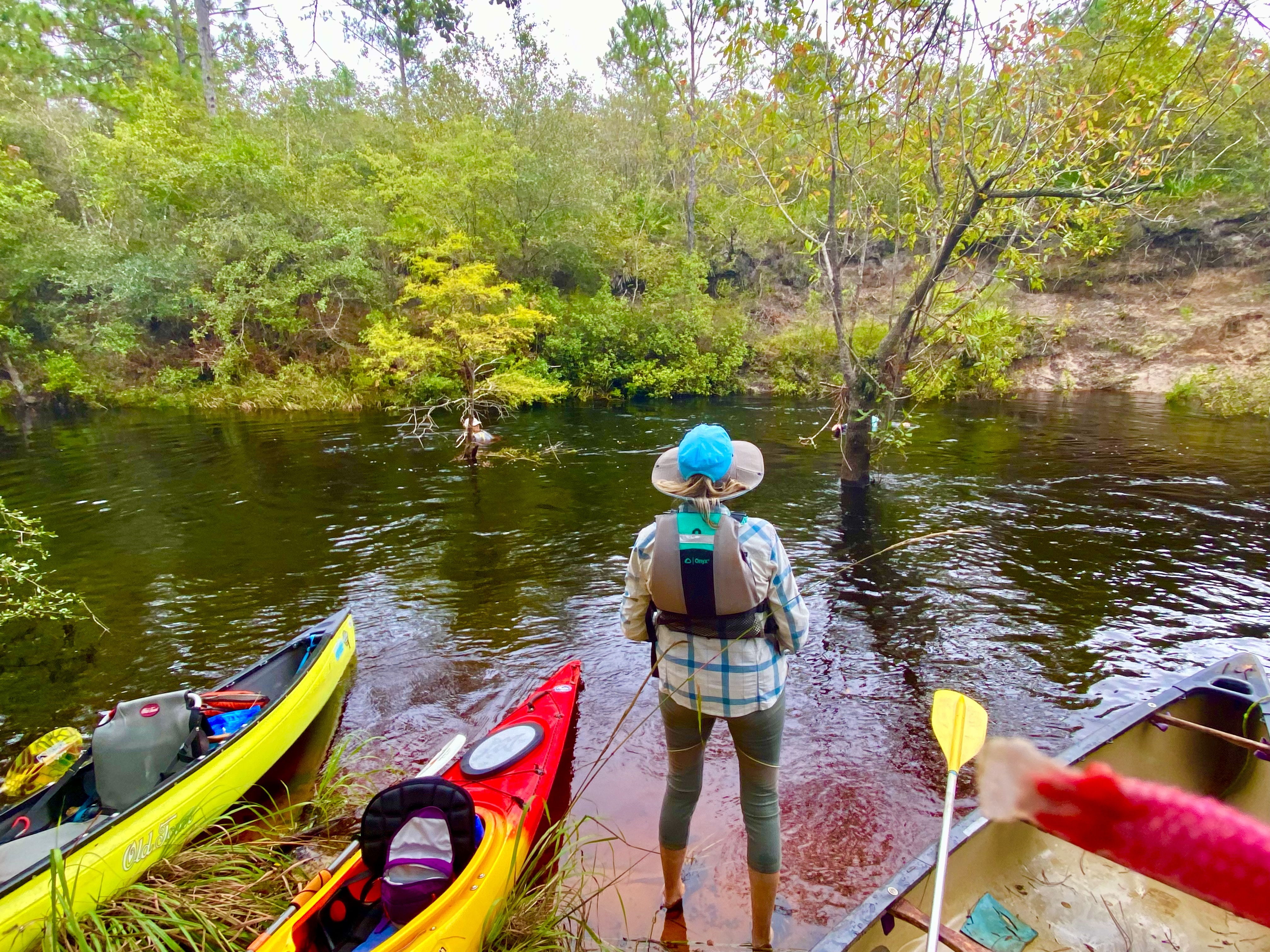
Once in a Decade
Under the guidance of Jimi DaBeard, Sue, Walter, Ed, and the other highly experienced paddlers, this felt like a once-in-a-decade run. We were lucky not simply because it had rained, but because they knew how conditions on rivers all around Florida respond to rain and runoff. They understood when to change plans and when a narrow opportunity was worth pursuing.
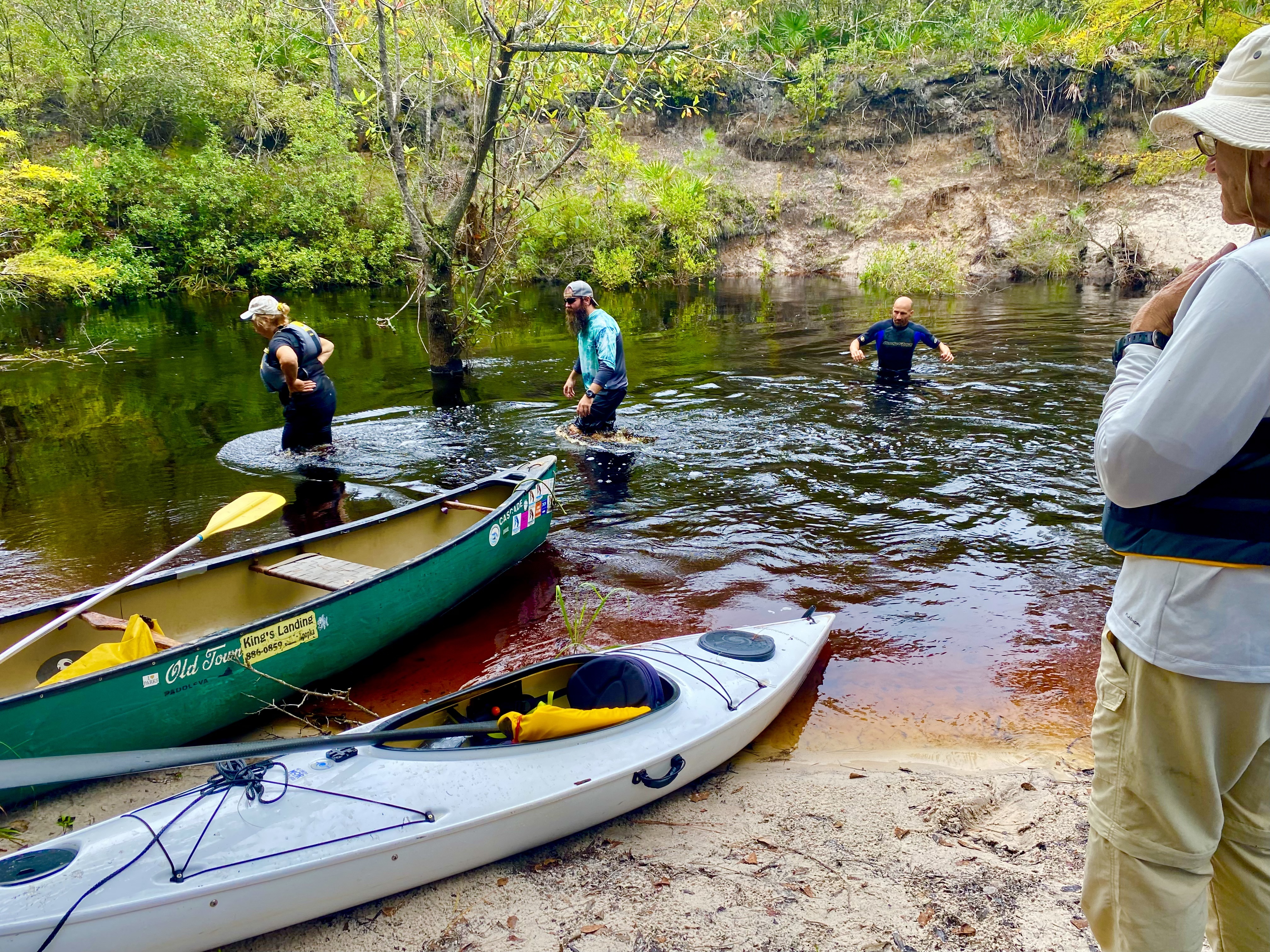
The timing was absolutely perfect. The rain had raised the Sopchoppy high enough to move us through the drops and turns, but we arrived before the water ran off and the channel became too shallow again. A few hours earlier or later might have produced a completely different day.
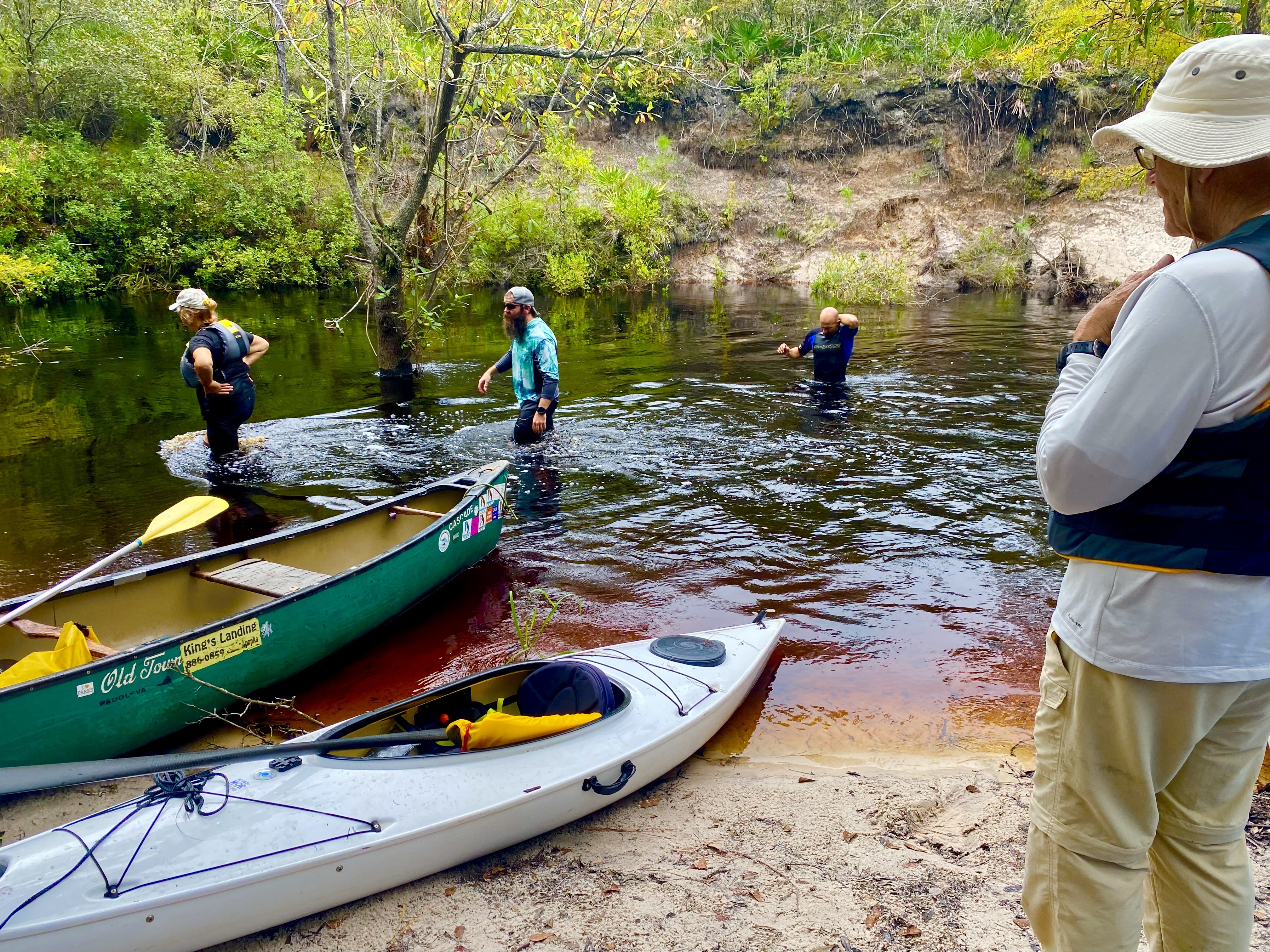
If anyone ever gets the chance to paddle this section under suitable conditions, it is an incredible wilderness run. But those conditions cannot be assumed. The river depends on enough recent rain to bring it up, followed by a very short window before the water drains away.
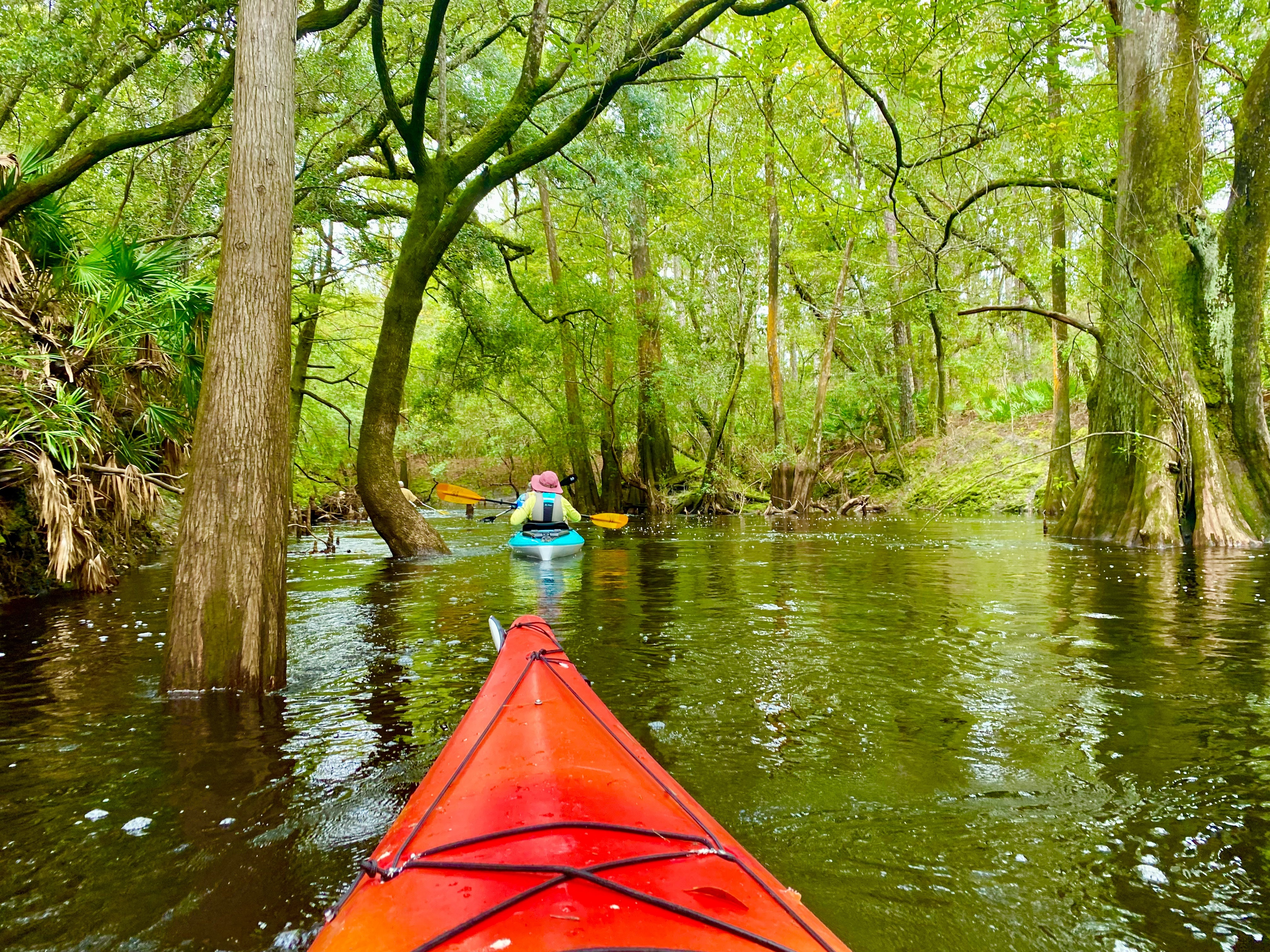
Unlike most Florida rivers, this run felt compact, steep, and urgent. There were no long stretches where the group simply drifted and talked. The river demanded attention, and the excitement came from responding to one feature after another while remaining connected as a team.
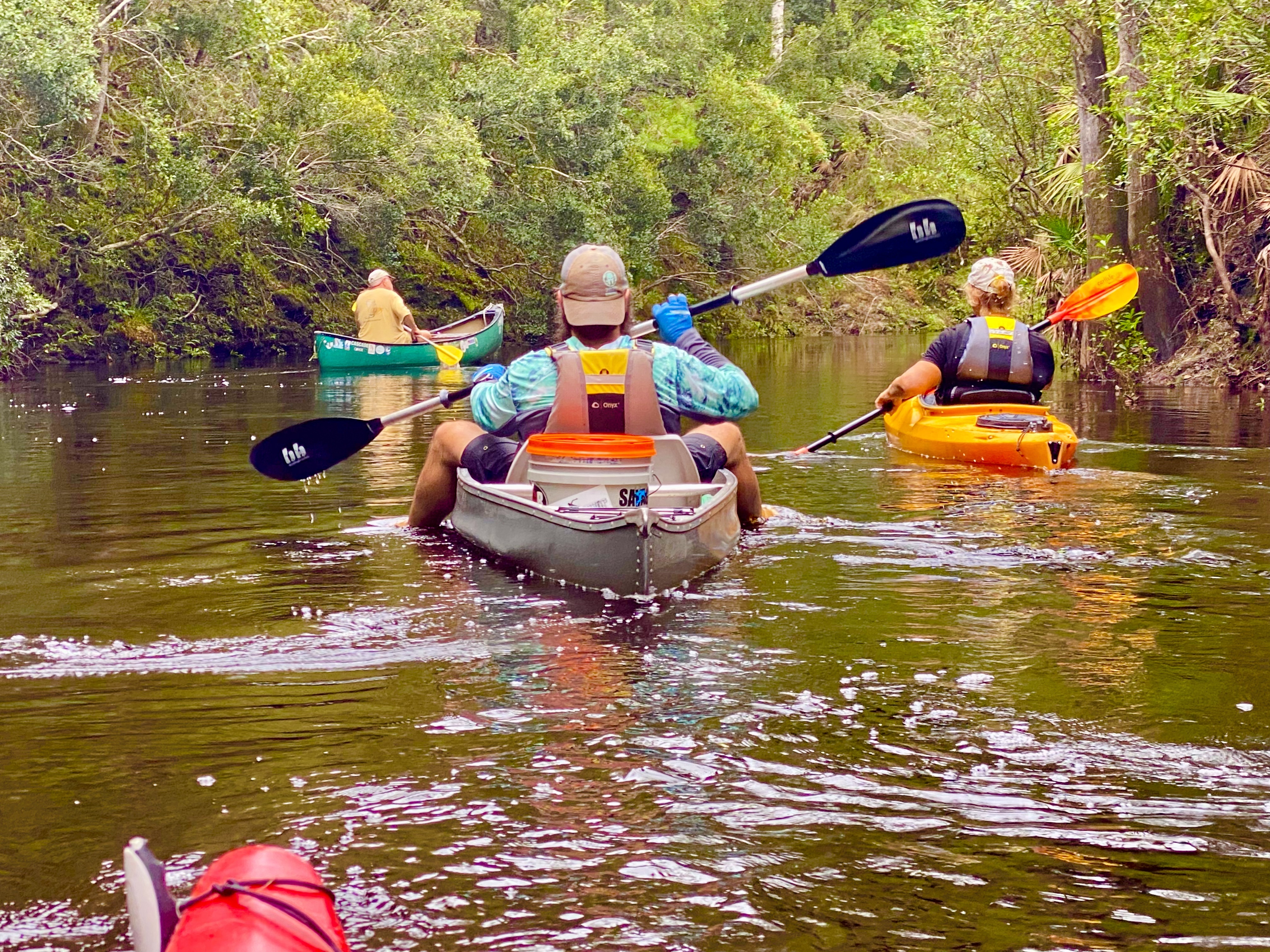
A Rare Place to Stop
Eventually we found one of the few places where the group could get out, regroup, and enjoy a break. After being carried through miles of bends and drops, the open sand felt almost luxurious.
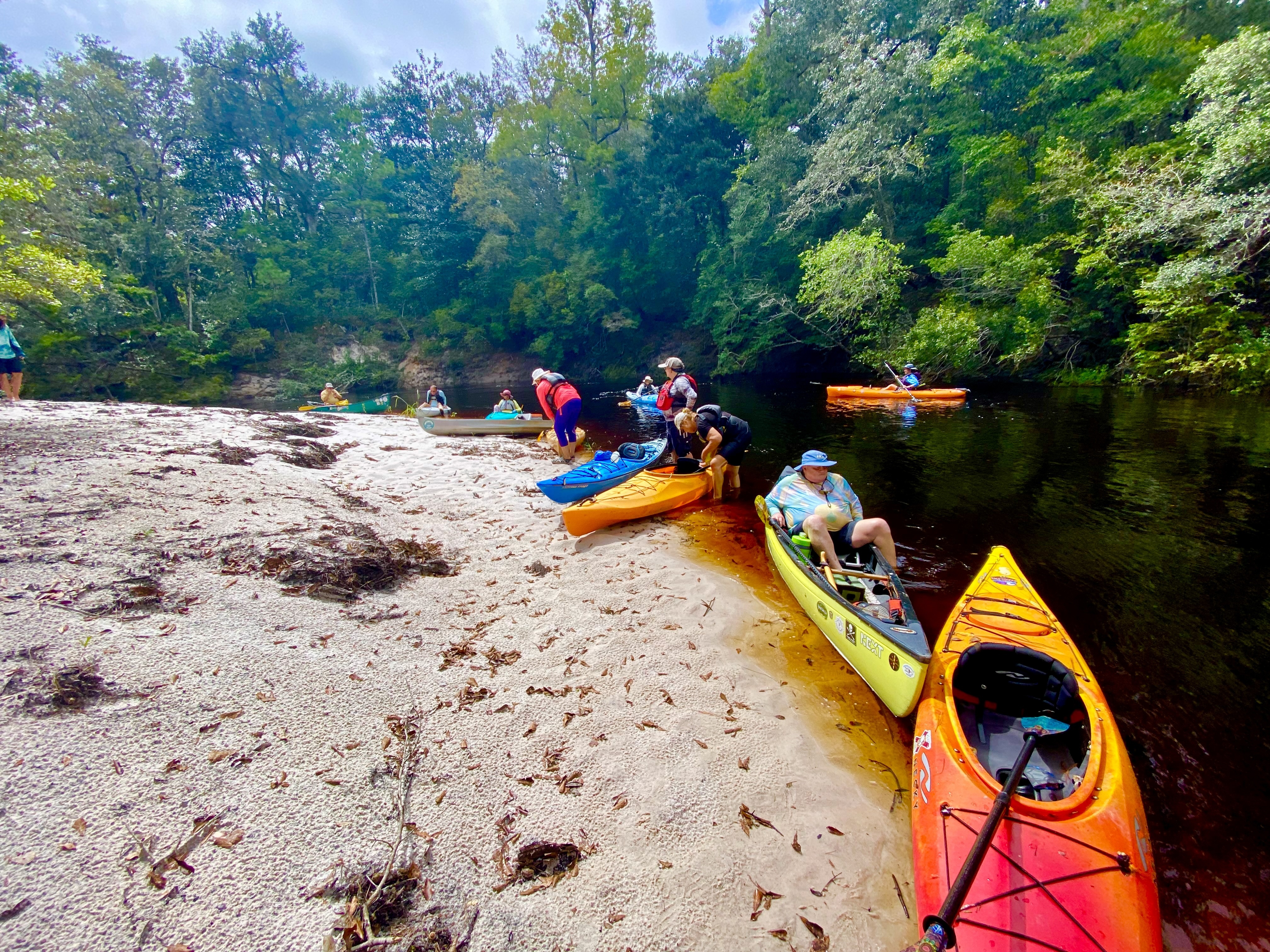
This pause also showed how many people had worked together to make the day successful. The strong paddlers did not simply race ahead. They helped with scouting, kept the group organized, and made sure everyone made it through the difficult sections.
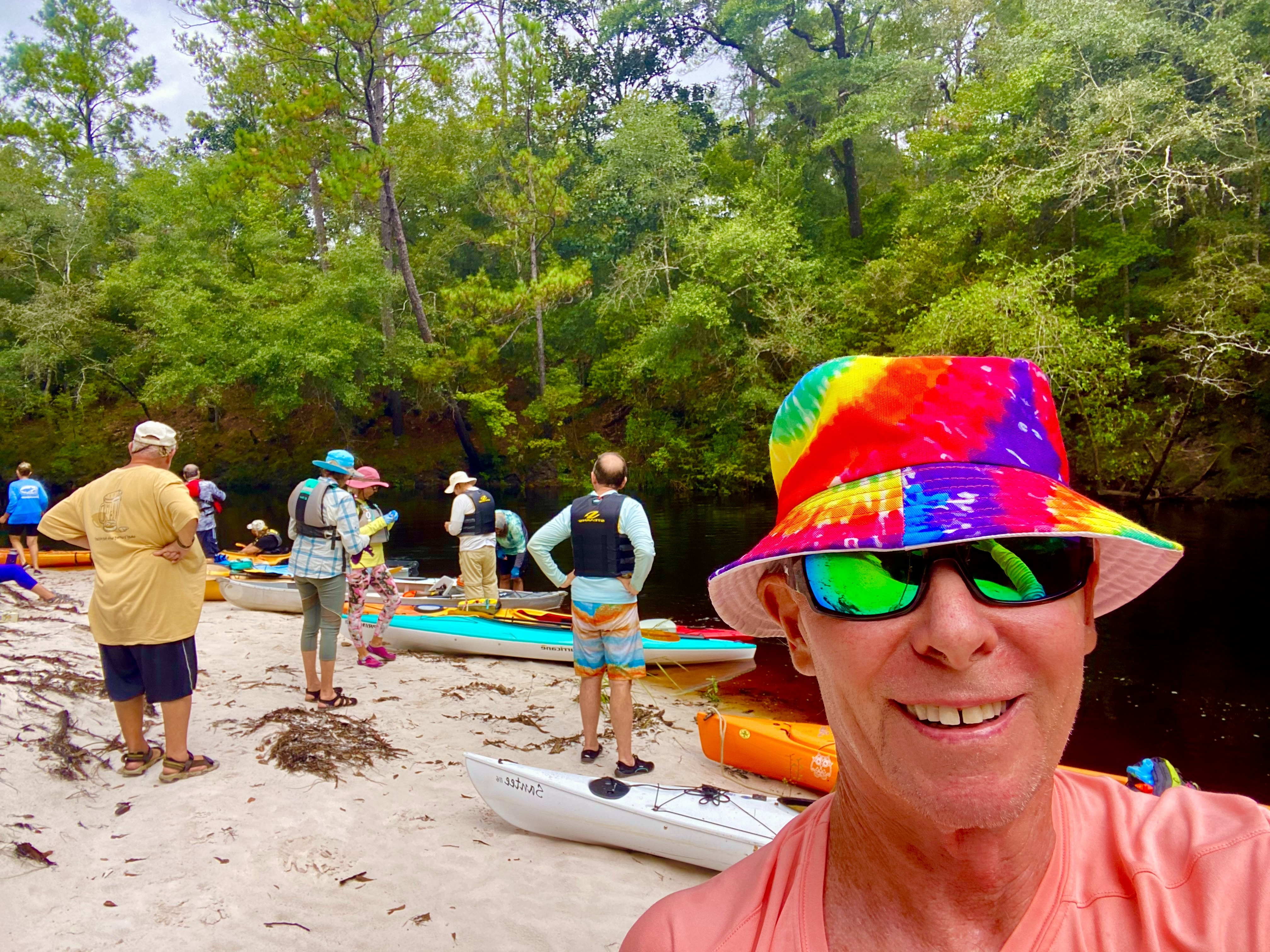
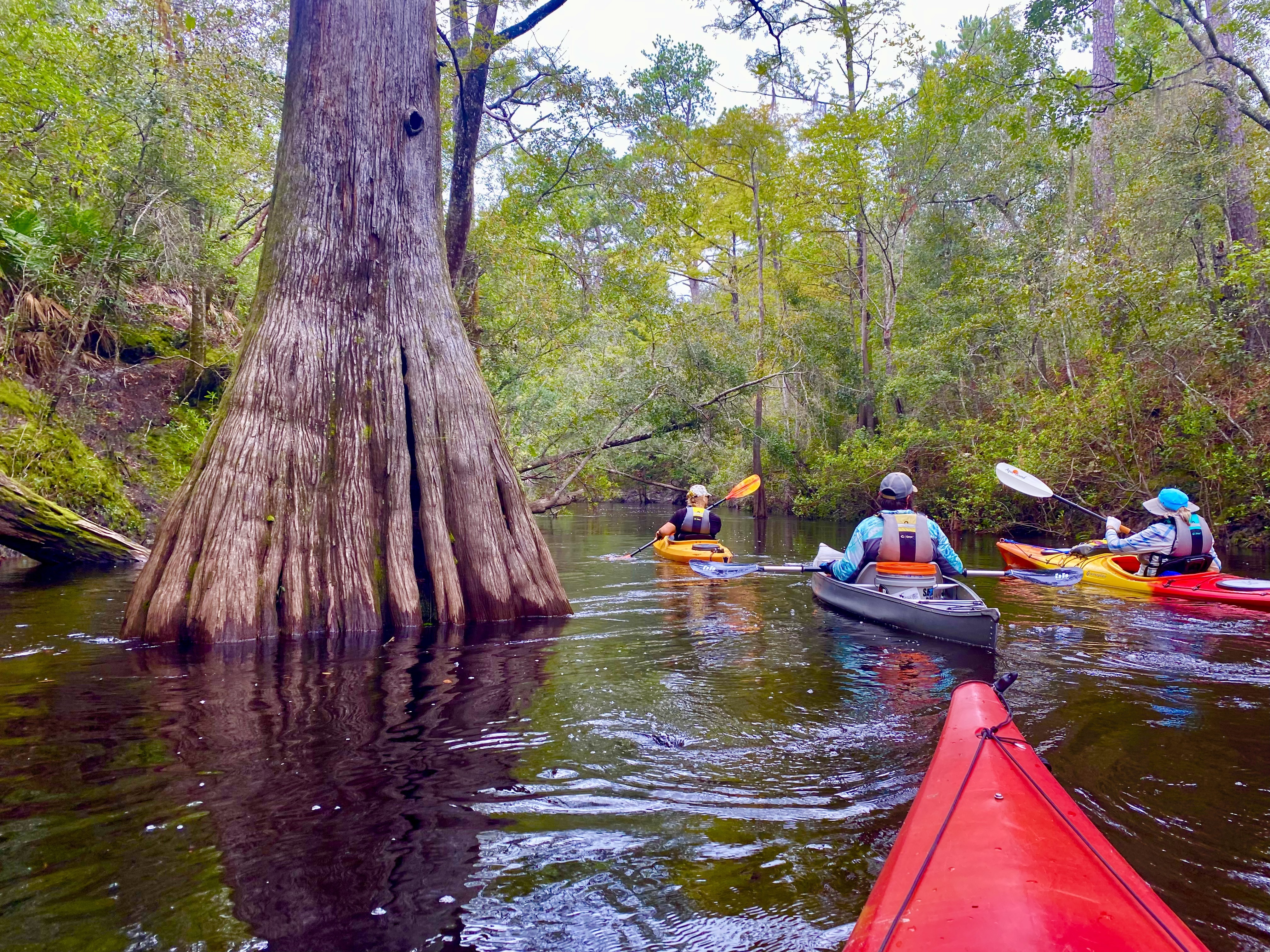
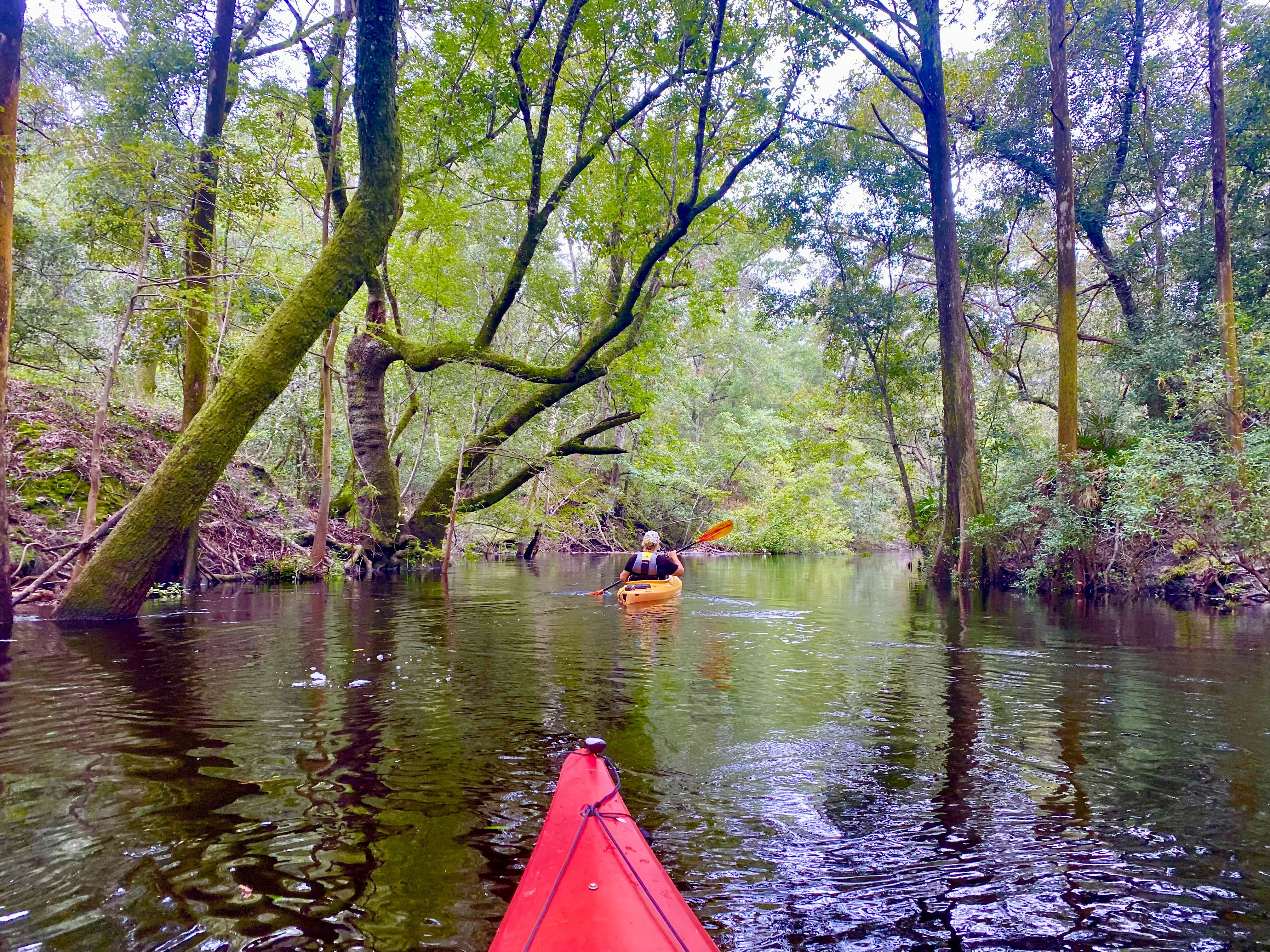
Back on the river, we returned immediately to the twists, branches, and quick decisions. Even the trees seemed to lean into the channel, making the whole trip feel close, intimate, and constantly changing.
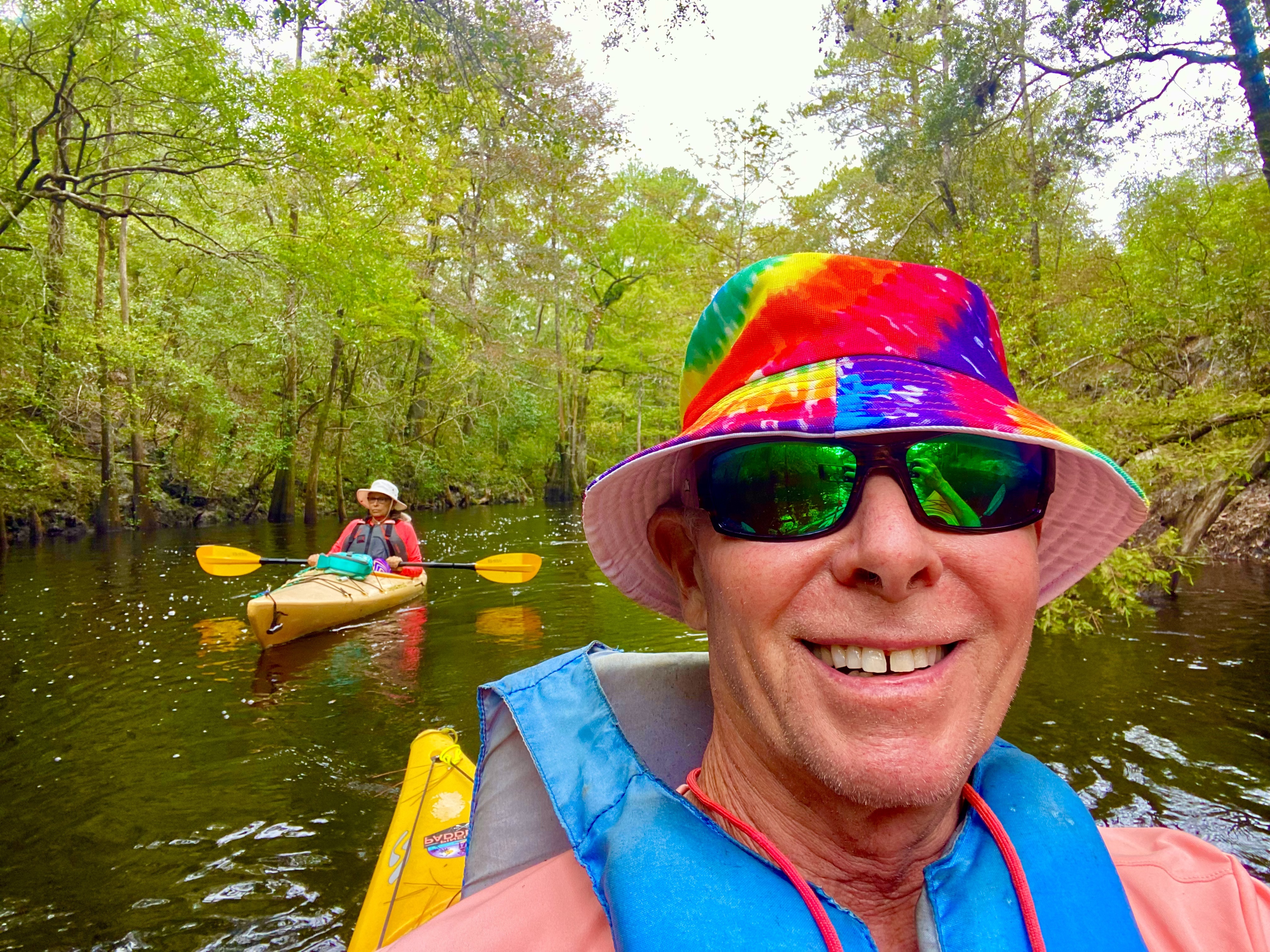
The scenery was not about broad views or distant horizons. It was about the immediate forest—the patterns of leaves, branches overhead, dark openings along the bank, and flashes of sky while the current pulled us onward.
The Shuttle Adventure
Reaching the take-out did not mean the adventure was finished. We still had to recover the vehicles and navigate the same confusing road network. Tim and a few others missed turns and had trouble finding the way back to the exit, which added one last challenge to an already eventful day.
Eventually everyone made it back to the take-out, the vehicles were recovered, and the boats were loaded. We were tired, relieved, and ready for the long drive back to base camp—but mostly we were thrilled. The river had been high at exactly the right moment, the team had worked, and we had pulled off a paddle that might not have been possible the day before or the day after.
That is what made the Sopchoppy unforgettable. It was not just a river trip. It was a lesson in watching weather, understanding watersheds, trusting experienced people, staying flexible, and being ready when a rare opportunity appeared.
A Wild Florida River
The Sopchoppy’s headwaters arise in the Apalachicola National Forest, and Florida maintains a designated paddling guide for the river. The official trail is generally described as easy to moderate depending on water level, but our rain-fed upper run was a much faster and more committing experience than an ordinary low-water float. The difference was the brief surge of water—and the experienced group that knew when and how to use it.