TIM DRISKELL'S ADVENTURES
Tim's A-frame home in Ashburnham A pond viewed through the trees in Ashburnham Tim and Kym at the Ashburnham A-frame Boats at a dock in Ashburnham Map of protected lands in Ashburnham Trail signs near Ashburnham and the Wapack Trail

Massachusetts • Home • Conservation • Adventure

Ashburnham — 19 Awesome Years

A home in the woods, ponds and trails close by, and years spent helping protect the landscapes that made this town so special.

Learning to Live Deliberately

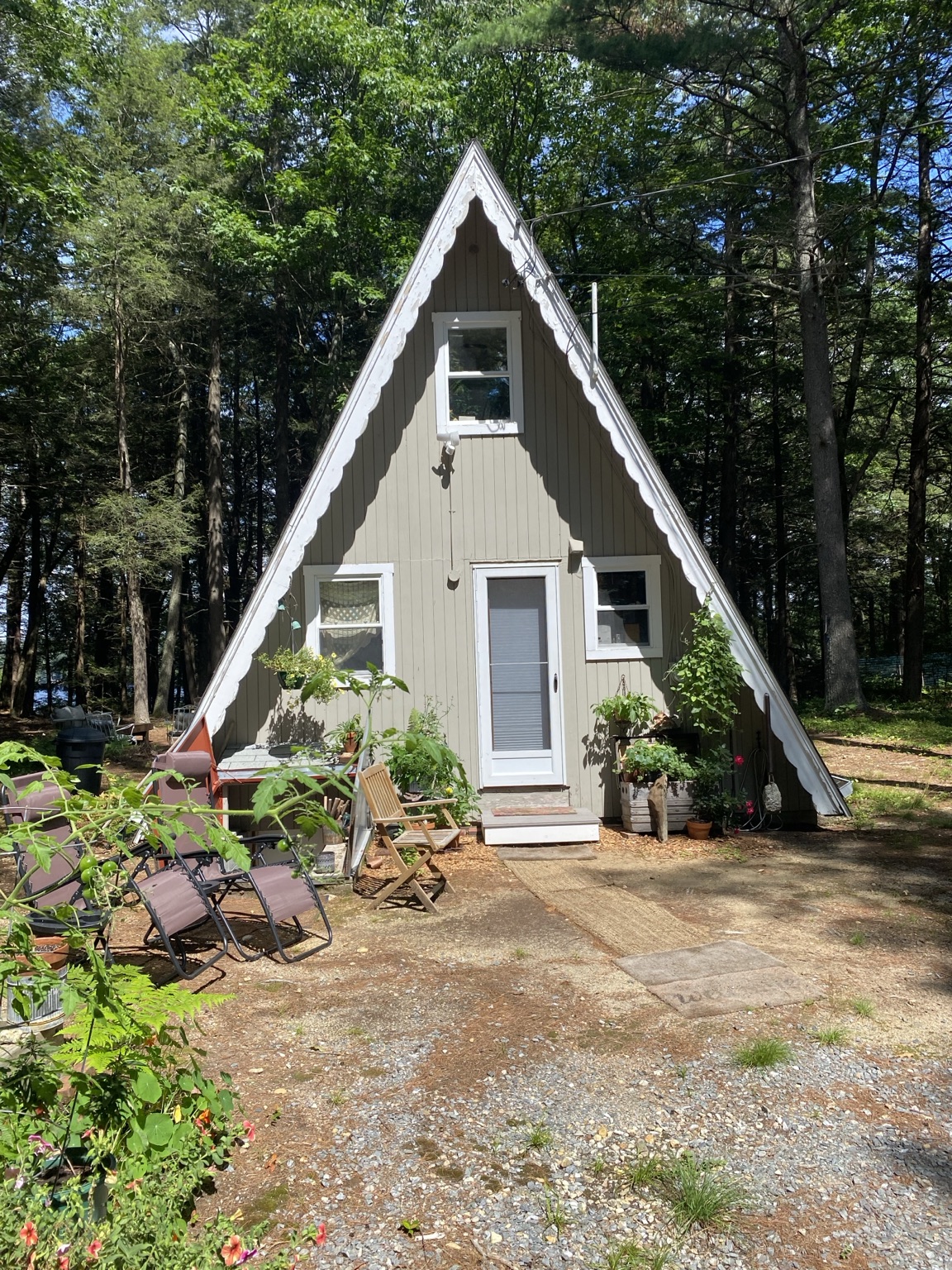
I lived in Ashburnham, Massachusetts, for 19 years, and those years became one of the most important chapters of my life. My little A-frame in the woods was only about 600 square feet, but it never felt small. The forests, ponds, trails, wetlands, hills, and changing seasons became the rest of my living space.

I was not trying to imitate Henry David Thoreau, but living there gradually taught me much the same lesson he described at Walden: a rich life does not require a large house or a lot of possessions. It requires paying attention. It requires time outdoors, curiosity, simplicity, and a willingness to notice what is happening around you.

Instead of measuring life by the size of the house, I measured it by the number of trails I could reach, the ponds I could paddle, the wildlife I could observe, and how quickly I could step outside and be immersed in the natural world. Ashburnham taught me that happiness has far more to do with experiences than with accumulating things.

Graduate school was only about fifteen minutes away in the next town. I was studying ecology and field biology in the classroom, then coming home to a landscape where I could immediately see those lessons operating in real life. The classroom explained forest succession, wetlands, watersheds, wildlife habitat, soils, glacial landforms, and ecological relationships. Ashburnham became the outdoor laboratory where all of it came alive.

Those years tied together nearly everything that mattered to me: education, outdoor adventure, community service, conservation, and a growing understanding of myself. Long before I began my later career with the U.S. Geological Survey, Ashburnham was teaching me how to observe landscapes, understand water, respect natural systems, and recognize how much can be lost when development ignores the land beneath it.

My own version of Walden: The A-frame taught me that a 600-square-foot home in the woods could support a much larger life than a bigger house filled with more possessions.

The A-Frame Years

The A-frame was more than a house. It became the center of a life built around the outdoors. Its steep roof, compact rooms, and wooded setting fit Ashburnham perfectly. It felt connected to the land rather than imposed upon it.

Living in a small house forced me to think carefully about what I truly needed. There was no reason to fill it with unnecessary things when the best parts of life were waiting outside. The woods became my study, the ponds became my recreation room, and the trails became the place where I worked through ideas, challenges, and decisions.

Thoreau wrote about going to the woods to live deliberately. I did not move to Ashburnham with that quotation in mind, but the place eventually taught me what it meant. I learned to live with less, notice more, and judge a day by what I experienced rather than what I acquired.
Front view of the Ashburnham A-frame
The small A-frame in the woods that became my own version of Walden.

A Home That Still Holds Memories

Long after moving away, the sight of the property still brings back the feeling of those years. Houses change hands and landscapes evolve, but the experiences attached to a place remain.

Every approach up the driveway, every storm, every fall foliage season, and every winter morning became part of the story.

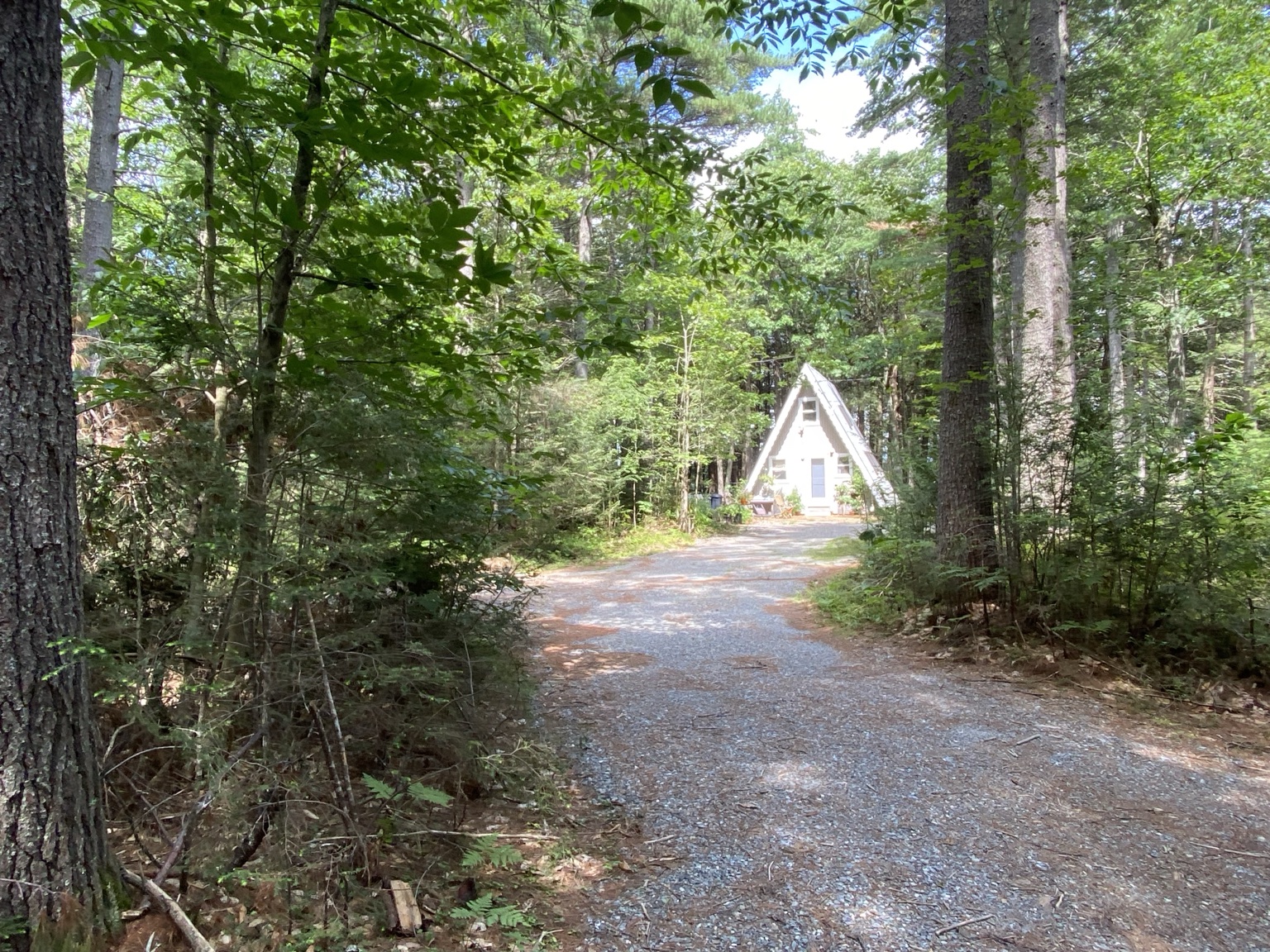
Driveway leading to the Ashburnham A-frame
The driveway leading into the wooded property.

The Property Through Another Lens

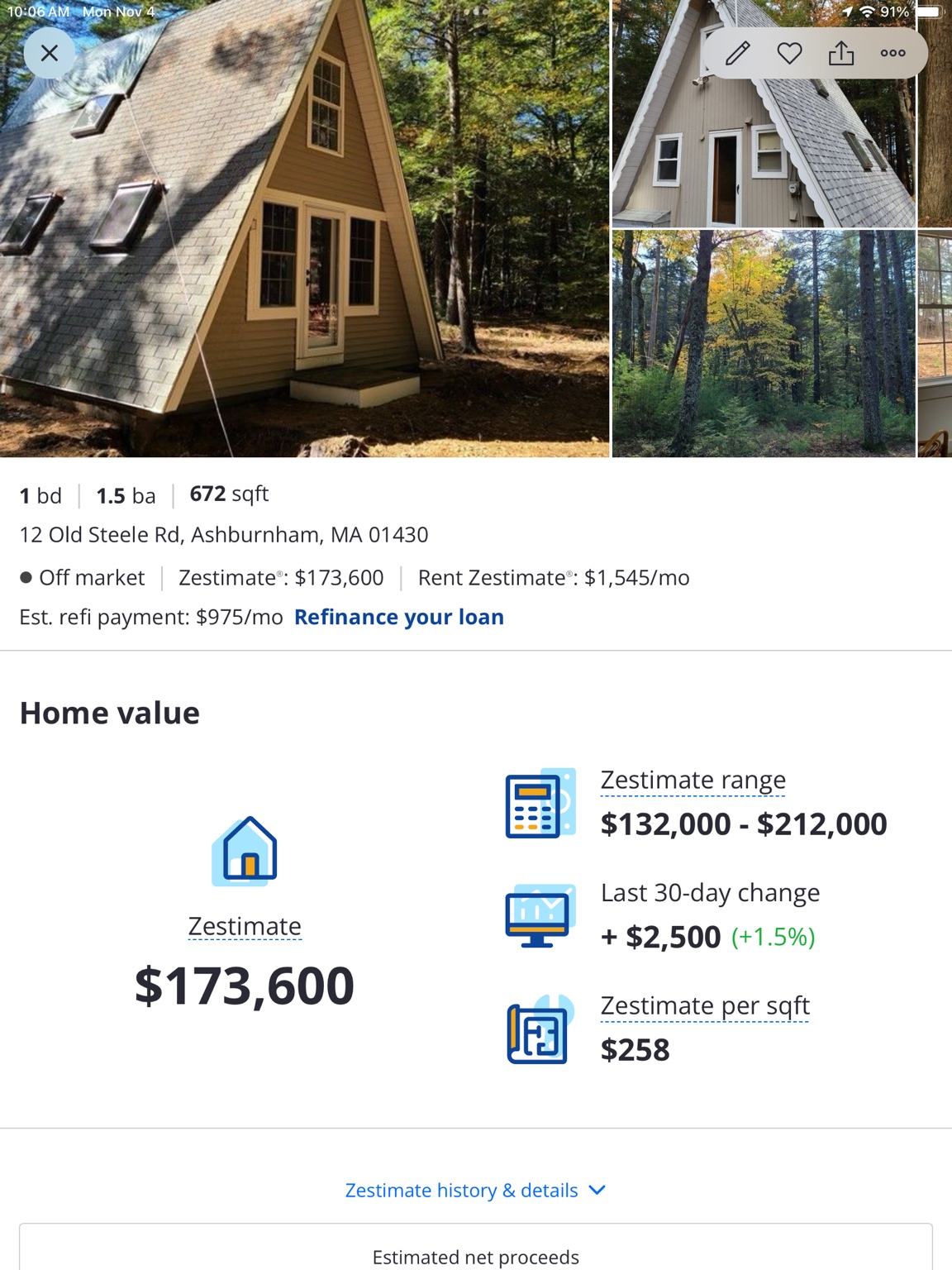
A real-estate listing reduces a home to square footage, rooms, and features. Living there was something else entirely. The real value was the way the house connected to the surrounding town, ponds, trails, people, and seasons.

The property was a base camp for a life that was spent outdoors whenever possible.

Property listing image of the Ashburnham A-frame
A later property listing for the A-frame.

Graduate School Fifteen Minutes Away

One of the great advantages of living in Ashburnham was that graduate school was only about fifteen minutes away in the next town. I could attend a class in ecology or field biology, then be back among the forests, wetlands, ponds, and glacial landscapes that made those lessons real.

The distance between theory and observation was almost nonexistent. A lecture about wetland functions could be followed by an evening beside a marsh. Lessons about forest succession were visible along old fields and logging roads. Watershed science could be understood by watching how runoff moved through the land after snowmelt or a hard rain.

Ashburnham became the perfect outdoor laboratory. It reinforced everything I was learning and helped turn academic knowledge into habits of observation that stayed with me through conservation work and my later USGS career.

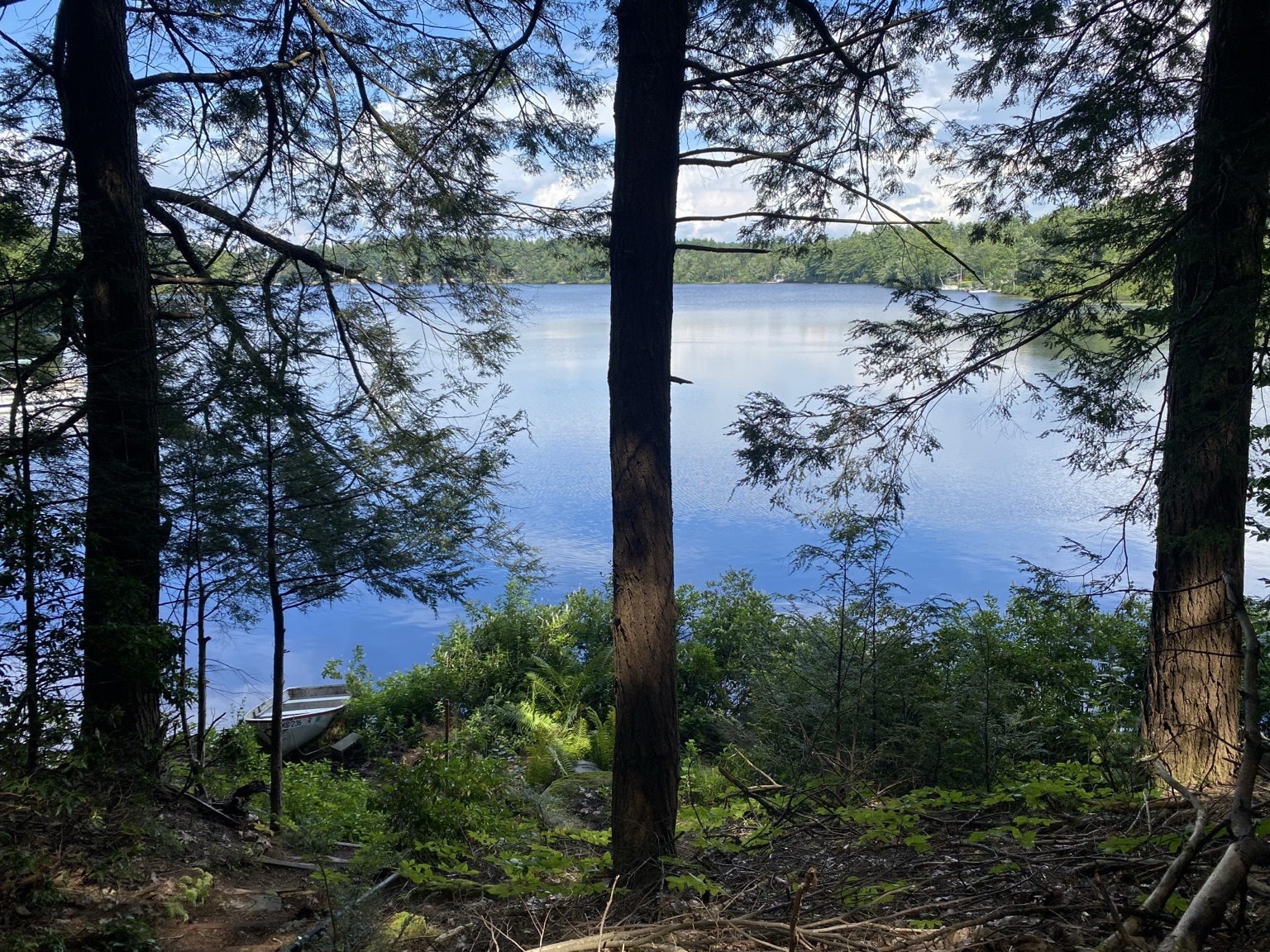
Ashburnham pond viewed through the trees
The landscape around home became an extension of the classroom.

Ponds, Boats, and Quiet Water

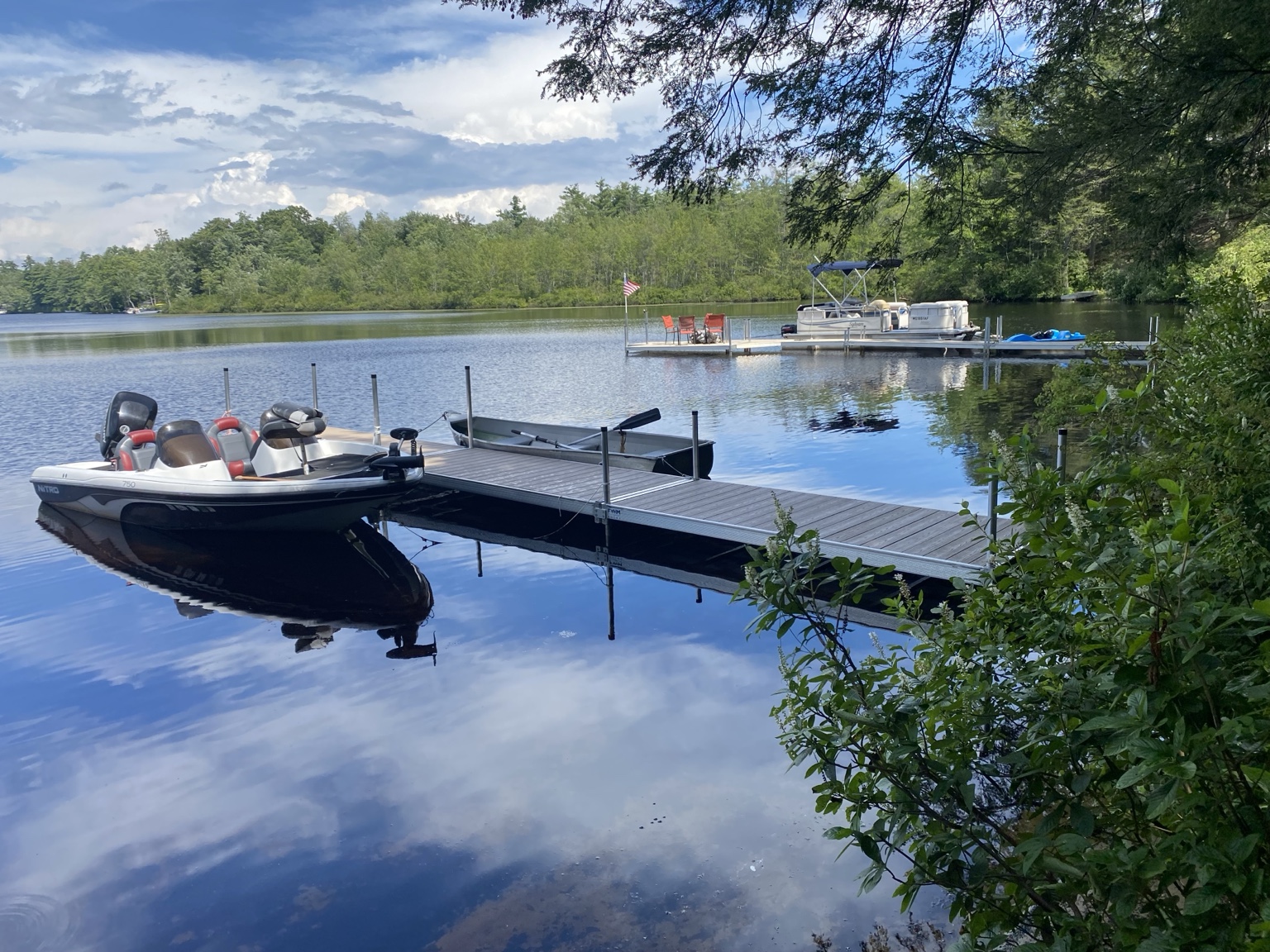
Ashburnham is a town of ponds, wetlands, forests, and small waterways. Boats were never just stored equipment; they represented another afternoon or evening waiting to happen.

Paddling gave me a different view of the landscape. From the water, the shoreline, wetlands, birds, and changing weather all became part of the experience.

Boats tied at a dock in Ashburnham
Boats at the dock, ready for another day on the water.

Always Ready for the Next Trip

Having boats close at hand made it easy to take advantage of a calm evening, good weather, or a free afternoon. Outdoor life did not require a complicated expedition. Sometimes the best adventure was only a few minutes from home.

That access was one of Ashburnham's great gifts.

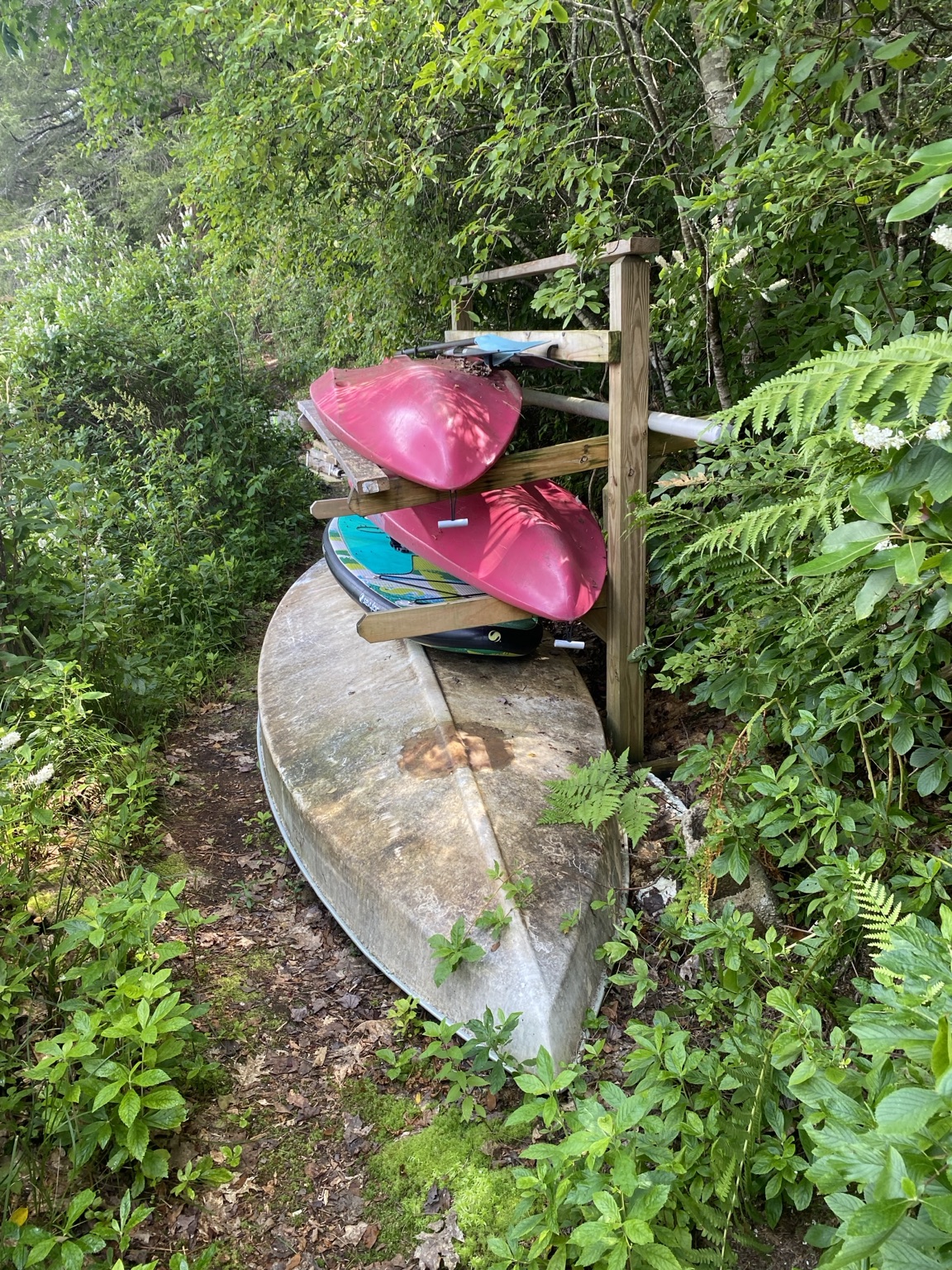
Boats stored on a rack in Ashburnham
Boats stored and ready for ponds, rivers, and future adventures.

Water Through the Trees

Some of my favorite Ashburnham views were not grand vistas. They were glimpses—a pond appearing through the trees, a wetland opening beside an old road, sunlight moving across the forest floor, or fresh snow outlining every branch.

Living there encouraged me to notice small changes in the land from one season to the next.

Pond visible through the forest in Ashburnham
One of those quiet Ashburnham views that never needed improving.

Old Roads and Local History

Old roads, wells, stone walls, cellar holes, and town landmarks are scattered throughout the New England woods. They are reminders that these forests have long human histories layered beneath the trees.

Exploring those places made every walk feel like a combination of ecology, geology, and local history.

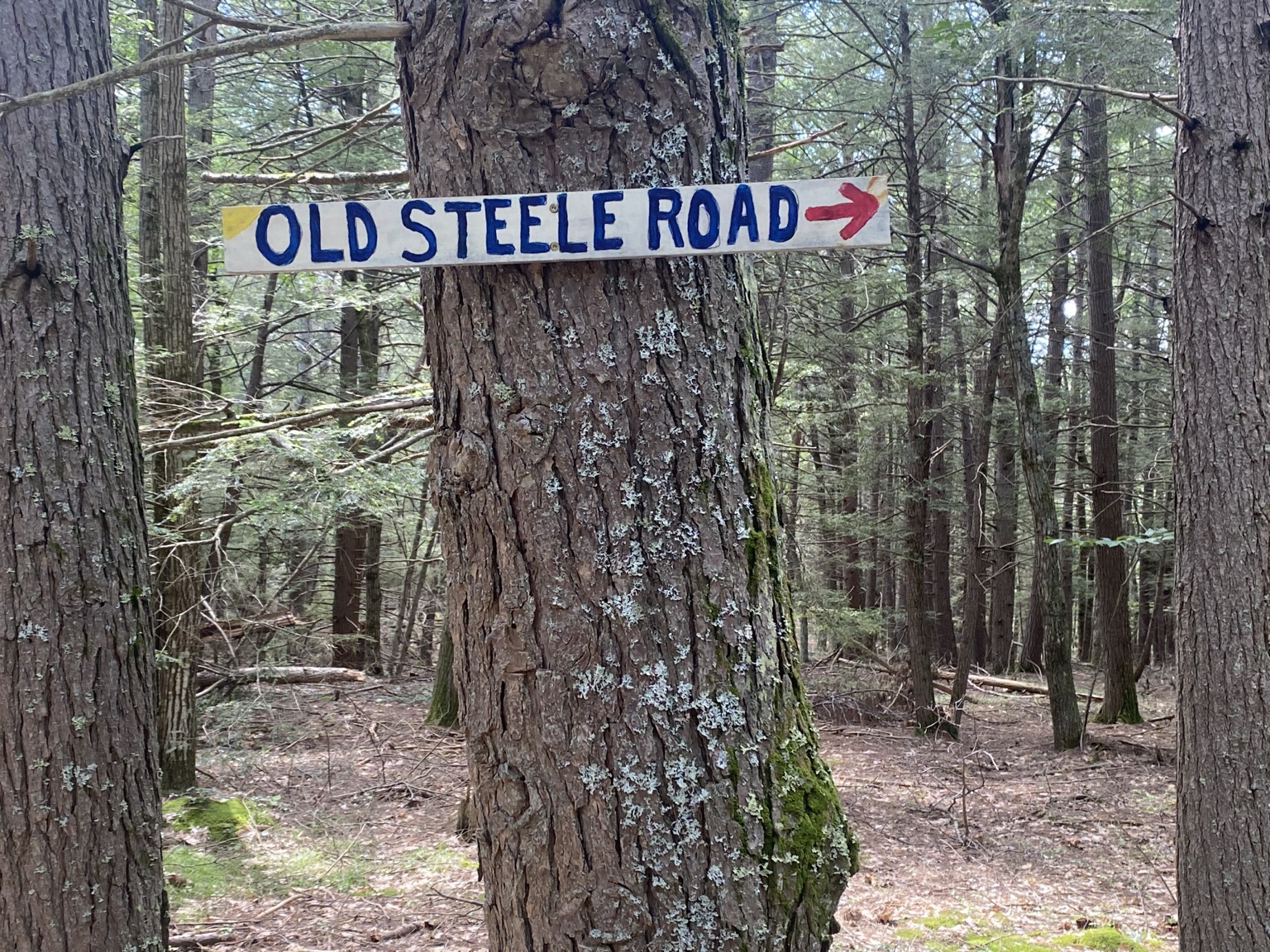
Old Steele Road sign in Ashburnham
Old Steele Road—one of the names and places woven into the local landscape.

The Old Well

An old well in the woods can tell a story without saying a word. It marks a place where someone once lived, worked, or depended on the land in a very direct way.

Places like this remind us that conservation is not about freezing land in time. It is about protecting the natural and cultural history together.

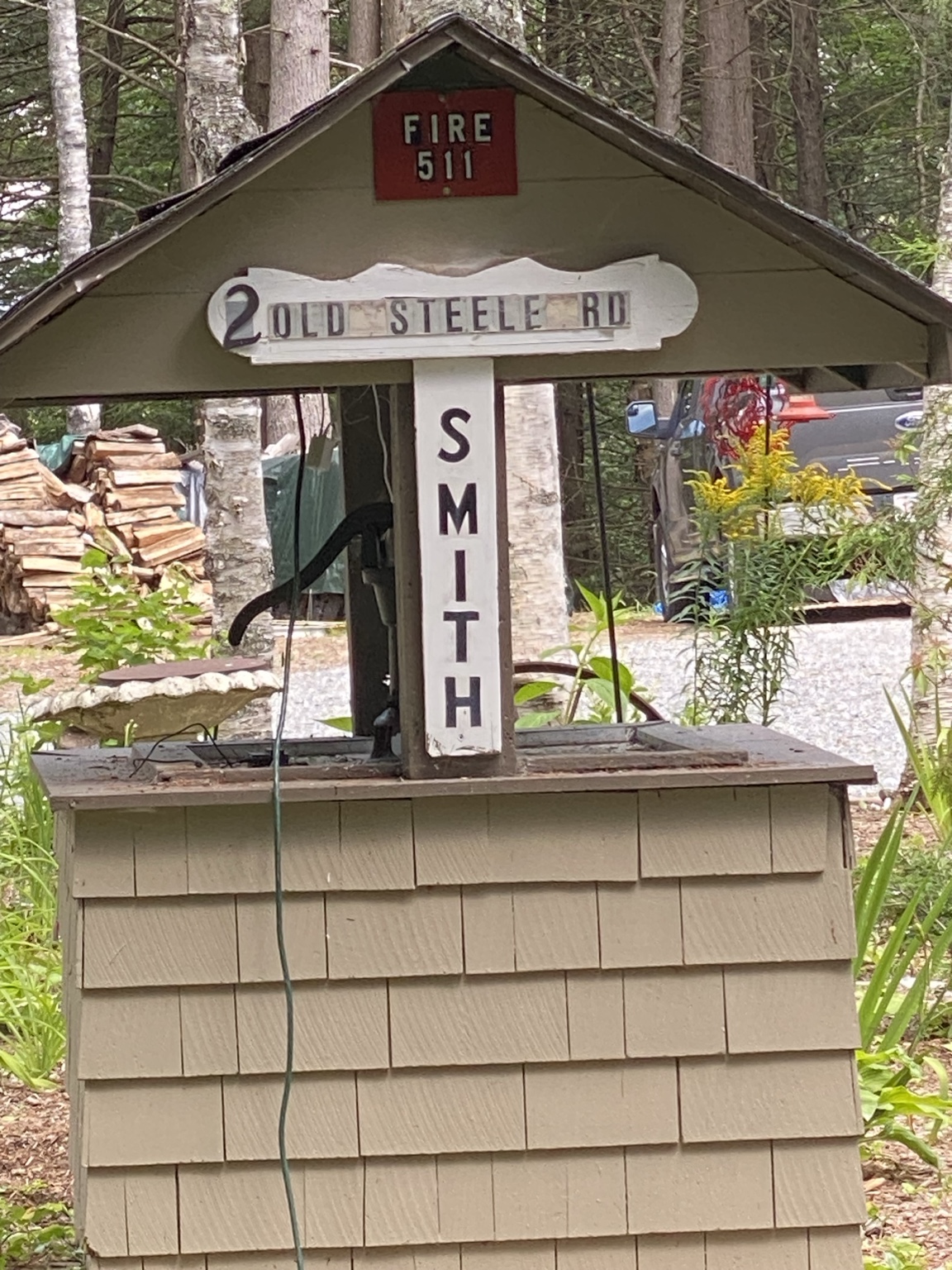
Old well along Steele Road in Ashburnham
An old well remaining beside a historic road.

Small Details of a New England Town

Even an ordinary roadside sand barrel can bring back winter in north-central Massachusetts—the icy roads, snowbanks, frozen mornings, and the practical traditions that helped people get through the season.

The harshness of winter was part of the place, and also part of what made spring feel so good when it finally arrived.

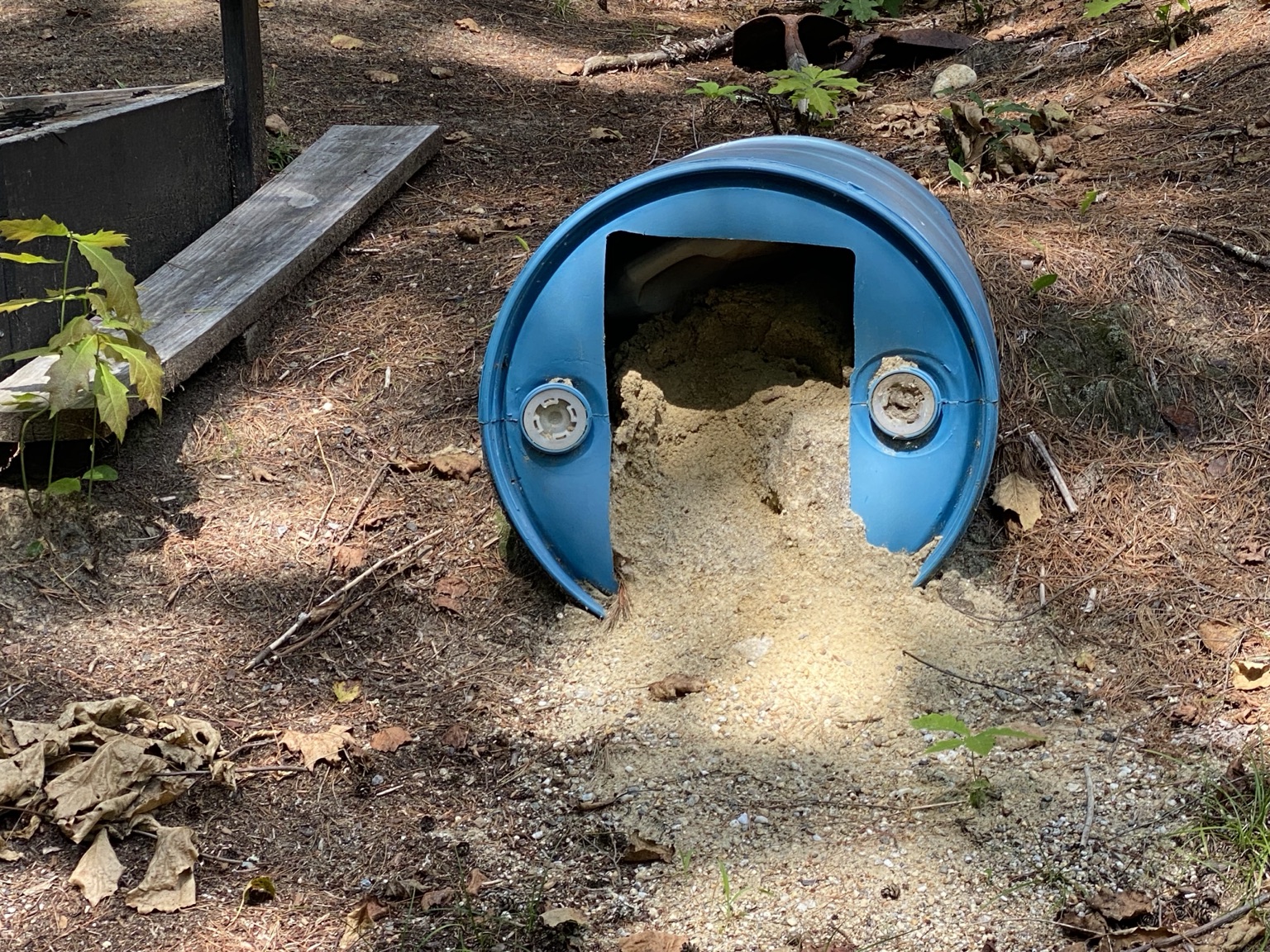
Roadside sand barrel in Ashburnham
A familiar and practical piece of small-town New England winter life.

Trails Beyond Town

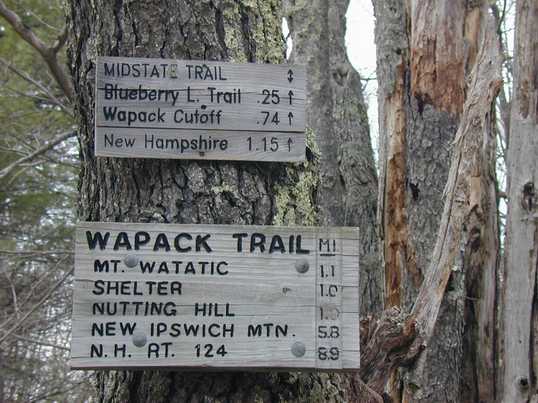
Ashburnham sits in an excellent part of New England for hiking. The Wapack Trail, Mount Watatic, the Midstate Trail, and many local woods roads and conservation paths were close enough for frequent use.

These trails connected local adventures to the larger mountain landscape of northern Massachusetts and southern New Hampshire.

Trail signs on the Wapack Trail
Trail signs pointing toward another day in the hills.

Protecting What Made Ashburnham Special

Living so closely with the landscape made conservation feel personal. I did not see wetlands, forests, and streams as abstract features on a planning map. They were the places where I hiked, paddled, watched wildlife, studied ecology, and found peace.

I served for about five years as chairman of the Ashburnham Conservation Commission. We reviewed projects, strengthened local protections, and worked to ensure that development respected wetlands, waterways, groundwater, wildlife habitat, and neighboring properties.

One principle I pushed strongly was keeping stormwater on site through low-impact development. Too often, conventional development treats runoff as something to move away as quickly as possible. But water sent downhill becomes someone else's flooding, erosion, pollution, or groundwater problem. Good design works with the landscape instead of forcing the landscape to absorb bad decisions.

Conservation is most meaningful when it becomes permanent. Good intentions matter, but permanently protected land continues serving wildlife, water quality, recreation, and future generations long after individual volunteers are gone.
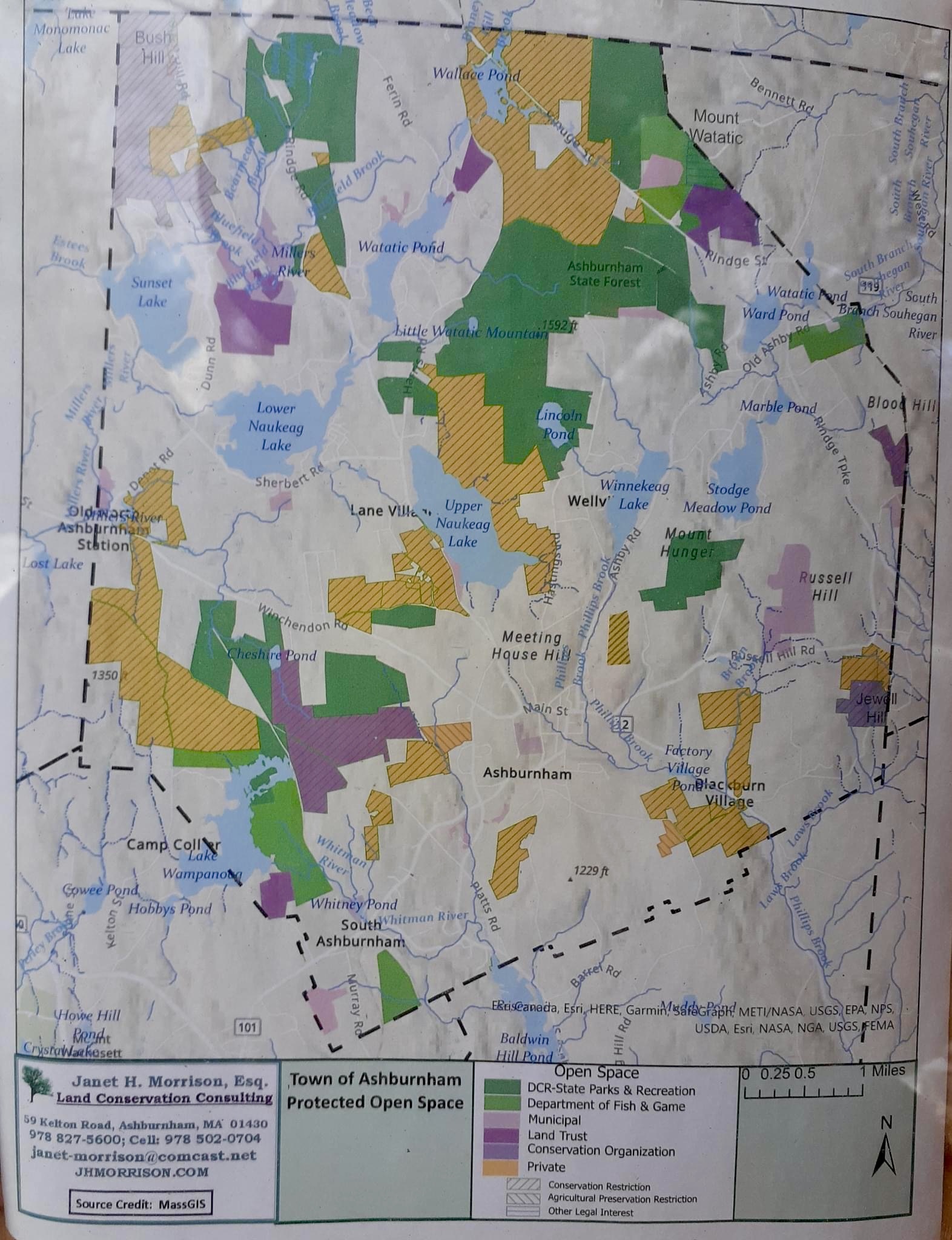
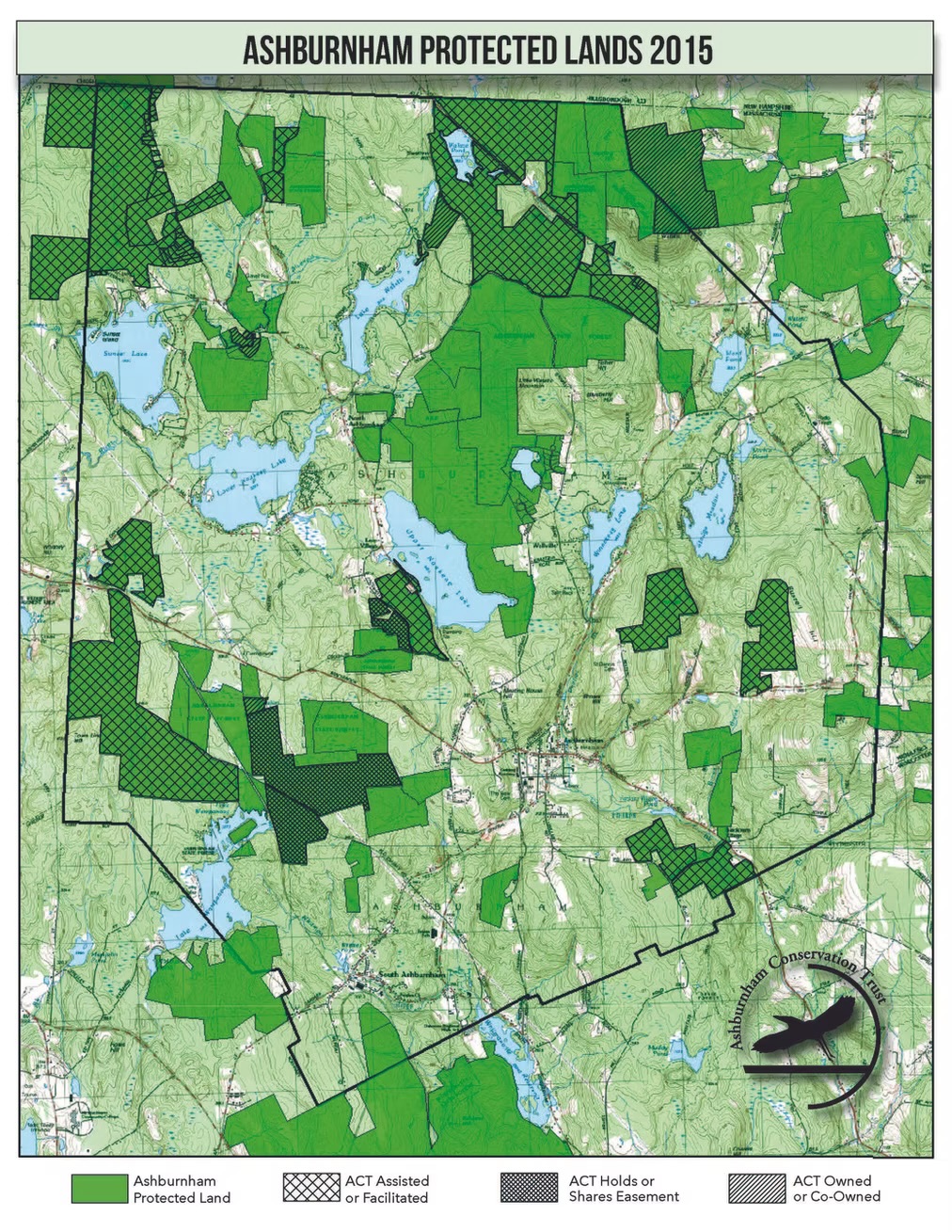
2015 map of protected lands in Ashburnham
A 2015 map showing the growing network of permanently protected land.

A Network of Open Space

I helped co-found the Ashburnham Conservation Trust, and over the years the amount of protected land grew to roughly 6,000 acres. Each parcel mattered, but the larger goal was connectivity—linking forests, wetlands, trails, wildlife corridors, and watersheds into a functioning landscape.

Maps make it possible to see the cumulative result of many separate projects, donations, negotiations, town decisions, and years of volunteer work.

Map of protected open space in Ashburnham
Protected open space showing how individual parcels can become a larger conservation network.

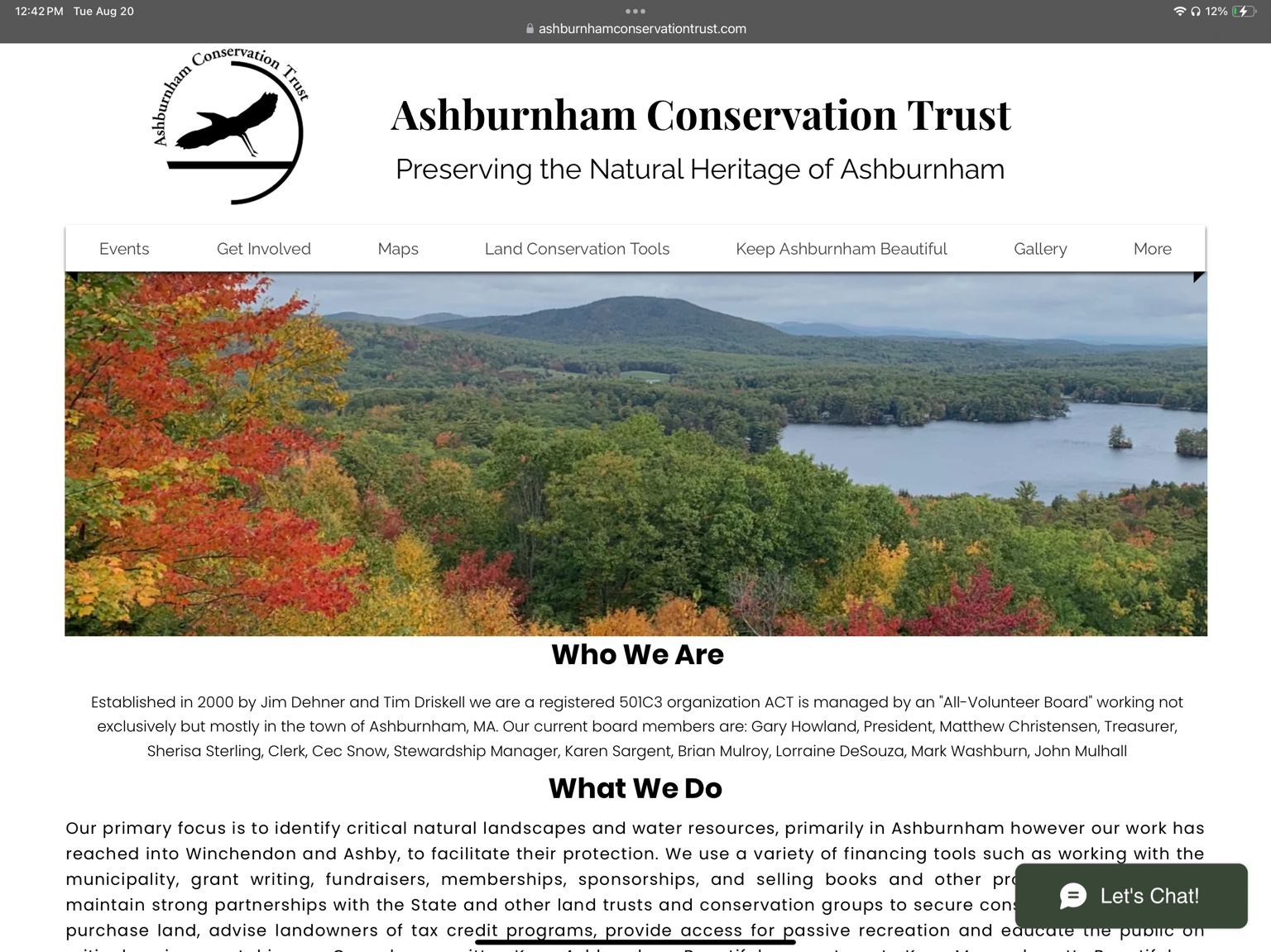
The Conservation Trust Continues

The lasting value of a local land trust is that its work continues beyond the people who first started it. New volunteers take over, new projects emerge, and the original mission keeps growing.

Seeing the Conservation Trust continue its work is one of the most satisfying parts of looking back at my years in Ashburnham.

Ashburnham Conservation Trust website
The Ashburnham Conservation Trust carrying the mission forward.

Returning With Kym

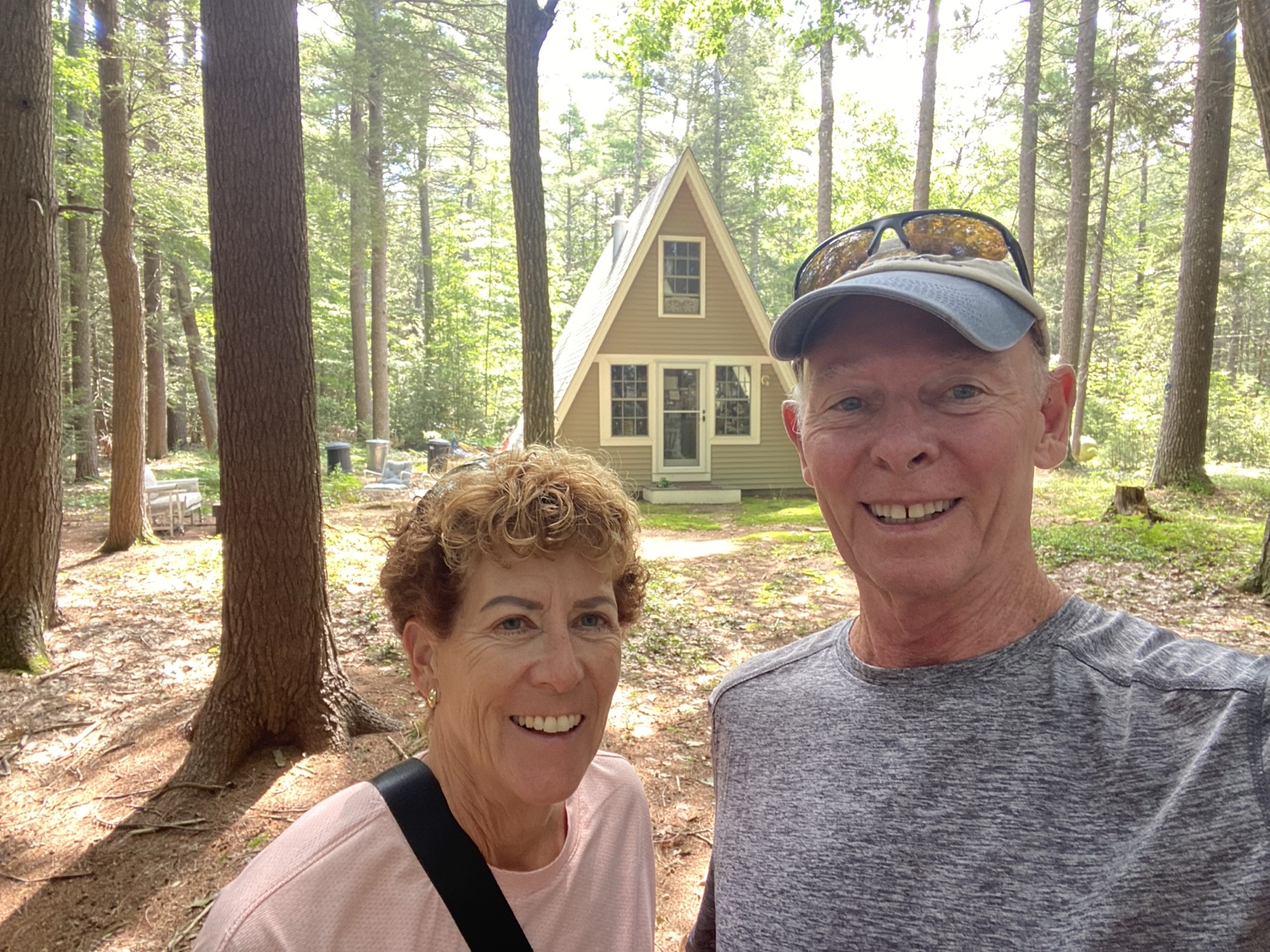
Returning to the A-frame area with Kym connected two very different chapters of my life. The place was filled with old memories, but the visit also created new ones. A former home is never exactly the same when you return, because you are no longer exactly the same person who once lived there.

Still, the land brought everything back—the driveway, the shape of the roof, the woods around the property, the nearby ponds, and the feeling that outdoor life was always waiting just beyond the door.

Looking back, Ashburnham shaped me in ways I did not completely understand at the time. It strengthened my love of ecology, influenced my conservation leadership, reinforced my graduate education, and helped prepare me for the work I later did with the U.S. Geological Survey.

More importantly, it taught me something about how I wanted to live. A meaningful life is not measured by the size of the house. It is measured by what the house makes possible, what you learn from the place around it, and what you leave protected for those who come after you.

Tim and Kym visiting the Ashburnham A-frame
Tim and Kym at the A-frame during a return visit.

A Place That Changed My Life

People sometimes ask why Ashburnham still means so much to me. The answer is not simply that it was beautiful. Beautiful places are everywhere.

Ashburnham changed how I thought about life. It taught me to notice the first spring wildflowers, the movement of water after a storm, migrating birds overhead, tracks in fresh snow, the pattern of stone walls disappearing into the woods, and the quiet satisfaction of helping protect a piece of land permanently.

Those nineteen years shaped my graduate studies, conservation work, outdoor adventures, career, and appreciation for living simply. Thoreau found his Walden beside a pond in Concord. In many ways, I found mine in a 600-square-foot A-frame in the woods of Ashburnham.

Related New England Adventures

Ashburnham was connected to a much larger life of hiking, climbing, backpacking, conservation, and exploring New England. These pages continue that story.